April to November 1795
The Peace of Basel and the Directory
On 5 April 1795 France and Prussia sign a peace at Basel. Prussia leaves the war and in a secret article accepts French control of the left bank of the Rhine, while France returns its conquests east of the river. The new Batavian Republic buys peace with France by giving up territory south of the Rhine, and Spain signs its own peace at Basel on 22 July. Austria and Britain stay at war.
In June a British fleet lands French émigrés in Brittany to support the royalist rebels of the west. General Lazare Hoche traps them on the Quiberon peninsula and takes the fort of Penthièvre on 20 July. On the Rhine Jourdan crosses at Düsseldorf in August and Pichegru takes Mannheim, but the Austrians under Count Clerfayt defeat Jourdan at Höchst in October and Pichegru at Pfeddersheim in November.
A new constitution, the Constitution of the Year III, gives executive power to five Directors and legislative power to two councils, the Council of Five Hundred and the Council of Ancients. In early October royalist sections of Paris rise against the Convention, which gives its defence to Paul Barras. Barras calls in Bonaparte, who has Joachim Murat bring 40 guns from the plain of Sablons. On 13 Vendémiaire, 5 October 1795, the guns fire grapeshot into the royalist assault of 7,000 men, and about 300 royalists are killed.
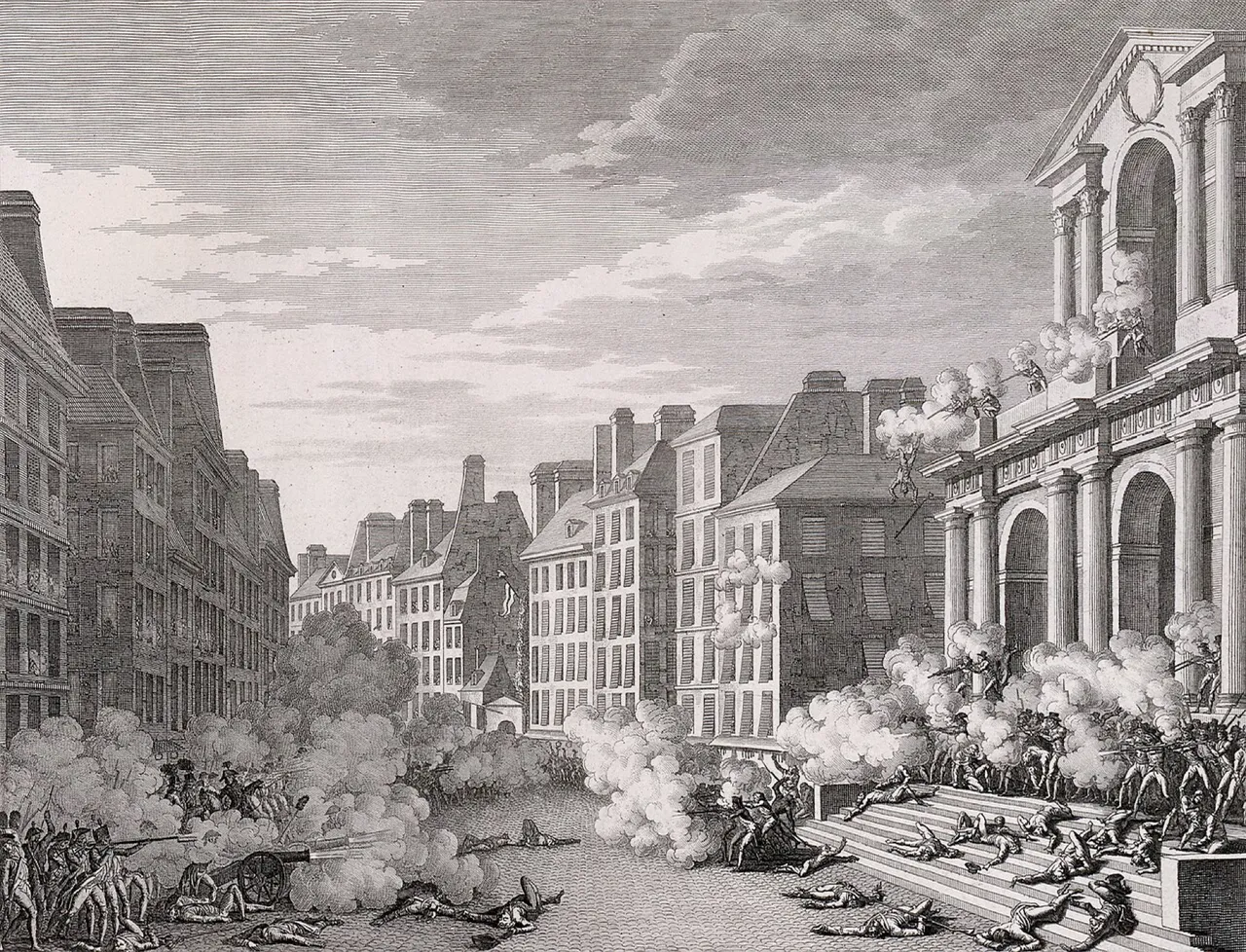 The fighting before the church of Saint-Roch on 13 Vendémiaire, 5 October 1795, engraving by Abraham Girardet and Pierre Gabriel BerthaultWikimedia Commons, Abraham Girardet and Pierre Gabriel Berthault, Public domain (Attaque de la Convention nationale, 1795.jpg)
The Convention holds its last session on 25 October, and the Directory governs from the next day, with Barras among the five Directors. Bonaparte becomes commander of the Army of the Interior. In March 1796 he marries Joséphine de Beauharnais, and two days later leaves Paris to take command of the Army of Italy.
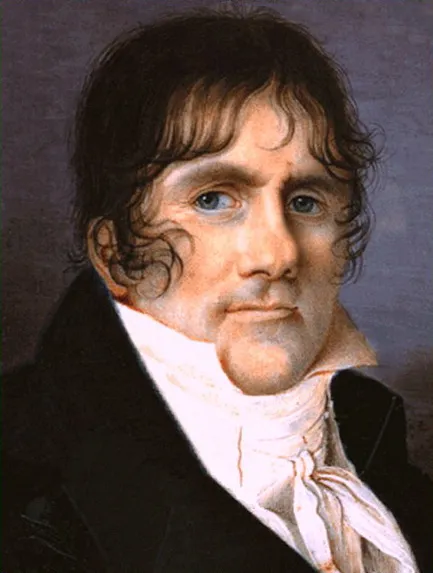 Paul Barras, portrait of the French school, 19th centuryWikimedia Commons, French school, 19th century, Public domain (Paul Barras directeur.jpg)
Sources
- Georges Lefebvre, The Thermidorians and the Directory (1964).
- Albert Soboul, The French Revolution 1787–1799 (1975).
- François Furet, A Critical Dictionary of the French Revolution (1989).
Prev: Fleurus and the Low CountriesNext: The Army of Italy