November 1808 to January 1809
Napoleon in Spain and the retreat to Corunna
After Bailén and Cintra Napoleon takes command in Spain himself and brings 100,000 veterans of the Grande Armée across the Pyrenees. With 278,670 men drawn up on the Ebro against about 80,000 Spanish troops, his marshals break the Spanish armies in November at Burgos, Espinosa and Tudela, where Marshal Lannes defeats Castaños on 23 November. On 30 November the Polish light horse of the Guard charge the Spanish guns at the pass of Somosierra, and early in December Madrid surrenders and Joseph returns to his capital.
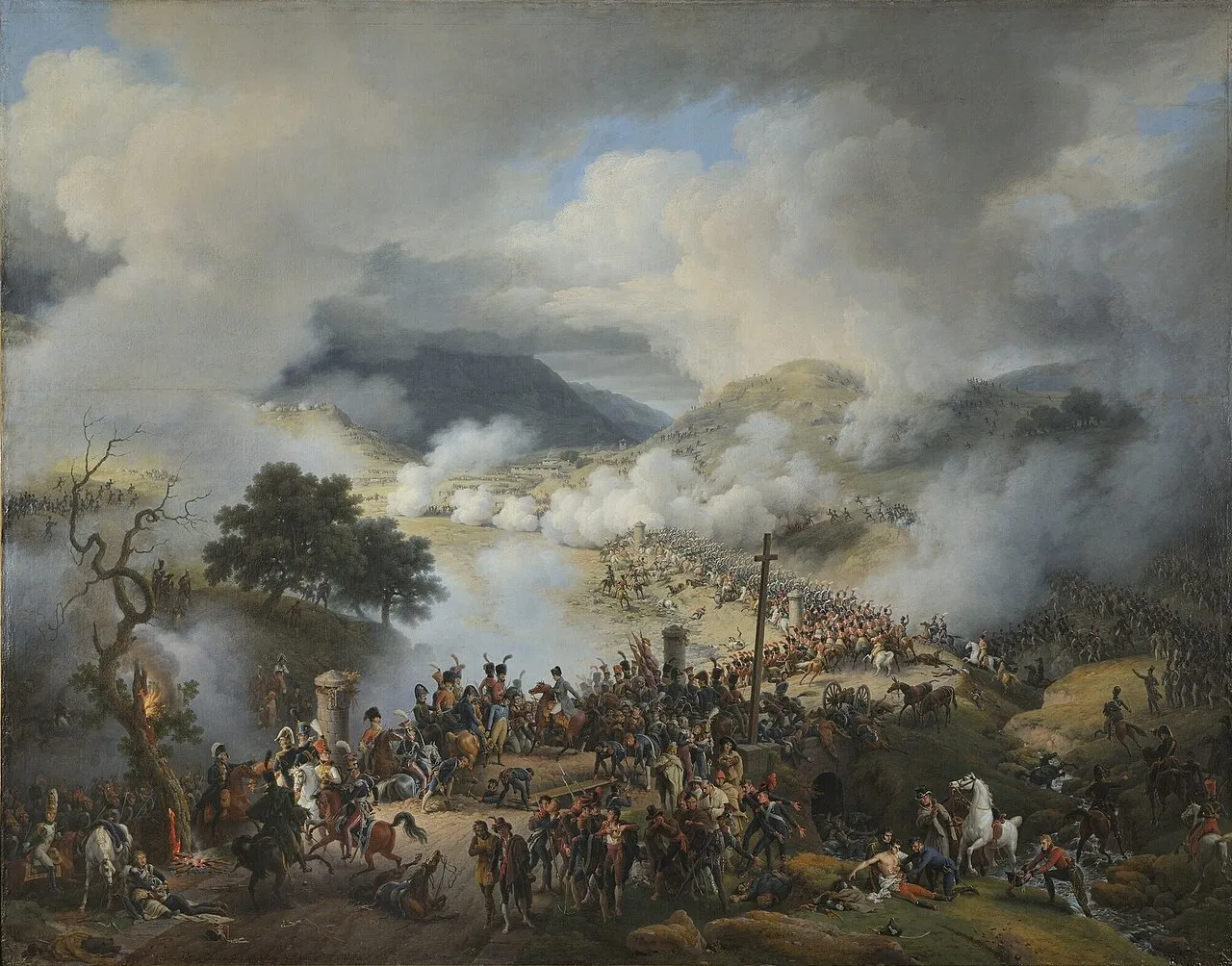 The Battle of Somosierra, 30 November 1808, painting by Louis-François Lejeune, 1810Wikimedia Commons, Louis-François Lejeune, Public domain (Louis-François Lejeune - Battle of Somosierra, November 30, 1808.jpg)
In October Sir John Moore takes command of the British army in Portugal, and Sir David Baird lands at Corunna on 13 October with 12,000 to 13,000 more. Moore advances to Salamanca, where General Hope joins him on 3 December with the cavalry and guns. Learning that Marshal Soult’s corps of 16,000 men lies isolated at Carrión, he marches against it on 15 December and joins Baird, giving him 23,500 infantry, 2,400 cavalry and 60 guns. On 21 December Paget’s cavalry surprises the French pickets at Sahagún.
Napoleon turns north from Madrid with 80,000 men, and Moore begins his retreat on 25 December. The cavalry and Craufurd’s Light Brigade cover the march through the mountains of Galicia in snow and rain, and at Benavente they beat the French cavalry and capture General Lefebvre-Desnouettes. Discipline breaks down in much of the army, which loots Benavente and leaves hundreds of drunken soldiers behind at Bembibre. Napoleon reaches Astorga on 1 January 1809, hands the pursuit to Soult with Ney in support, and on 19 January leaves Spain to prepare for war with Austria.
Moore offers battle at Lugo from 6 to 8 January, then slips away at night and reaches Corunna on 11 January, where the transports arrive three days later. On 16 January, while the army is embarking, Soult attacks the ridge south of the town with the divisions of Mermet, Merle and Delaborde. The village of Elviña changes hands several times, and by nightfall both sides hold much the same ground. Moore is struck by a cannonball and dies some hours later, and Baird is badly wounded.
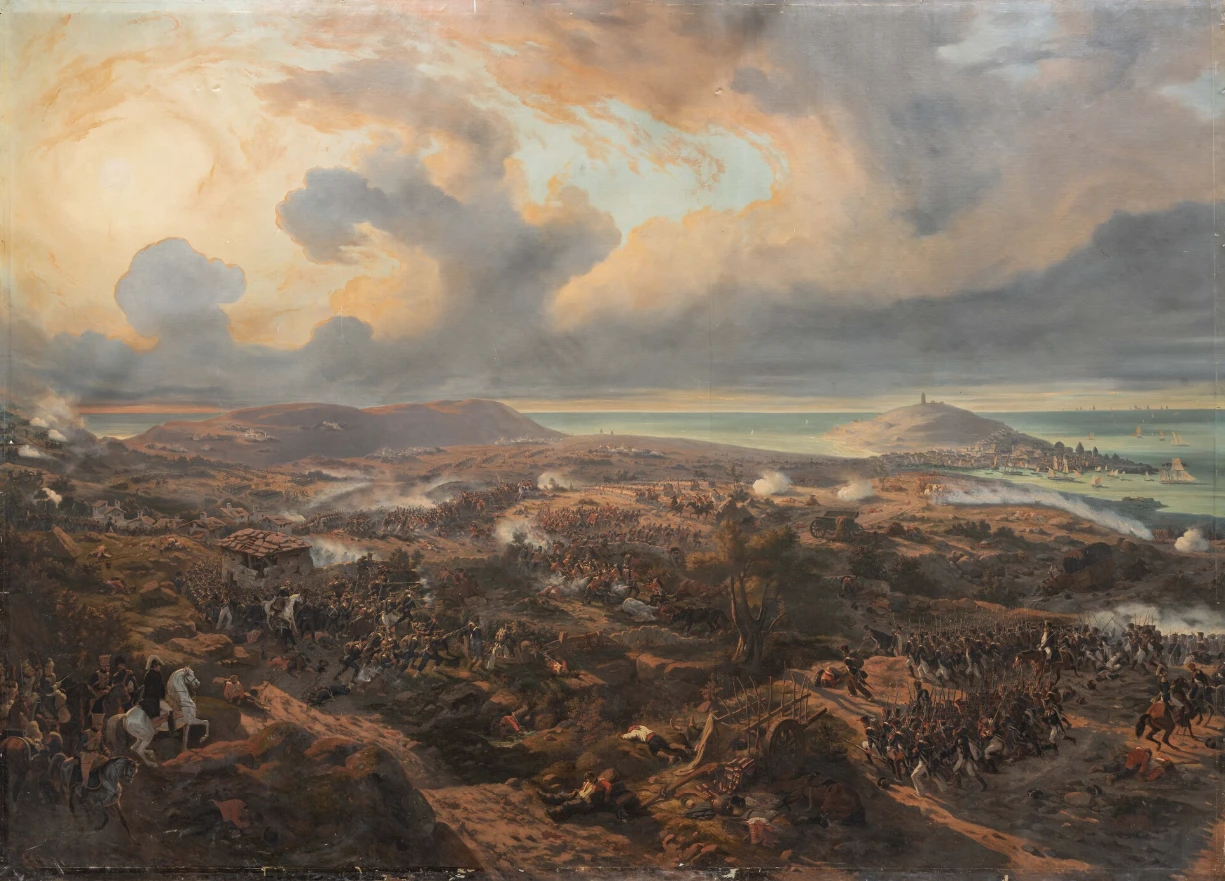 The Battle of Corunna, 16 January 1809, painting by Hippolyte Bellangé, 1843Wikimedia Commons, Hippolyte Bellangé, Public domain (Combat de la Corogne, 16 janvier 1809.png)
Under Hope the army embarks during the night and the next morning, and the Spanish garrison holds the citadel until the fleet is out to sea. The British lose about 900 killed and wounded in the battle, the French about 1,000. Soult takes Corunna and a week later the naval base of Ferrol with eight ships of the line. Some 26,000 British troops reach home, and 7,000 have been lost in the campaign.
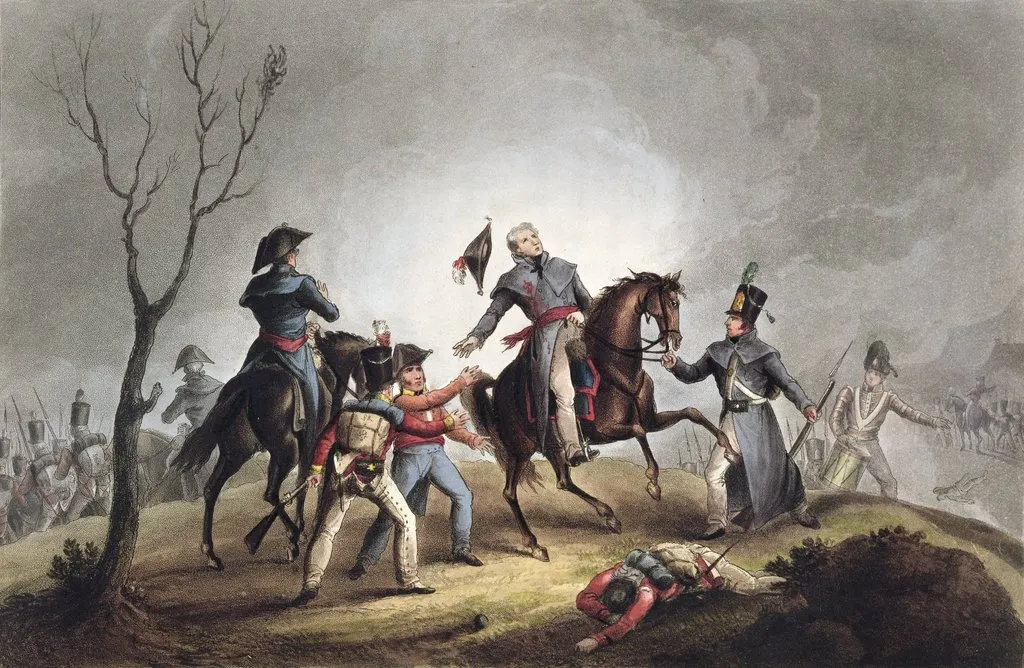 The death of Sir John Moore at Corunna, aquatint after William Heath, 1815Wikimedia Commons, William Heath, Public domain (36 214430~death-of-sir-john-moore-(1761-1809)-january-17th-1809,-from-'the-martial-achievements-of-great-britain-and-her-allies-from-1799-.jpg)
Sources
- Charles Oman, A History of the Peninsular War, vol. I (1902).
- Christopher Hibbert, Corunna (1961).
- Charles J. Esdaile, The Peninsular War: A New History (2003).
Prev: Vimeiro and CintraNext: Porto and the advance up the Tagus