29 November 1812
The bridges burn
At about 10 pm on 28 November Victor’s corps crosses, and three hours later the bridges are clear of formed troops. Most of the stragglers on the east bank stay by their fires for the night. Eblé has orders to burn the bridges at 7 am on 29 November, waits until 8:30 and then sets them alight, leaving tens of thousands of stragglers and civilians on the east bank.
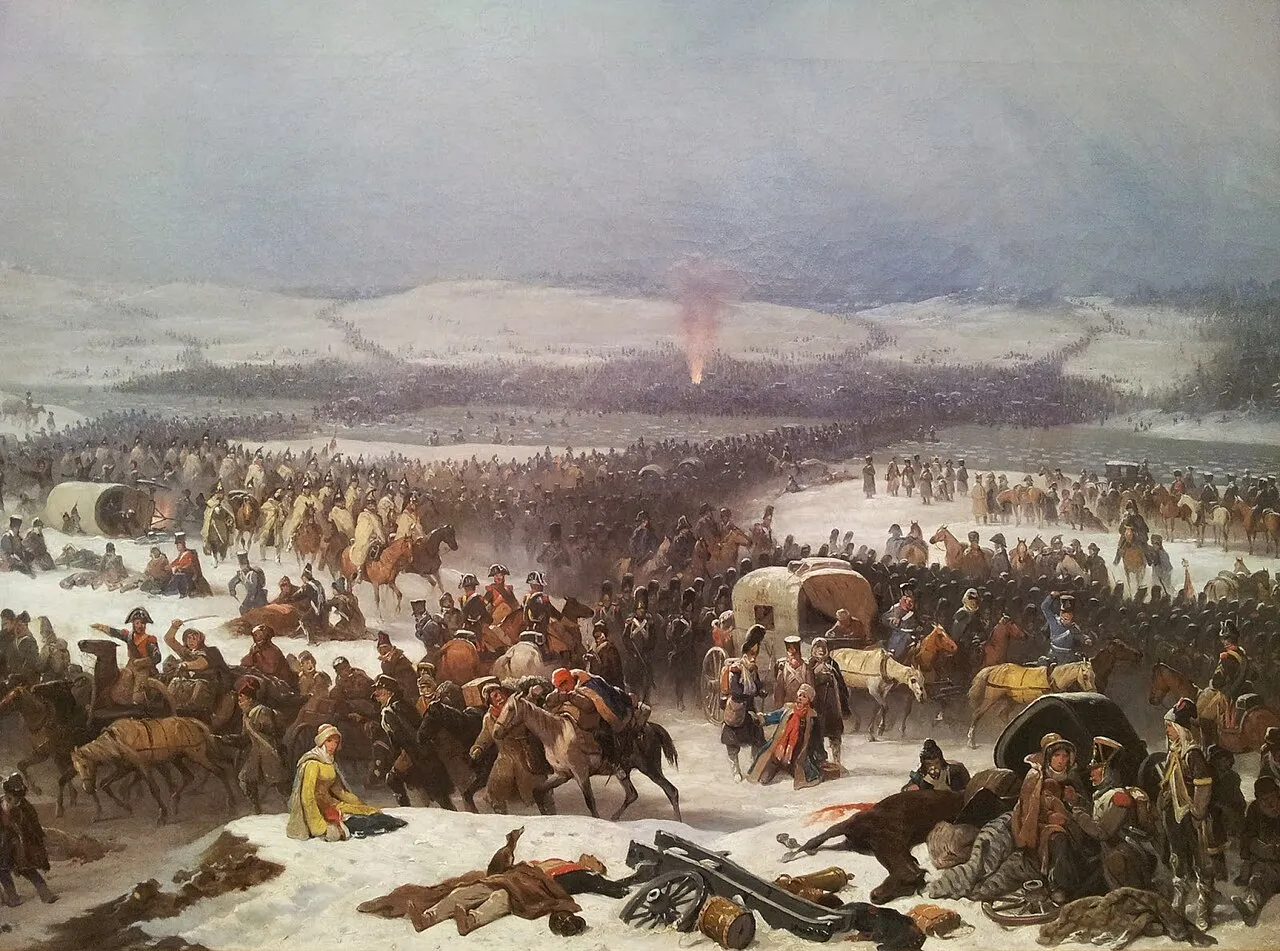 The crossing of the Berezina, painting by January Suchodolski, 1866Wikimedia Commons, January Suchodolski, Public domain (National Museum in Poznan - Przejście przez Berezynę.JPG)
Cossacks and Wittgenstein’s troops take prisoner those left behind, but without bridges Wittgenstein cannot follow. The French march west on the road to Zembin and Vilnius and destroy three bridges over the Gaina swamp behind them, so that Chaplits cannot pursue.
David Chandler estimates the French losses at 20,000 to 30,000 combatants, most of them in Oudinot’s and Victor’s corps, and perhaps 30,000 non-combatants, and the Russian losses at no fewer than 10,000 killed. Napoleon, his generals, about 200 guns and some 40,000 men escape.
Sources
- David G. Chandler, The Campaigns of Napoleon (1966).
- Adam Zamoyski, Moscow 1812: Napoleon’s Fatal March (2004).
- Paul Britten Austin, 1812: The Great Retreat (1996).
Prev: Battle on both banksNext: The end of the Grande Armée