20 March to April 1799
The siege lines
Acre stands on a peninsula, closed on the land side by walls that Jezzar Pasha has strengthened since 1775. He holds the city with about 5,000 men, and his Jewish adviser Haim Farhi directs much of the defence. The French émigré engineer Antoine de Phélippeaux, who studied with Bonaparte at the École Militaire, mounts the captured French guns on the walls, and Sidney Smith anchors Tigre and Theseus so that their broadsides cover the approaches.
Bonaparte, with 12,000 to 13,000 men, camps on the hill of Tell al-Fukhar, 1.5 km east of the city, still known as Napoleon’s Hill. He expected Acre to fall within two weeks. Without siege guns the French dig trenches towards the walls and make assault after assault, which the defenders drive back, while they also stop several attempts to mine the walls.
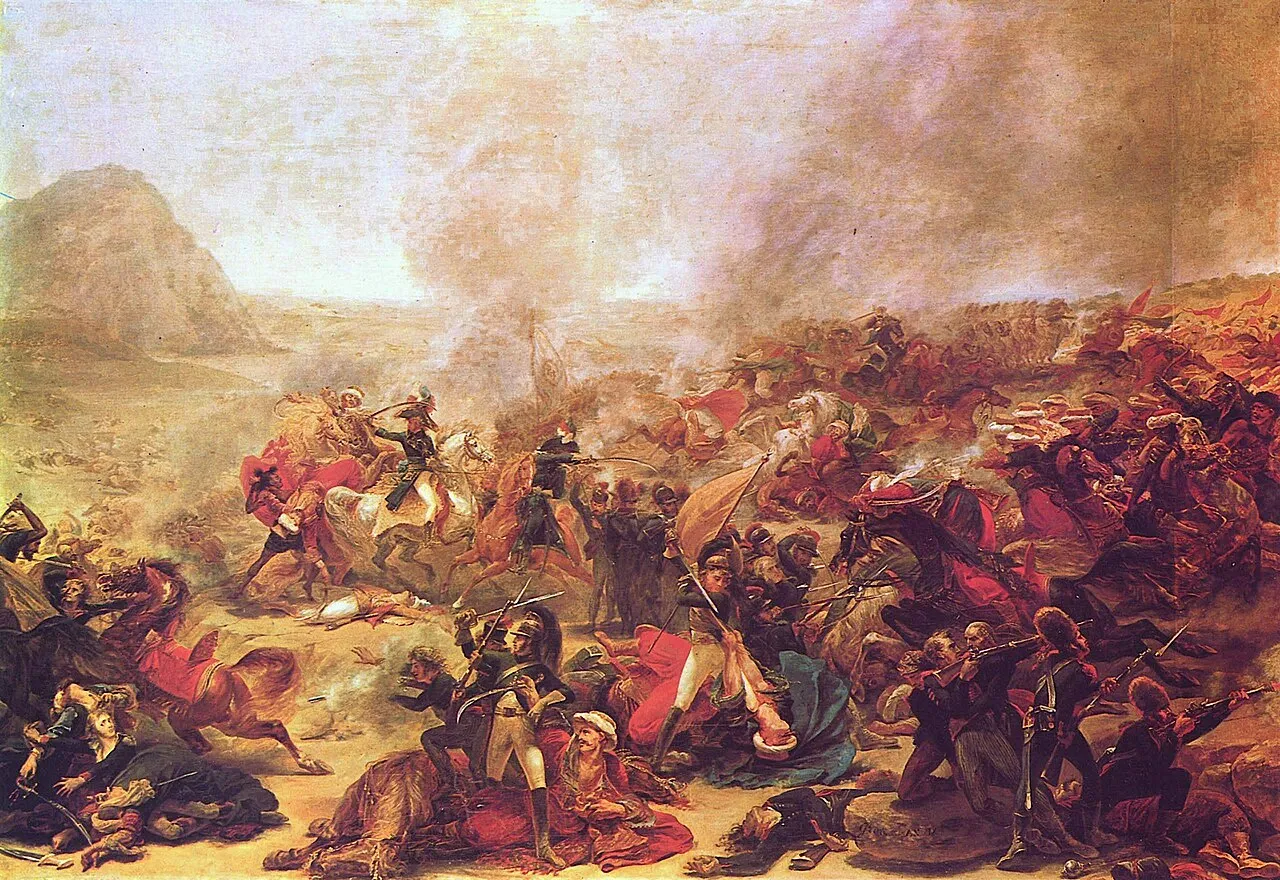 The fight at Nazareth, 8 April 1799, sketch by Antoine-Jean Gros, 1801Wikimedia Commons, Antoine-Jean Gros, Public domain (Antoine-Jean Gros 010.jpg)
An army from Damascus meanwhile marches to relieve the city, and on 8 April Junot with 500 men defeats about 3,000 of its soldiers near Nazareth. On 16 April Kléber, with about 4,000 men, is attacked by it at Mount Tabor, about 40 km south-east of Acre. Western accounts give it 20,000 to 35,000 men under Abdullah Pasha al-Azm. Bonaparte marches to Kléber’s aid, and the Ottomans are routed, leaving their camels, tents and supplies.
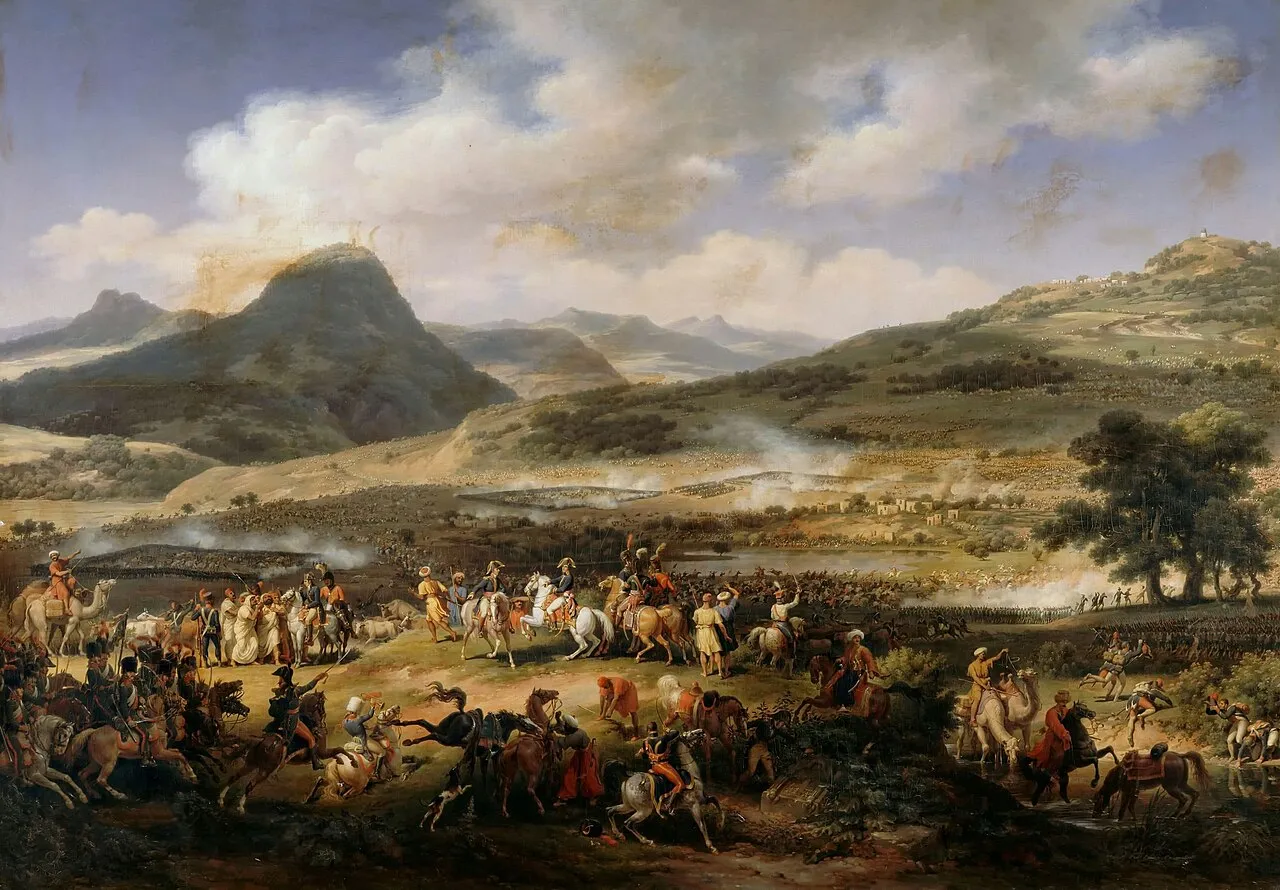 The Battle of Mount Tabor, 16 April 1799, painting by Louis-François Lejeune, 1804Wikimedia Commons, Louis-François, Baron Lejeune, Public domain (La Bataille du mont Tabor, en Syrie, le 27 germinal an VI by Louis François Lejeune Salon de 1804.jpg)
Sources
- David G. Chandler, The Campaigns of Napoleon (1966).
- Paul Strathern, Napoleon in Egypt (2008).
- Gaston Bodart, Militär-historisches Kriegs-Lexikon (1908).
Prev: The Syrian campaignNext: The breach