March to May 1814
Paris and the abdication
After Arcis-sur-Aube Napoleon moves east to Saint-Dizier to draw the allies after him and cut their communications. Cossacks intercept a letter in which he tells Marie Louise of the plan, and on 24 March Alexander I and Frederick William III decide to march on Paris and send only 10,000 cavalry under Wintzingerode after him. On 25 March the allies defeat Marmont and Mortier at Fère-Champenoise, who lose 6,000 men and 45 guns, and surround a further 4,300 men under Pacthod. Marie Louise and her son leave Paris on 29 March.
Joseph Bonaparte commands in Paris with about 25,500 regular troops and 12,000 National Guards, and the city is almost unfortified. On 30 March over 100,000 allied troops attack the eastern and northern suburbs, Marmont holding the heights from Romainville to Belleville and Mortier holding Montmartre and La Villette. When Blücher's army appears on the plain north of Montmartre, Joseph authorises the marshals to negotiate and leaves the city. At 17:00 the fighting stops, the French evacuate Paris in the night, and on 31 March the allied monarchs ride into the city.
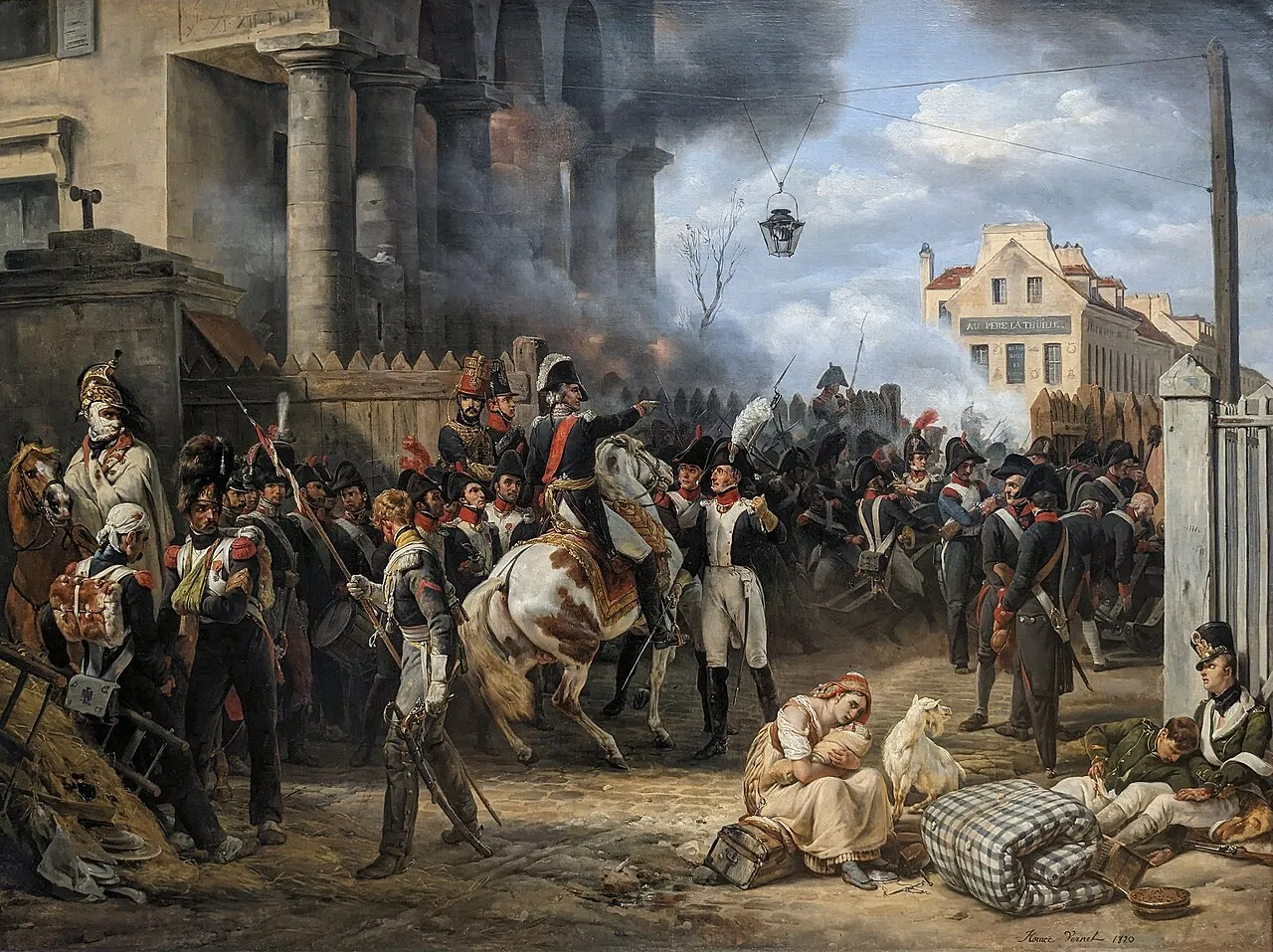 The defence of the Barrière de Clichy in Paris on 30 March 1814, painting by Horace Vernet, 1820Wikimedia Commons, Horace Vernet, Public domain (La Barrière de Clichy. Défense de Paris, le 30 mars 1814 - Horace Vernet - Musée du Louvre Peintures RF 126.jpg)
Napoleon reaches Fontainebleau and gathers about 36,000 men there. On 2 April the Senate, led by Talleyrand, declares him deposed. His marshals refuse to march on Paris, and on 4 April Marmont's corps, 11,000 men, marches away to Versailles under an agreement with the allies. Napoleon abdicates in favour of his son that day, and when the allies demand an unconditional abdication he gives it on 6 April.
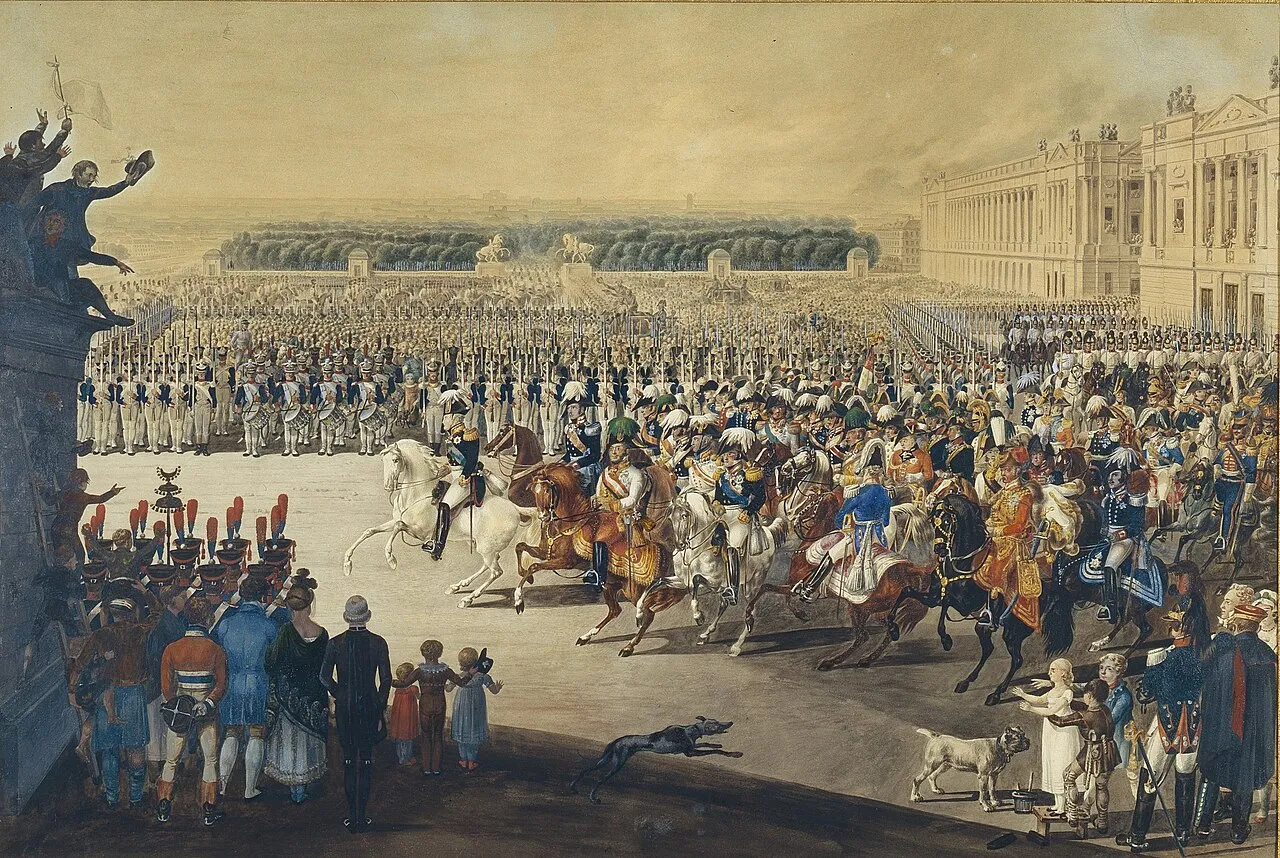 The allied armies entering Paris on 31 March 1814, watercolour by F. de Maleque, 1815Wikimedia Commons, F. de Maleque, Public domain (Armies of allies entering Paris March 19, 1814 - F.de Maleque (1815).jpg)
The Treaty of Fontainebleau of 11 April leaves him the title of emperor and makes him sovereign of Elba with a guard of 400 men, and Marie Louise receives Parma. On 20 April he takes leave of the Old Guard at Fontainebleau, and on 4 May he lands at Portoferraio from the British frigate HMS Undaunted. Louis XVIII returns as king, and the Treaty of Paris of 30 May 1814 gives France its borders of 1792.
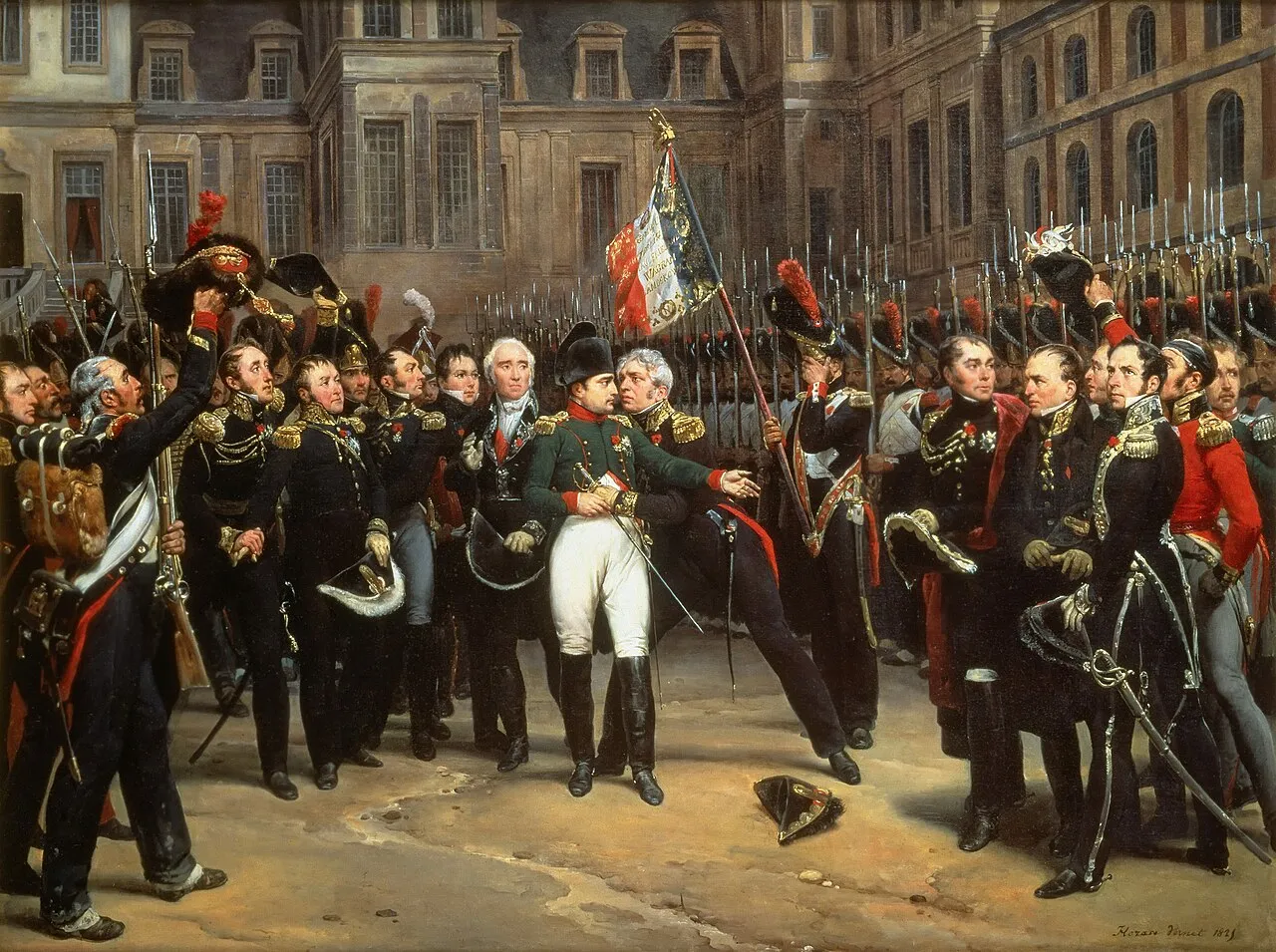 Napoleon takes leave of the Old Guard at Fontainebleau on 20 April 1814, painting by Horace Vernet, 1825Wikimedia Commons, Horace Vernet, Public domain (Napoleon bids farewell to his Guard at Fontainebleau on 20 April 1814 (1825), by Horace Vernet.jpg)
Sources
- David G. Chandler, The Campaigns of Napoleon (1966).
- F. Loraine Petre, Napoleon at Bay, 1814 (1914).
- Digby Smith, The Napoleonic Wars Data Book (1998).
Prev: The campaign of FranceNext: The return from Elba