July – October 1525
Gonzalo de Alvarado marches on the Mam
The Mam of the western highlands have their main town at Xinabahul, now Huehuetenango. Lovell writes that the K'iche' resent the execution of their kings for a plan that the Mam king Kayb'il B'alam had suggested, and propose a march on the Mam, which the Spanish quickly take up.
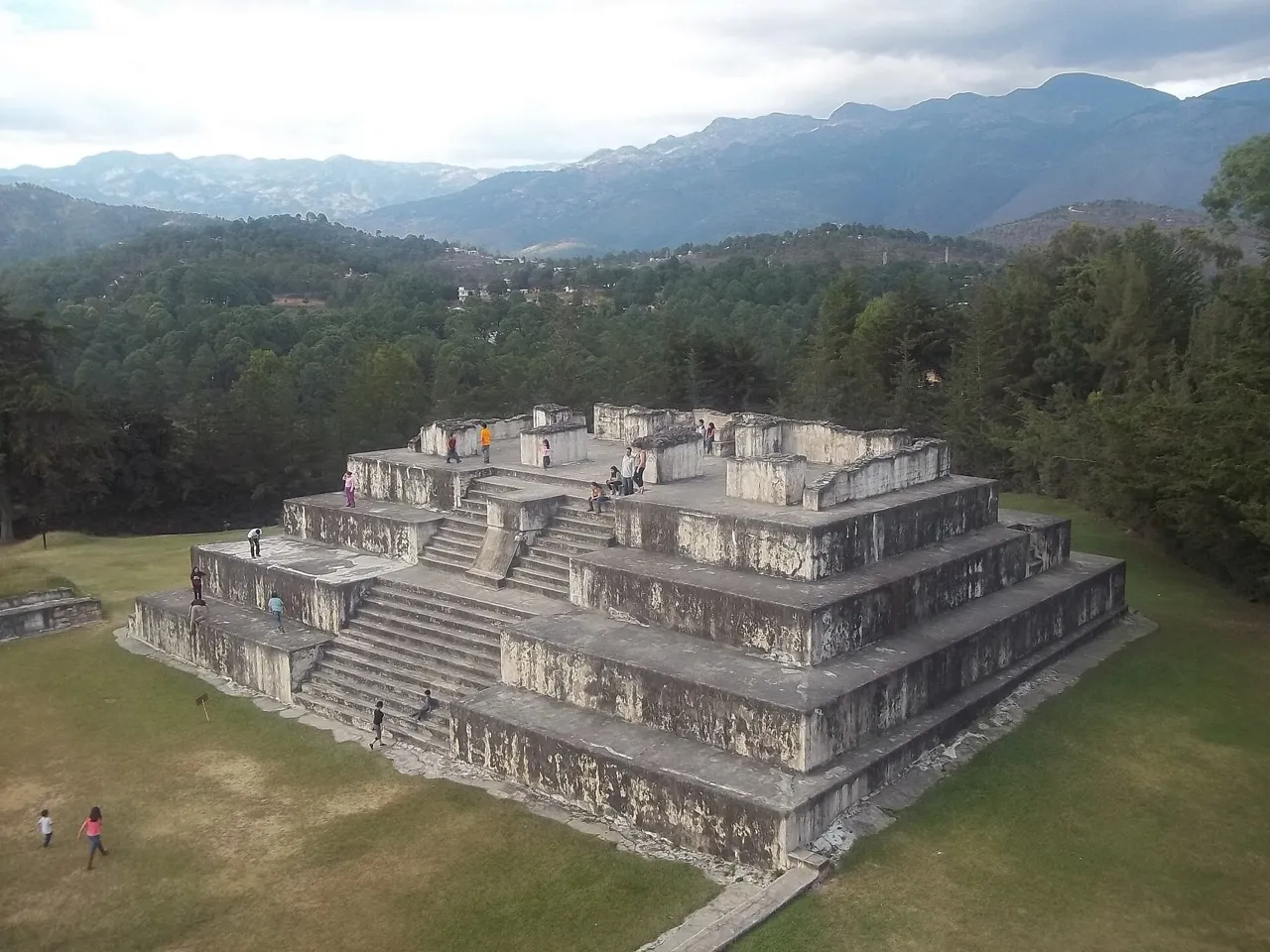 A temple pyramid at Zaculeu, HuehuetenangoWikimedia Commons, Simon Burchell, CC BY-SA 4.0 (Zaculeu 04.JPG)
In July 1525 Pedro de Alvarado’s brother Gonzalo de Alvarado y Contreras leaves the Spanish camp at Tecpán with 40 Spanish cavalry, 80 Spanish infantry and some 2,000 Mexican and K'iche' allies. He makes Totonicapán his supply base and turns north to Momostenango, slowed by heavy rain, and takes the town after a four-hour battle. The next day, on the road to Huehuetenango, a Mam army from Malacatán bars his way.
After that battle the army rests for a few days and then finds Huehuetenango deserted. Kayb'il B'alam has withdrawn to the fortress of Zaculeu, and he leaves Gonzalo’s offer of terms unanswered. Zaculeu stands on a plateau above the Selegua River, with deep ravines on the south and east. The only way in is a narrow neck of land on the north, guarded by a fortified structure across three quarters of its width, and walls and ditches defend the approach.
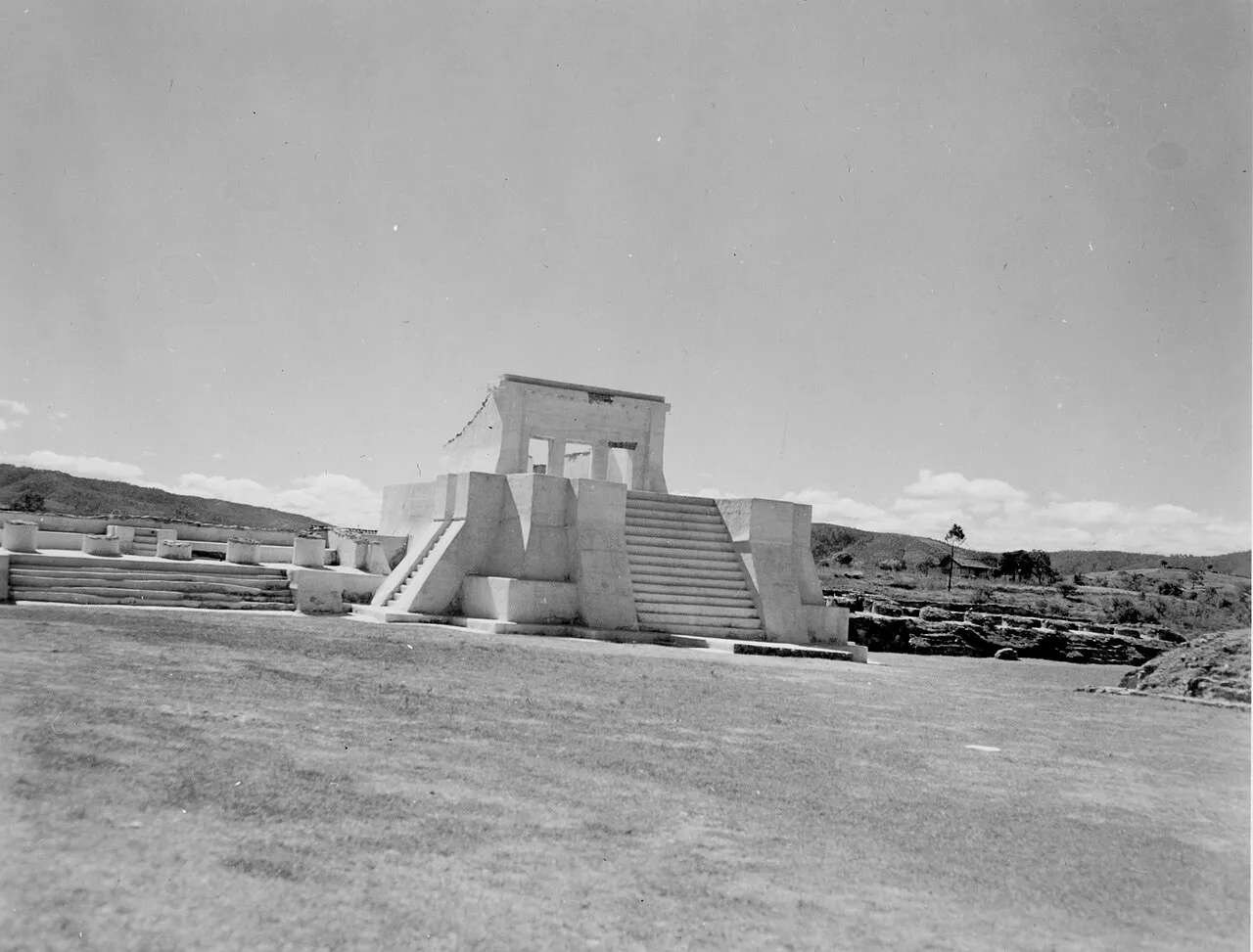 The ruins of Zaculeu in 1950, during their restoration by the United Fruit CompanyWikimedia Commons, T. W. Kines, Public domain (Ruins of Zaculeu, Huehuetenango 1950 cropped.jpg)
Sources
- W. George Lovell, Conquest and Survival in Colonial Guatemala (3rd ed. 2005), pp. 60 to 64.
- Adrián Recinos, Pedro de Alvarado: conquistador de México y Guatemala (2nd ed. 1986), p. 110.
- Patricia del Águila Flores, Zaculeu: ciudad postclásica en las tierras altas mayas de Guatemala (2007), pp. 10 to 11, 37 to 38.
Prev: Santiago and the Kaqchikel revoltNext: The Mam army from Malacatán