c. AD 90 – 378
Tikal and the Classic kingdoms
The Classic period is dated from about AD 250, when the lowland Maya begin to raise monuments dated in the Long Count. This calendar counts days from a creation date in 3114 BC in units of 1, 20, 360, 7,200 and 144,000 days, and has a sign for zero. The earliest Long Count date in the lowlands is on Stela 29 at Tikal, AD 292. Stela 9 at Uaxactun, 20 km to the north, follows in 328.
Stela 29 is also the oldest monument with the emblem glyph of Tikal. An emblem glyph is a royal title, k'uhul ajaw, "holy lord", joined to the name of a kingdom, for Tikal Mutul. The stelae show the king with his titles, his ancestors and his deeds.
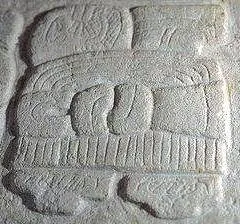 The emblem glyph of Tikal, the title holy lord of Mutul, on a stela in the Tikal museumWikimedia Commons, Authenticmaya, CC BY-SA 3.0 (Tikalemblem.jpg)
Tikal’s kings count their succession from the founder, Yax Ehb Xook, who rules around AD 90. A Late Preclassic tomb deep in the North Acropolis, Burial 85, is linked to him. In 317 a woman, Lady Unen Bahlam, presides over a k'atun-ending ceremony as ruler. Caracol, in present-day Belize, dates the founding of its dynasty by Te' K'ab Chaak to 331. Stela 15 at El Perú names the rulers of that kingdom from the middle of the 4th century.
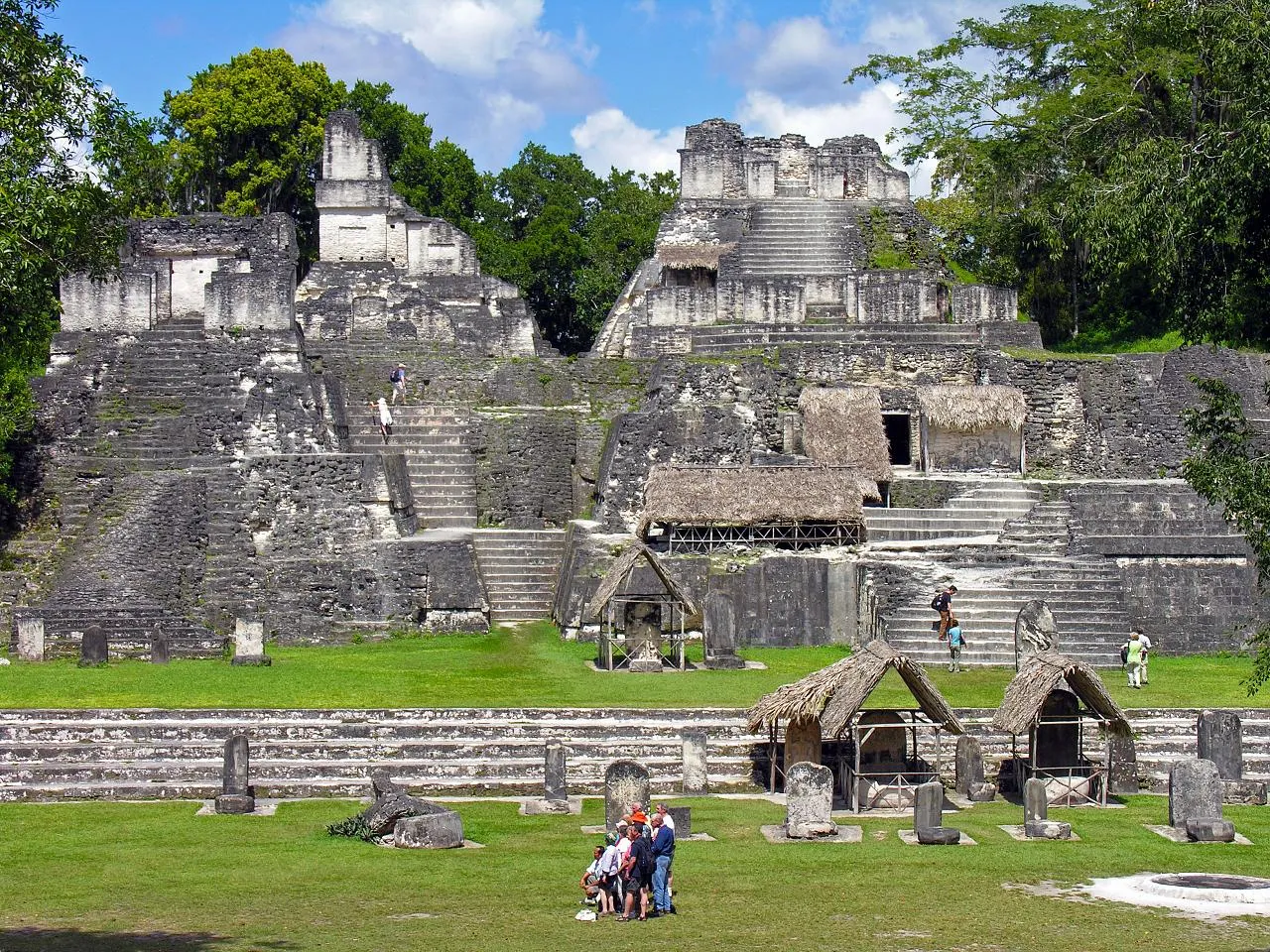 The North Acropolis of Tikal, burial place of its kings from the Late Preclassic, seen from the Central AcropolisWikimedia Commons, Dennis G. Jarvis, CC BY-SA 2.0 (Flickr - archer10 (Dennis) - Guatemala-1633.jpg)
Chak Tok Ich'aak I, the fourteenth king of Tikal, takes the throne in 360. Stela 39 shows him standing on a bound captive at the k'atun ending of 376, and his name also appears on Stela 26. Early in the Classic period Uaxactun records the capture of prisoners from Tikal.
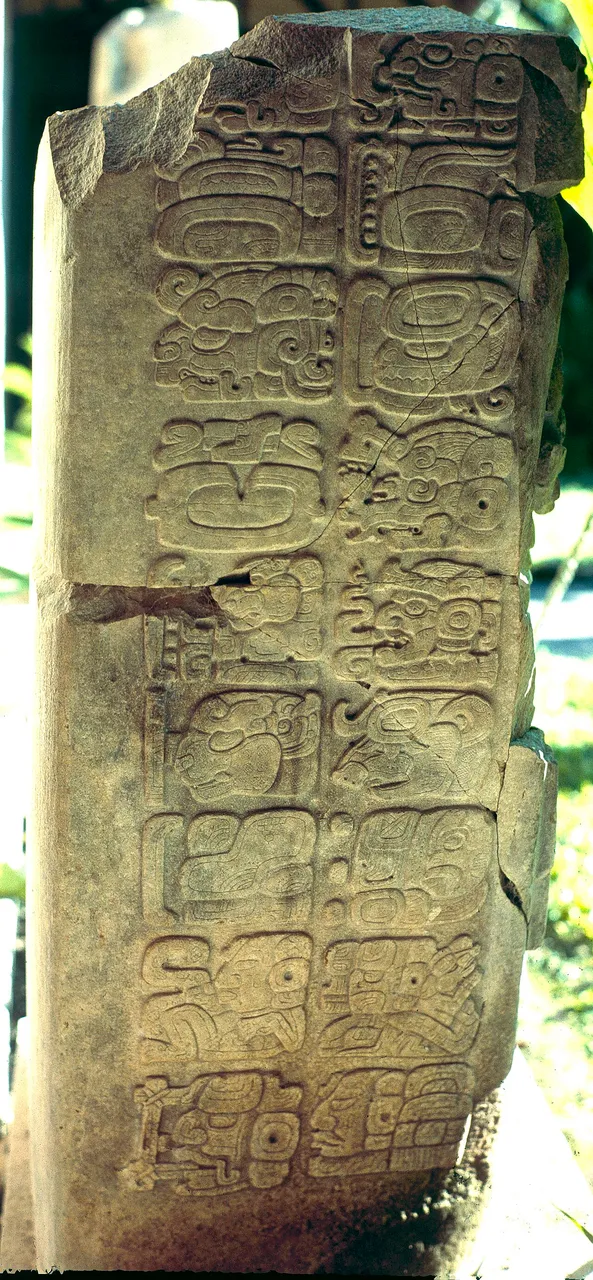 Stela 26 from the North Acropolis of Tikal, which names Chak Tok Ich'aak IWikimedia Commons, HJPD, CC BY 3.0 (Tikal St26.jpg)
Sources
- Simon Martin and Nikolai Grube, Chronicle of the Maya Kings and Queens (2nd ed. 2008), pp. 24 to 29.
- Michael D. Coe, The Maya (6th ed. 1999), pp. 75 to 91.
- Mary Ellen Miller, Maya Art and Architecture (1999), pp. 88 to 91.
Prev: The end of the Preclassic citiesNext: The arrival of Siyaj K'ak'