1511 – 1519
Aguilar and Guerrero
In 1511 the caravel Santa María de la Barca sails from Darién, on the isthmus of Panama, for Santo Domingo. It carries news of the quarrel between Diego de Nicuesa and Vasco Núñez de Balboa, and gold for a lawsuit. The ship founders on a reef called Las Víboras, somewhere off Jamaica. About twenty survivors drift in the ship’s boat for thirteen days, and half of them die before the current brings the boat to the east coast of Yucatán.
A Maya lord seizes the survivors as they land. The captain, Valdivia, and four others are sacrificed. Gerónimo de Aguilar, a Franciscan from Écija, and Gonzalo Guerrero, a sailor from Palos, are held with a few others to be killed later. The two escape to a neighbouring lord, an enemy of the first, who keeps them as slaves. By 1519 they are the only survivors still alive.
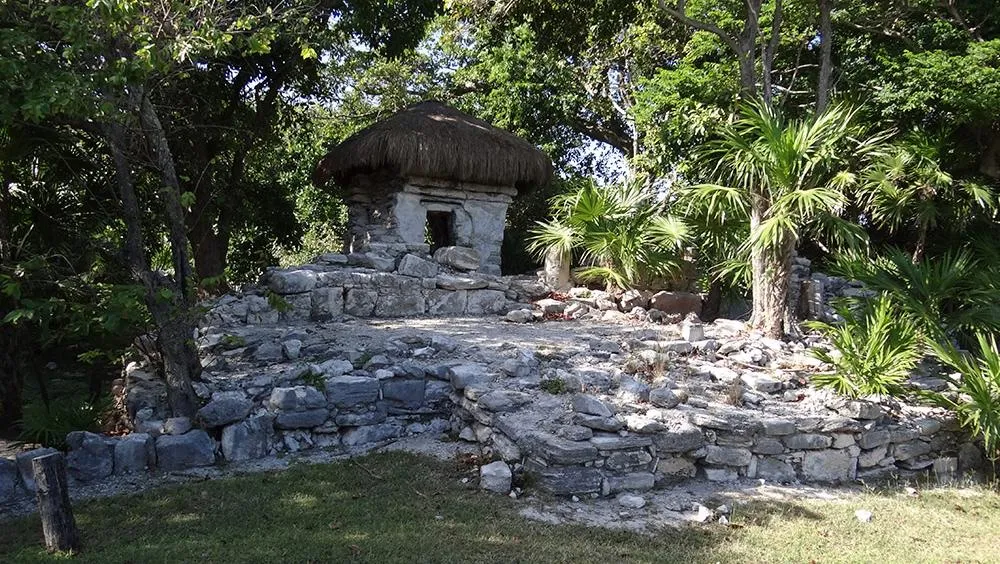 Maya ruins of Xamanha, the town of Aguilar’s master, at Playa del Carmen, Quintana RooWikimedia Commons, Lugares INAH, CC BY-SA 4.0 (Playa del Carmen Maya ruins Xaman Ha.jpg)
Around 1514 Guerrero passes to Nachan Can, the lord of Chetumal. He takes up Maya ways, with a tattooed face and pierced ears, marries Zazil Ha, a daughter of Nachan Can, and has three children with her. He rises to nacom, a war captain. Aguilar remains a slave of the batab of Xamanha, on the coast facing Cozumel. He learns Yucatec Maya and keeps his vows as a cleric.
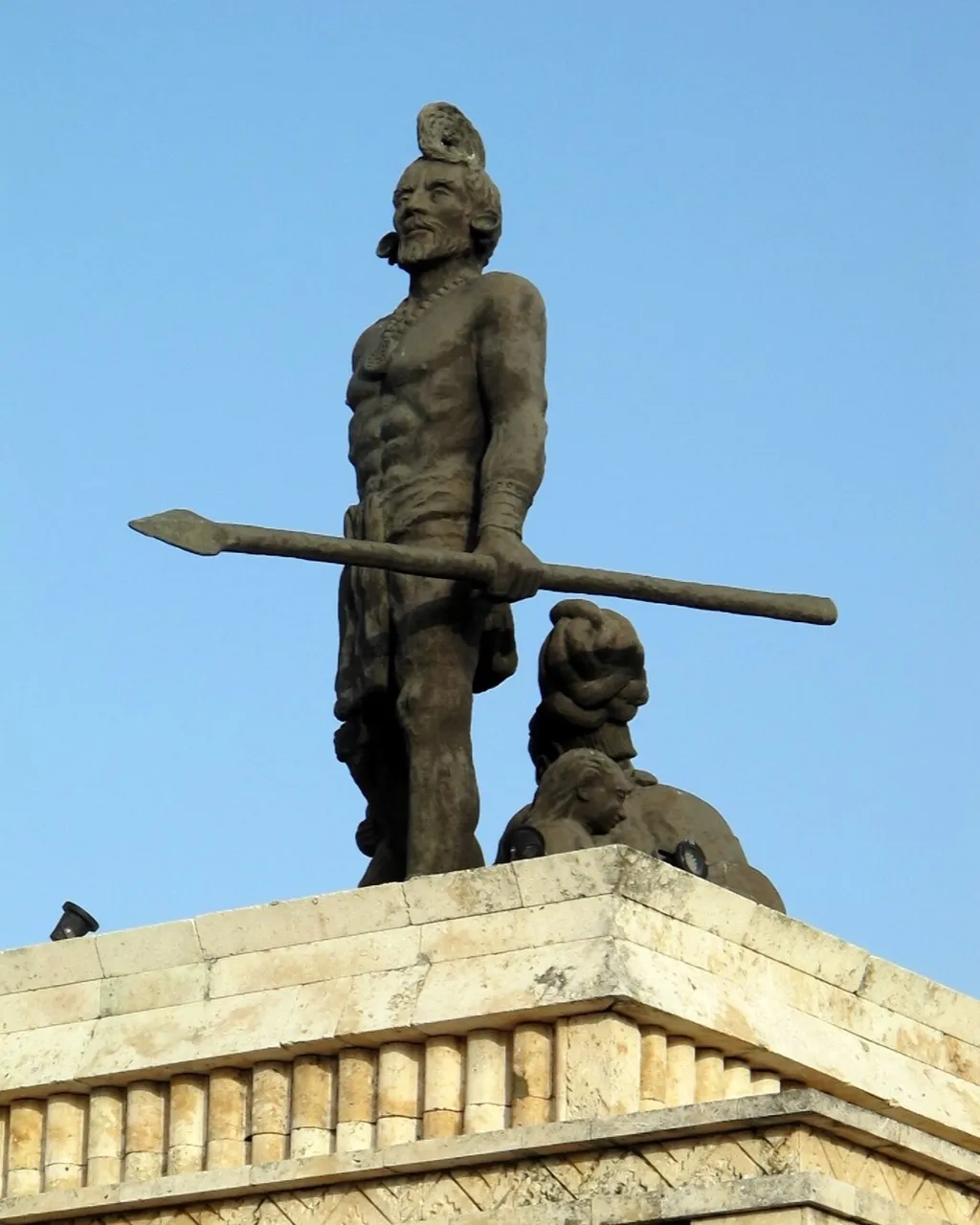 Monument to Gonzalo Guerrero in Maya dress on the Paseo de Montejo, MéridaWikimedia Commons, Yodigo, CC BY-SA 3.0 (Monumento a Gonzalo Guerrero Mérida Yucatán.jpg)
Guerrero is thought to have served Chetumal and its allies against the Spanish expeditions of 1517 and 1518. Aguilar later suggests that Guerrero planned the ambush at Cape Catoche in 1517.
Sources
- Juan de Dios González, Gonzalo Guerrero, primer mexicano por voluntad propia, Inventio 4 (2008), pp. 25 to 26.
- Robert S. Chamberlain, The Conquest and Colonization of Yucatan, 1517 to 1550 (1948), p. 15.
- Bernal Díaz del Castillo, The Conquest of New Spain, tr. J. M. Cohen (1963), pp. 60 to 65.
Prev: Tulum, Cozumel and the sea tradeNext: Hernández de Córdoba