February – April 1524
The burning of Q'umarkaj
The day after the battle of Olintepeque the army reaches Tzakahá, now Salcajá, which submits without a fight. The chaplains Juan Godínez and Juan Díaz say mass there under a makeshift roof, and the site is chosen for the first church in Guatemala, dedicated to Concepción La Conquistadora.
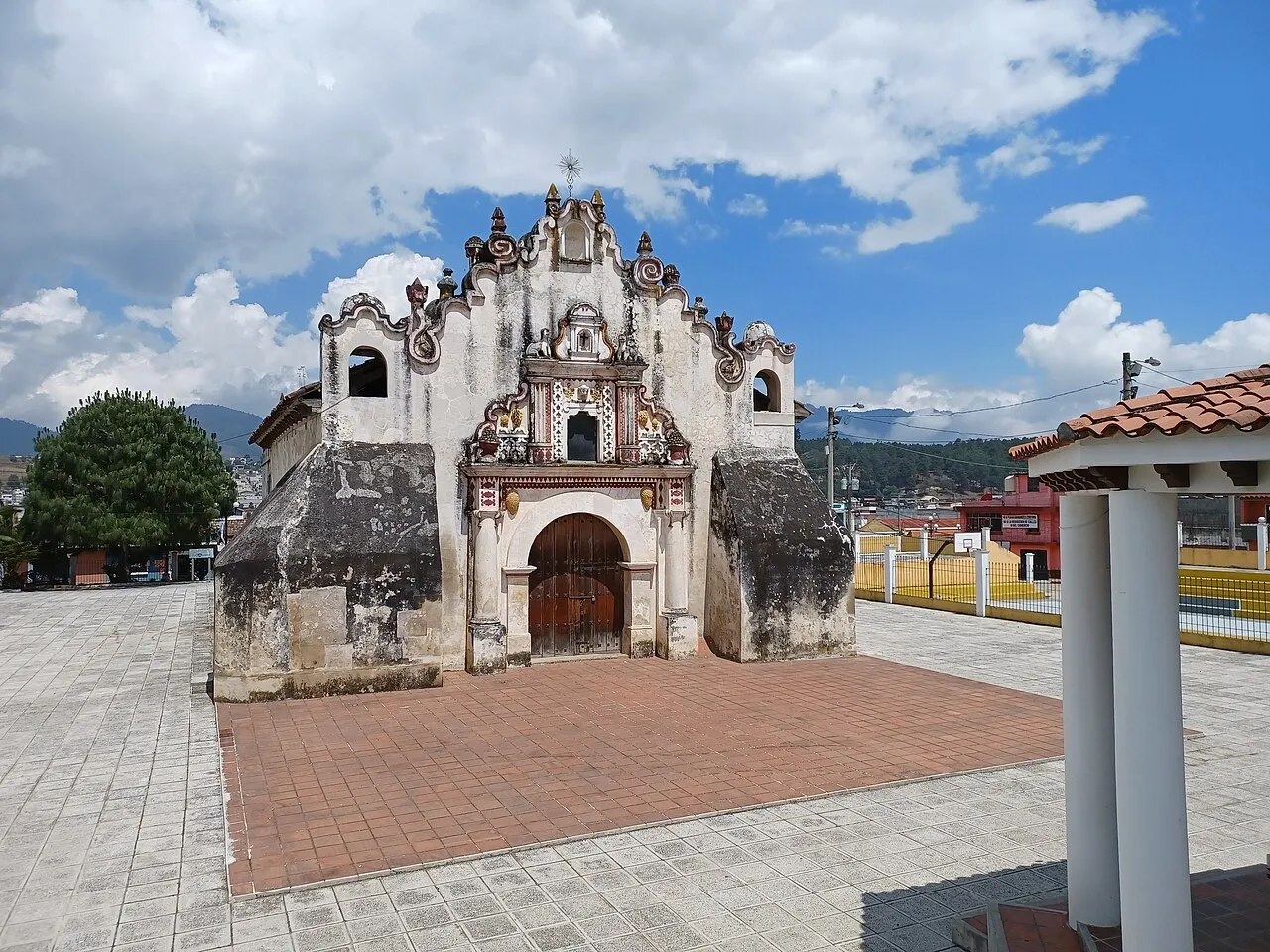 The early colonial church of La Conquistadora in SalcajáWikimedia Commons, Simon Burchell, CC BY-SA 4.0 (Ermita La Conquistadora de la Inmaculada Concepción, Salcajá 03.jpg)
In March 1524 Alvarado reaches Q'umarkaj, which his Nahuatl-speaking allies call Tecpan Utatlan. The city stands on a plateau surrounded by ravines more than 100 m deep. Alvarado fears a trap and camps on the plain outside, since his horsemen could not manoeuvre in the narrow streets. He invites the king Oxib-Keh and the king elect Beleheb-Tzy to his camp and seizes them. The K'iche' warriors attack his allies and kill a Spanish soldier, and Alvarado has the two lords burnt alive and then burns the city.
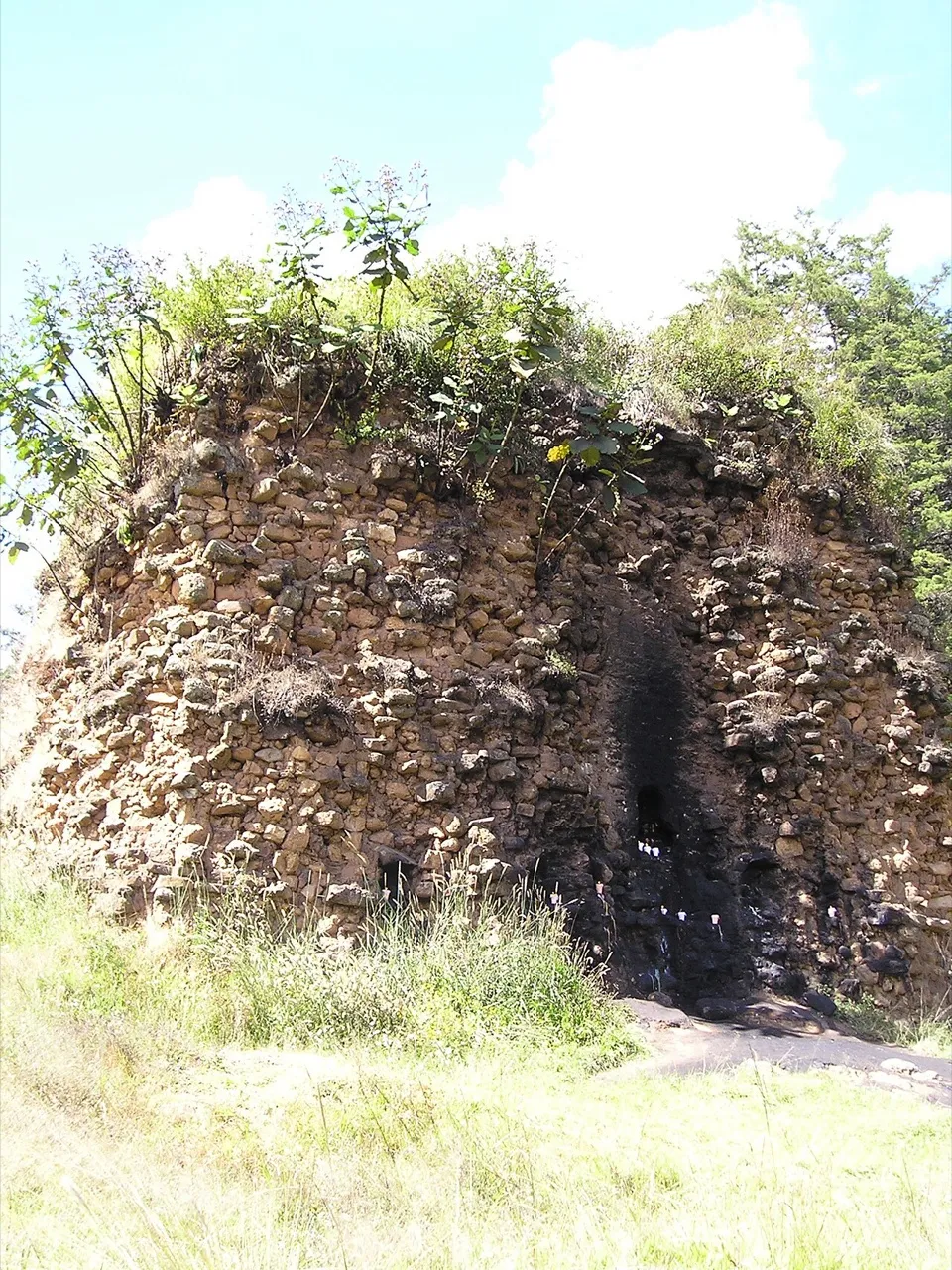 The ruin of the Temple of Tohil at Q'umarkaj, near Santa Cruz del QuichéWikimedia Commons, JoePhoto, CC BY 2.0 (Utatlan3.jpg)
The Mam king Kayb'il B'alam is received with great honour at Q'umarkaj during Alvarado’s stay, and by Lovell’s account it is he who suggests the plan to trap the Spanish in the city. From Q'umarkaj Alvarado sends to the Kaqchikel at Iximche for help against the remaining K'iche'. He writes that they send 4,000 warriors, while the Kaqchikel annals give 400. His third letter to Cortés, written at Q'umarkaj, is dated 11 April 1524.
Sources
- Robert J. Sharer and Loa P. Traxler, The Ancient Maya (6th ed. 2006), pp. 764 to 765.
- Adrián Recinos, Pedro de Alvarado: conquistador de México y Guatemala (2nd ed. 1986), pp. 68 to 75.
- Miguel Ángel de León Soto, La notable historia de Tzalcahá, Quetzaltenango (2010), pp. 22 to 24.
Prev: The battle of OlintepequeNext: The Tz'utujil of Lake Atitlán