AD 761 – c. 810
The Petexbatún wars
In AD 761 Tamarindito and other centres of the Petexbatún region rebel against their overlord at Dos Pilas. A hieroglyphic stairway at Tamarindito records the flight of the Dos Pilas king K'awiil Chan K'inich, who is not mentioned again. The royal family probably moves to Aguateca, its second capital, on a 90 m limestone bluff above Lake Petexbatún. Refugees who stay at Dos Pilas wall themselves in with stone stripped from its temples and palaces.
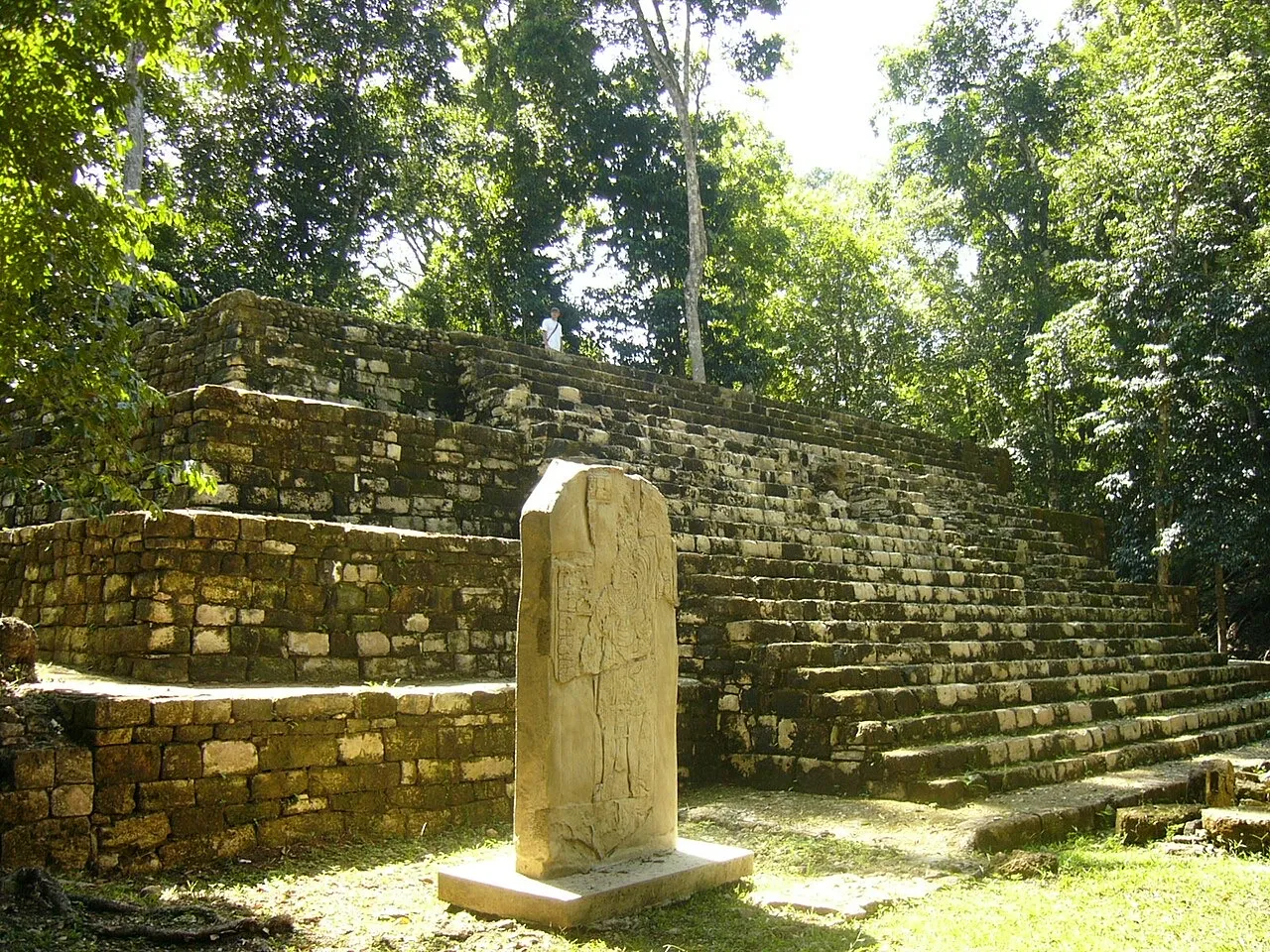 A stela in front of a temple on the main plaza of Aguateca, 2006Wikimedia Commons, Sébastian Homberger, CC BY 2.5 (Aguateca-plaza.jpg)
War spreads through the former kingdom. Aguateca surrounds itself with defensive walls more than 4.8 km long. Punta de Chimino, on a peninsula of the lake, cuts three moats across its neck, one of them 12 m deep, each with a palisade along the top. Water fills the innermost moat and turns the town into an island.
Seibal, a vassal of Dos Pilas since 735, becomes independent again when Ajaw B'ot takes the throne in 771. Upriver on the Pasión, Tajal Chan Ahk of Cancuén builds a palace of 200 rooms in 770.
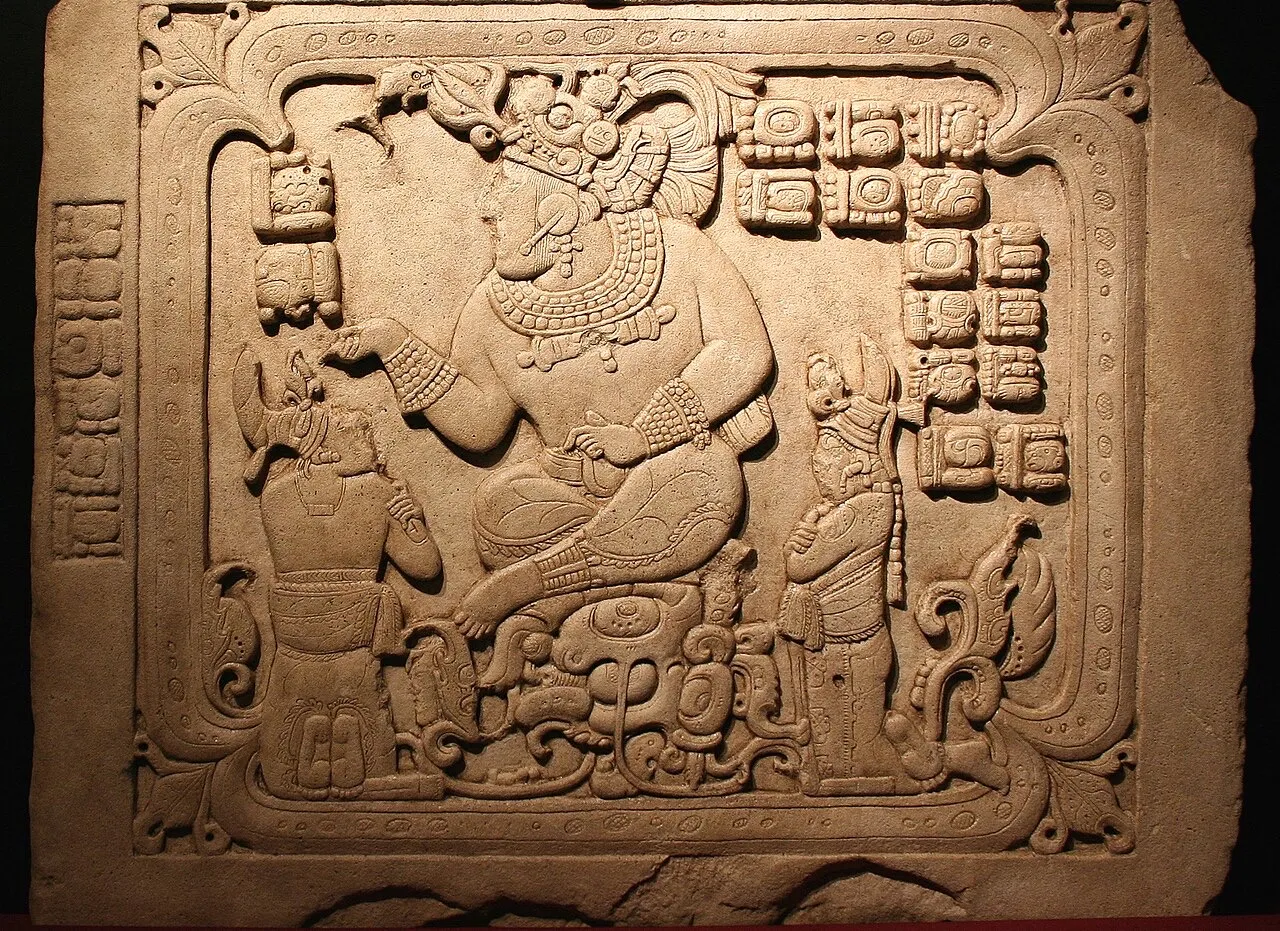 Panel 3 from Cancuén, 795: Tajal Chan Ahk on his throne between two lesser lords, National Museum of Archaeology and Ethnology, Guatemala CityWikimedia Commons, Authenticmaya, CC BY-SA 2.5 (Cancuenpanel3.jpg)
Around 800 enemies attack Aguateca in the reign of Tan Te' K'inich. The palace district burns, and its residents flee or are taken away, leaving their belongings in the rooms. At about the same time several dozen nobles of Cancuén, among them the ruler Kan Maax, are killed and thrown into a cistern. The refugee village at Dos Pilas is overrun in the early 9th century, and Punta de Chimino remains the last seat of a ruling elite in the region.
Sources
- Arthur A. Demarest, The Petexbatun Regional Archaeological Project: A Multidisciplinary Study of the Maya Collapse (2006).
- Takeshi Inomata and Ronald W. Webb, “War, destruction, and abandonment: The fall of the Classic Maya center of Aguateca, Guatemala”, in The Archaeology of Settlement Abandonment in Middle America (2003), pp. 43 to 60.
- Simon Martin and Nikolai Grube, Chronicle of the Maya Kings and Queens (2000), pp. 63 to 67.
Prev: Tikal’s last victoriesNext: The murals of Bonampak