December 1696 – 12 March 1697
Ursúa at the lake
By December 1696 the road from Campeche reaches the shore of Lake Petén Itzá, unfinished and in places hardly passable. The Itza leaders are divided: Kan Ek' has offered submission, while the Kowoj and the Chak'an Itza of the north shore oppose the Spanish. In late December the Chak'an Itza raid the Kejache mission town of Pak'ek'em and burn its church, and the garrison at Chuntuki falls back. Ursúa sends soldiers and workmen down the road with orders to build a galeota, an oared warship, and leaves Campeche himself on 23 January 1697.
He reaches the western shore of the lake on 26 February with about 235 soldiers and 120 native labourers and fortifies a camp at Ch'ich' with heavy guns. In 12 days his men assemble the galeota there: a keel of 14.4 m, 12 oars a side, room for 114 men and at least five guns. From 28 February Itza parties shoot arrows towards the camp, while others mingle with the soldiers and receive trinkets.
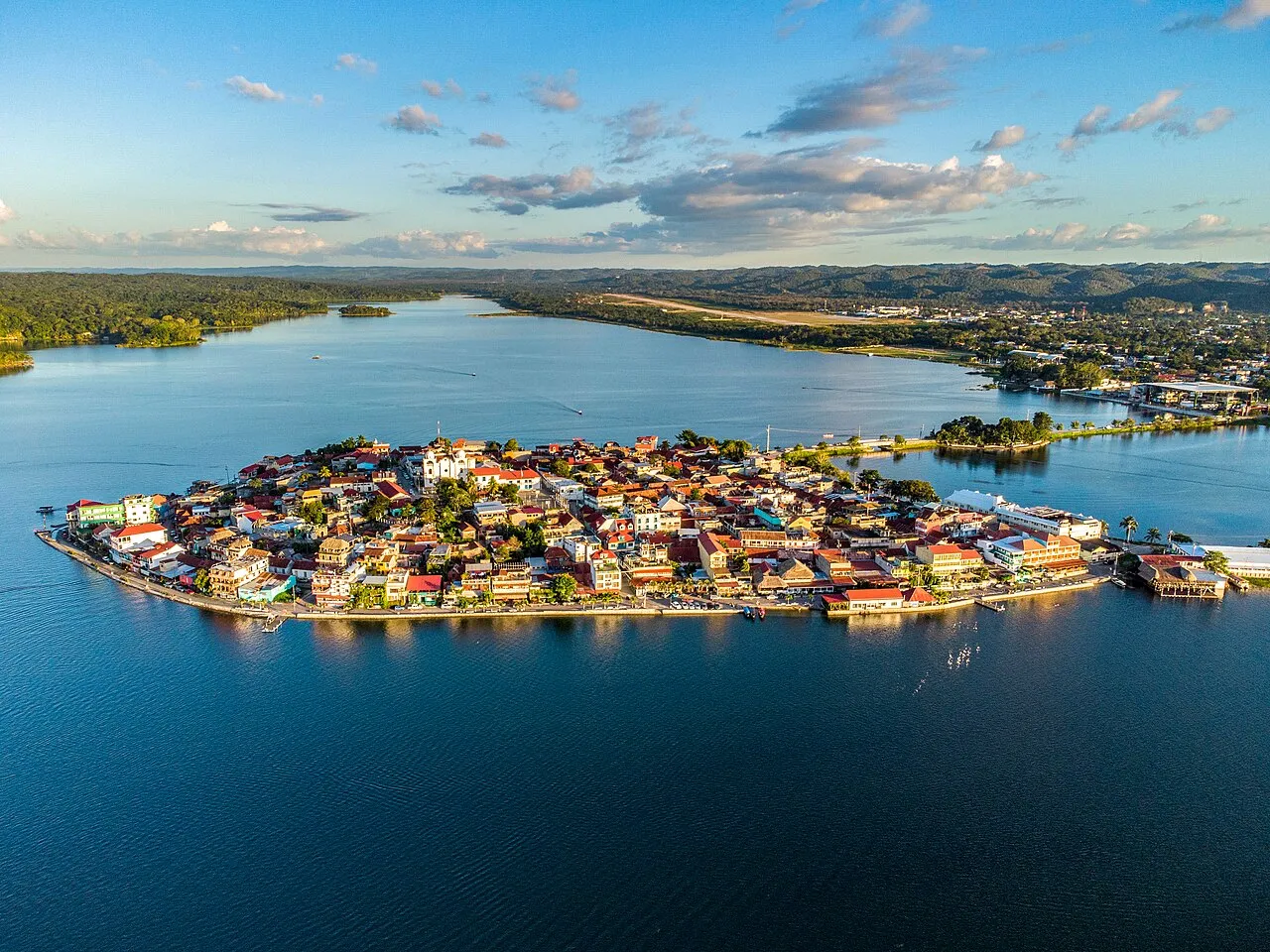 Flores, the town on the island of Nojpetén, from the air, 2019Wikimedia Commons, Juan Francisco, CC BY-SA 2.0 (Flores Island.jpg)
On 10 March AjChan and Chamach Xulu, ruler of the Yalain, come to Ch'ich'. A canoe under a white flag then brings the Itza high priest, who offers a peaceful surrender, and Ursúa invites Kan Ek' to his camp in three days. On the appointed day Kan Ek' does not come. Instead warriors gather on the shore and in canoes on the lake.
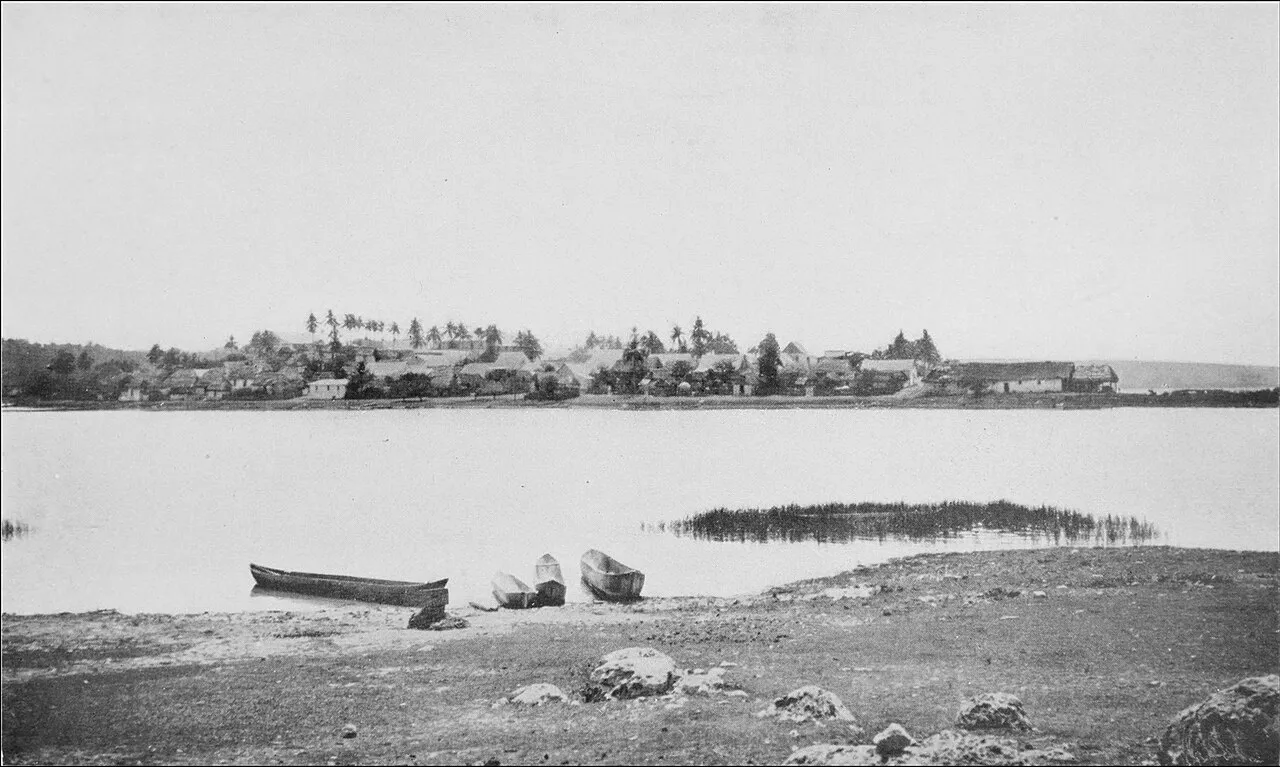 Canoes on the shore of Lake Petén Itzá facing Flores, photograph printed by Philip Ainsworth Means in 1917Wikimedia Commons, unknown author, Public domain (SCY D241 Plate III - Lake Peten and Flores, Guatemala.jpg)
Sources
- Grant D. Jones, The Conquest of the Last Maya Kingdom (1998), pp. 245 to 297.
- Robert J. Sharer and Loa P. Traxler, The Ancient Maya (6th ed. 2006), pp. 776 to 777.
- Grant D. Jones, The Kowoj in Ethnohistorical Perspective, in Prudence M. Rice and Don S. Rice, eds., The Kowoj: Identity, Migration, and Geopolitics in Late Postclassic Petén, Guatemala (2009), p. 59.
Prev: The road from YucatánNext: The galley crosses the lake