1531 – 1535
Campeche and Chichen Itza
Montejo becomes alcalde mayor of Tabasco in 1529. From there Alonso Dávila founds Salamanca de Acalan in 1530, leaves it for lack of gold and people, and crosses the land of the Kejache to Champotón, where the two Montejos join him. In 1531 Montejo moves his base to Campeche.
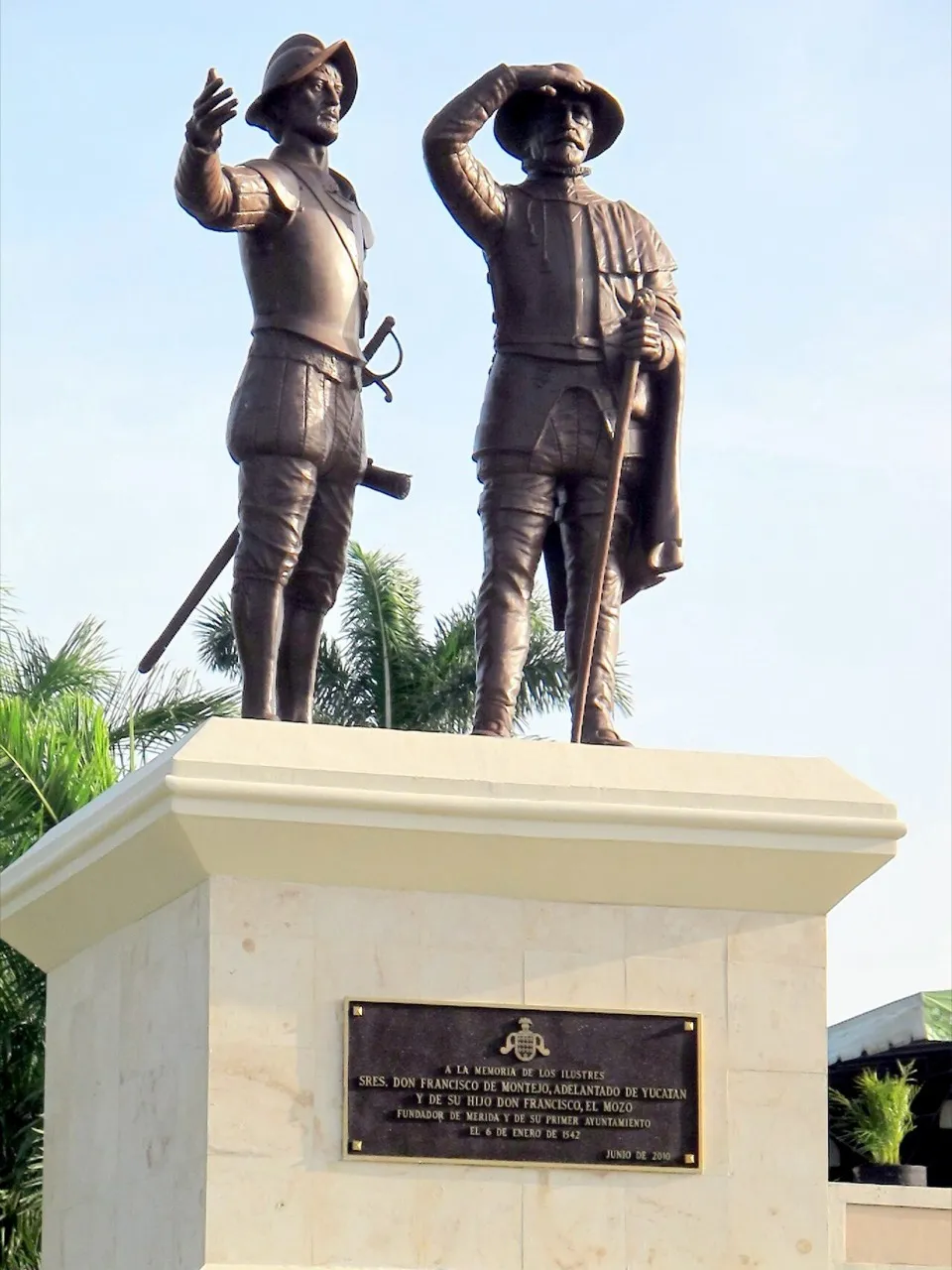 Statues of Francisco de Montejo and his son Francisco de Montejo the Younger on the Paseo de Montejo in Mérida, set up in 2010Wikimedia Commons, Yodigo, CC BY-SA 3.0 (Monumento a los Montejo.jpg)
In mid 1531 Dávila marches east with about fifty men, through Maní, where the Xiu receive him well, and through Cochuah and Uaymil, and founds Villa Real at the deserted port of Chetumal. The Maya besiege the town for months. In autumn 1532 the Spanish leave in 32 trading canoes and reach Puerto Caballos in Honduras in spring 1533.
At Campeche Montejo is nearly killed in a Maya attack before the Spanish drive it off, and Aj Canul, lord of the attackers, surrenders. Montejo the Younger then founds Ciudad Real at Chichen Itza in the Cupul province and gives each of his men two to three thousand Maya in encomienda. After six months Naabon Cupul dies in a failed attempt to kill him, and in mid 1533 the Cupul besiege the town. Montejo the Younger slips away by night to Dzilam, where Namux Chel, lord of the Chel, receives him.
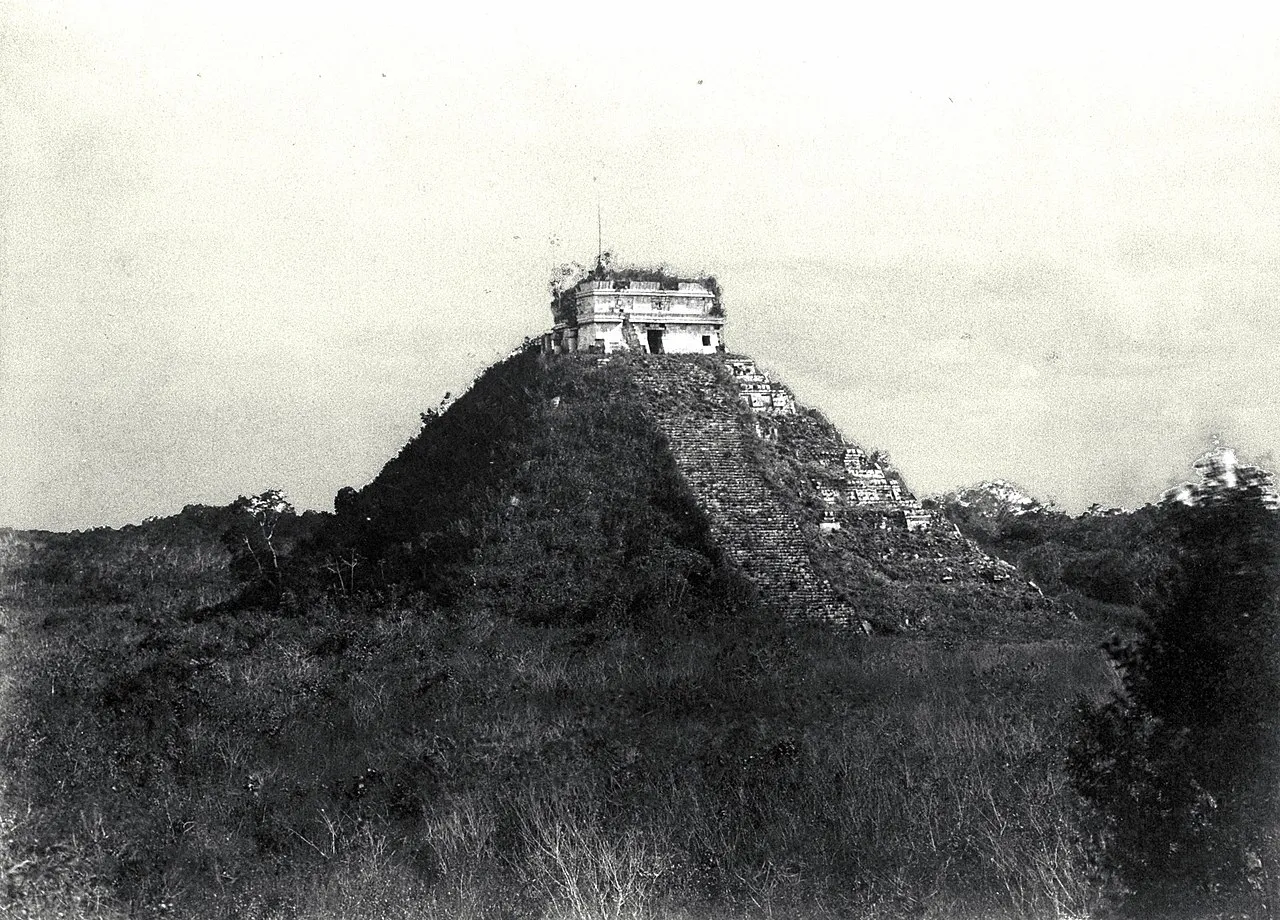 El Castillo at Chichen Itza, overgrown, photographed by Teobert Maler in 1892Wikimedia Commons, Teoberto Maler, Public domain (Castillo Maler.jpg)
In spring 1534 he rejoins his father near T'ho. The elder Montejo has met the Xiu ruler at Maní, and the Xiu stay allies of the Spanish. News of Pizarro’s plunder in Peru draws soldiers away, and late in 1534 or early in 1535 the Montejos withdraw from Campeche to Veracruz.
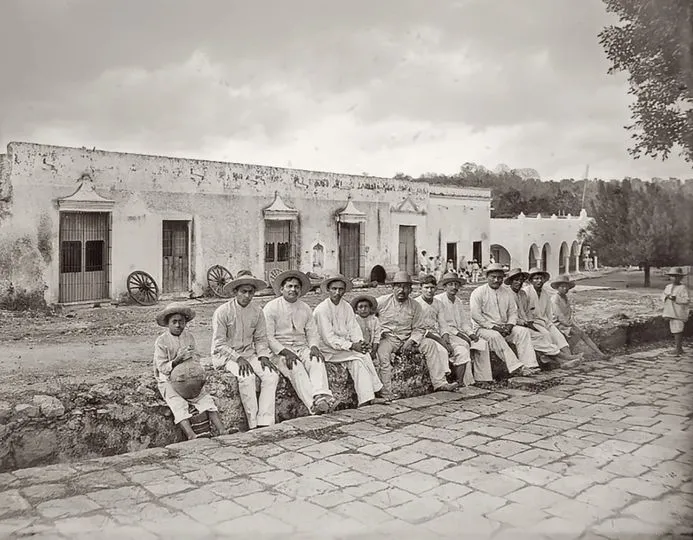 Maní, the seat of the Xiu rulers, photographed by Teobert Maler in 1890Wikimedia Commons, Teoberto Maler, Public domain (Maní, Yucatan 1890 Teoberto Maler.jpg)
Sources
- Robert J. Sharer and Loa P. Traxler, The Ancient Maya (6th ed. 2006), pp. 768 to 770.
- Robert S. Chamberlain, The Conquest and Colonization of Yucatan, 1517 – 1550 (1948), pp. 100 to 124.
- Grant D. Jones, Maya Resistance to Spanish Rule: Time and History on a Colonial Frontier (1989), pp. 30 to 39.
Prev: Montejo’s first campaignNext: Mérida on the ruins of T'ho