1527 – 1528
Montejo’s first campaign
Charles V names Francisco de Montejo, a veteran of the Grijalva and Cortés expeditions, adelantado of Yucatán on 8 December 1526. Montejo sails from Spain in June 1527 with four ships, 400 men by Sharer and Traxler’s count, 250 soldiers besides the crews by Chamberlain’s. In late September he reaches Cozumel, where the lord Aj Naum Pat receives him in peace.
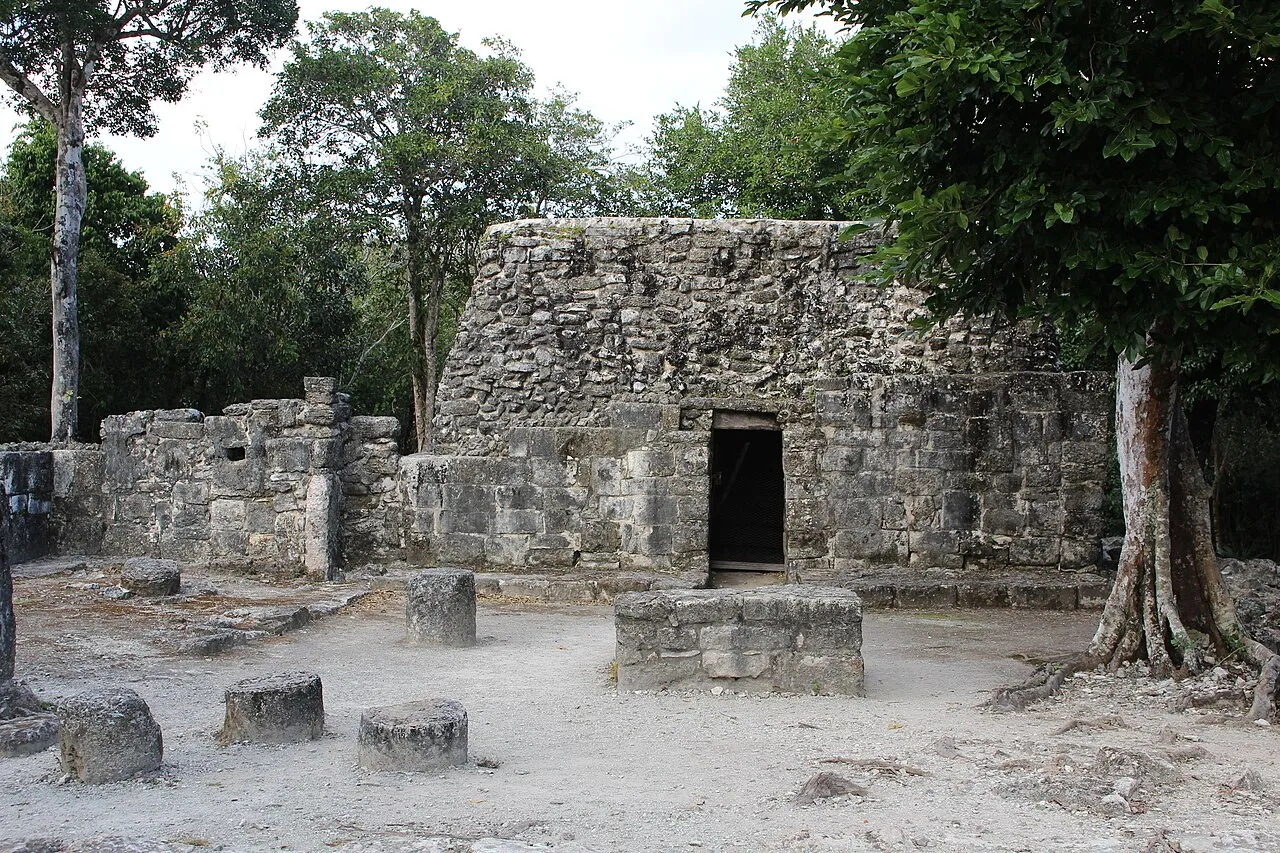 Los Murciélagos, a building at San Gervasio, the chief Maya site on CozumelWikimedia Commons, Puchku, CC BY-SA 3.0 (Los Murcielagos, San Gervasio.JPG)
On the coast of Ekab Montejo founds Salamanca de Xelha, the first Spanish town on the peninsula, and leaves 40 men there under Alonso Dávila and 20 at Pole. As food runs short he burns his ships. With 125 men he marches north through Xamanha and Belma to Conil, a town of 5,000 houses, where he halts for two months.
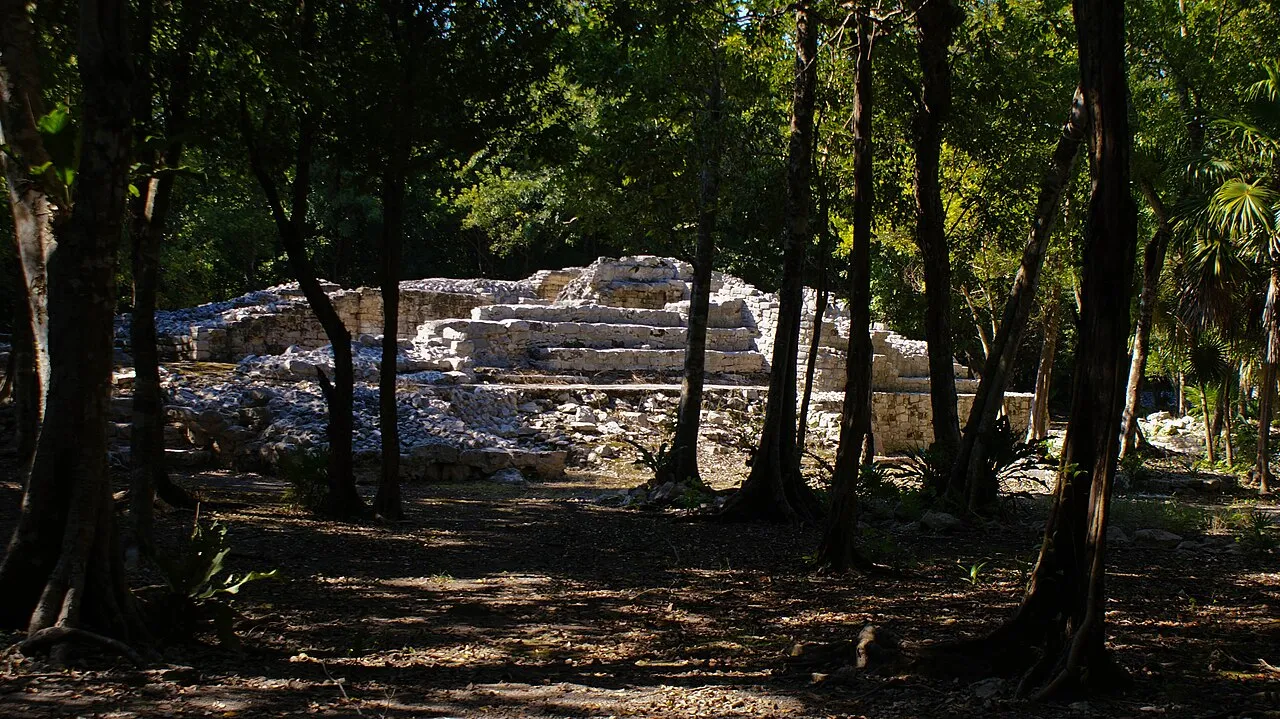 Maya ruins at Xel-Há on the east coast of the peninsulaWikimedia Commons, Guillermo Isaac Huesca Solis, CC BY-SA 3.0 (Xelha.jpg)
In spring 1528 the people of Chauaca leave their town by night, attack the Spanish the next morning and are beaten. At Aké, 16 km north of Tizimín, the Spanish kill more than 1,200 Maya in a large battle, and the neighbouring lords submit. Montejo comes back to Xelha by Sisia and Loche with 60 men. He finds 12 of the 40 at Xelha alive and the post at Pole wiped out.
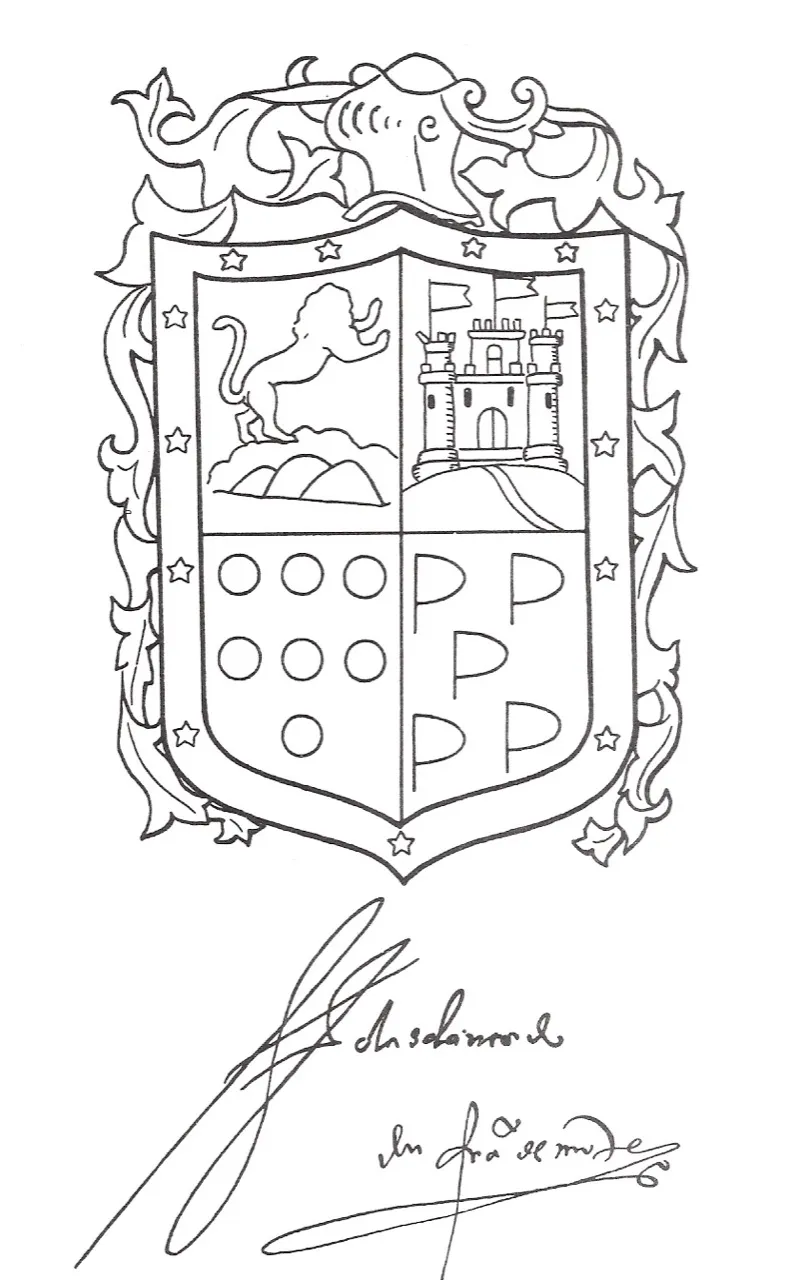 The coat of arms and signature of Francisco de Montejo, from the Nobiliario de conquistadores de Indias, Madrid, 1892Wikimedia Commons, Comvaser, CC BY-SA 4.0 (Escudo de armas de Francisco de Montejo.jpg)
A supply ship from Santo Domingo takes Montejo south to Chaktumal, capital of the Chetumal province, where the shipwrecked sailor Gonzalo Guerrero refuses to rejoin the Spanish. Montejo sails on to the Ulúa River in Honduras and back to Xamanha, where Dávila has moved the colony. Late in 1528 he leaves for New Spain.
Sources
- Robert J. Sharer and Loa P. Traxler, The Ancient Maya (6th ed. 2006), pp. 766 to 768.
- Inga Clendinnen, Ambivalent Conquests: Maya and Spaniard in Yucatan, 1517 – 1570 (2nd ed. 2003), pp. 20 to 21.
- Robert S. Chamberlain, The Conquest and Colonization of Yucatan, 1517 – 1550 (1948), pp. 31 to 38.
Prev: The relief army and the surrenderNext: Campeche and Chichen Itza