1618 – 1624
Friars at Nojpetén
In 1618 the Franciscan friars Bartolomé de Fuensalida and Juan de Orbita set out from Mérida to convert the Itza, with some Christian Maya. The alcalde of Bacalar escorts them upriver as far as Tipuj. After a six-month journey the Kan Ek' of the time receives them at Nojpetén and attends their masses, but he will not give up his religion: by Itza prophecy, he says, the time has not yet come. Orbita smashes a statue of Cortés’s horse, and Fuensalida calms the crowd with a sermon.
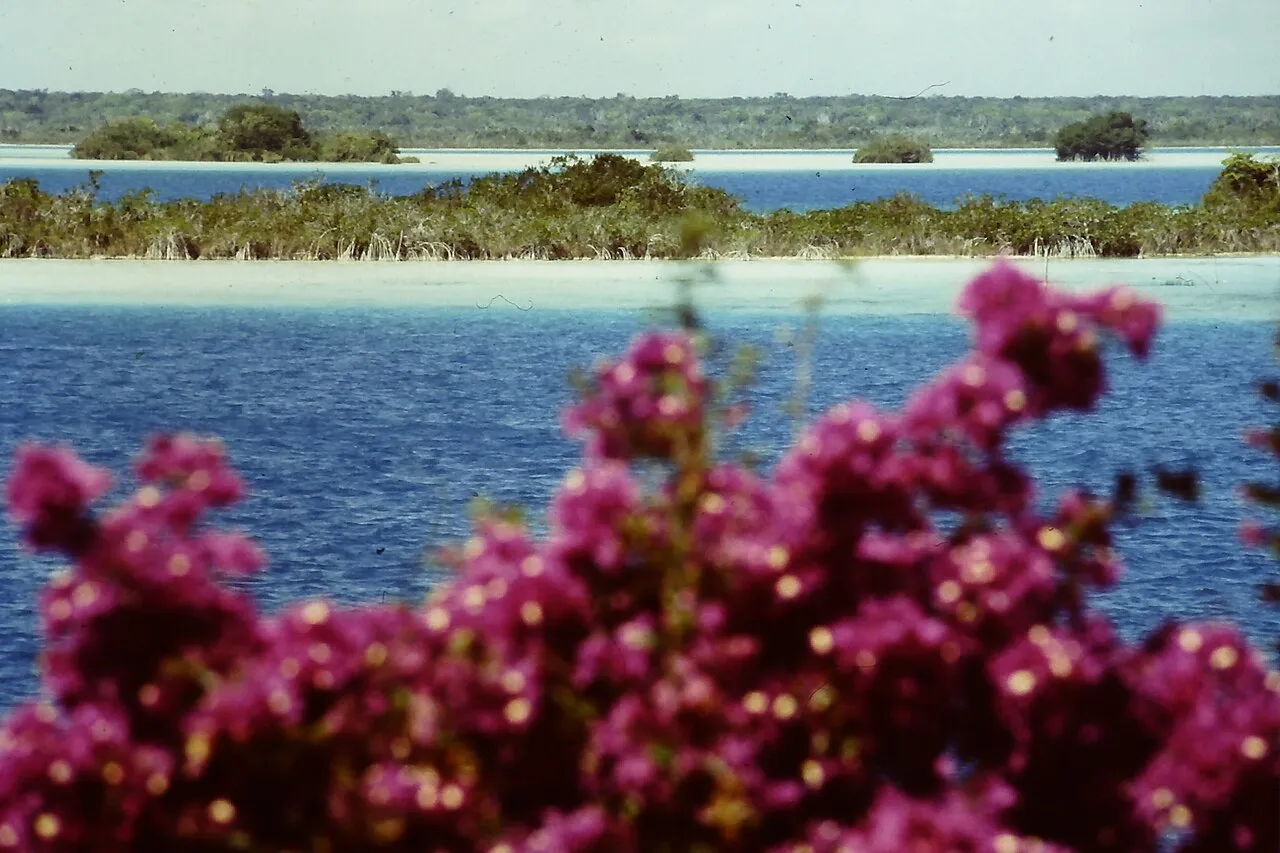 Lake Bacalar, beside the Spanish town of Salamanca de Bacalar in southern Quintana RooWikimedia Commons, Wasquewhat, CC BY-SA 3.0 (Laguna de Bacalar.JPG)
The friars return in October 1619 and stay 18 days. The Itza priests turn the king’s wife against them, warriors surround their lodgings, and they are put into a canoe without food or water. Orbita resists and is knocked unconscious. Both reach Mérida alive.
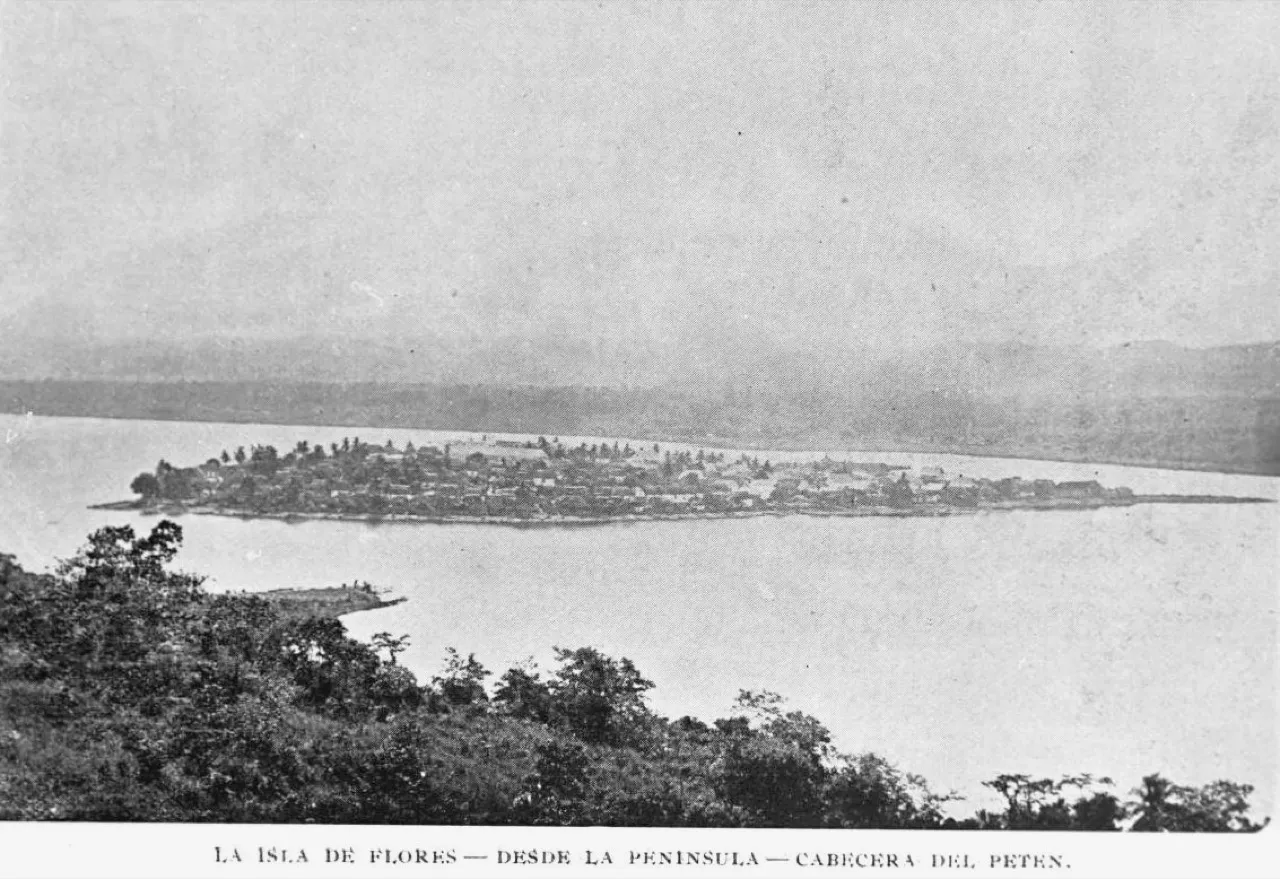 The island of Flores, once Nojpetén, seen from the peninsula to its north, photograph by Claudio Urrutia, 1897Wikimedia Commons, Claudio Urrutia, Public domain (Flores1897c.jpg)
In March 1622 the governor of Yucatán sends Captain Francisco de Mirones against the Itza with 20 Spanish soldiers and 80 Maya. The Franciscan Diego Delgado, who thinks the soldiers cruel to the Maya, goes ahead with 80 Christian Maya from Tipuj and an escort of 13 soldiers. The Itza receive them at Nojpetén, then seize them and sacrifice the soldiers and Delgado.
On 27 January 1624 an Itza war party under AjK'in P'ol surprises Mirones and his men unarmed in the church at Sakalum and kills them. Fernando Kamal, the Maya governor of Oxkutzcab, captures AjK'in P'ol with 150 Maya archers, and the prisoners are executed. No Spaniard tries to reach the Itza again until 1695.
Sources
- Robert J. Sharer and Loa P. Traxler, The Ancient Maya (6th ed. 2006), pp. 773 to 774.
- Grant D. Jones, The Conquest of the Last Maya Kingdom (1998), pp. 42 to 49.
- Philip Ainsworth Means, History of the Spanish Conquest of Yucatan and of the Itzas (1917), pp. 61 to 81.
Prev: The Itza kingdom and CortésNext: The road from Yucatán