c. 1220 – 1441
Mayapan
Mayapan is the political capital of the Maya of northern Yucatán from the 1220s to the 1440s. It lies about 40 km southeast of present-day Mérida. A stone wall 9.1 km long, with twelve gates, encloses 4.2 km² and more than 4,000 structures, most of them houses. The city and its outskirts hold 15,000 to 17,000 people. Lanes wind between walled house lots grouped around some 40 cenotes.
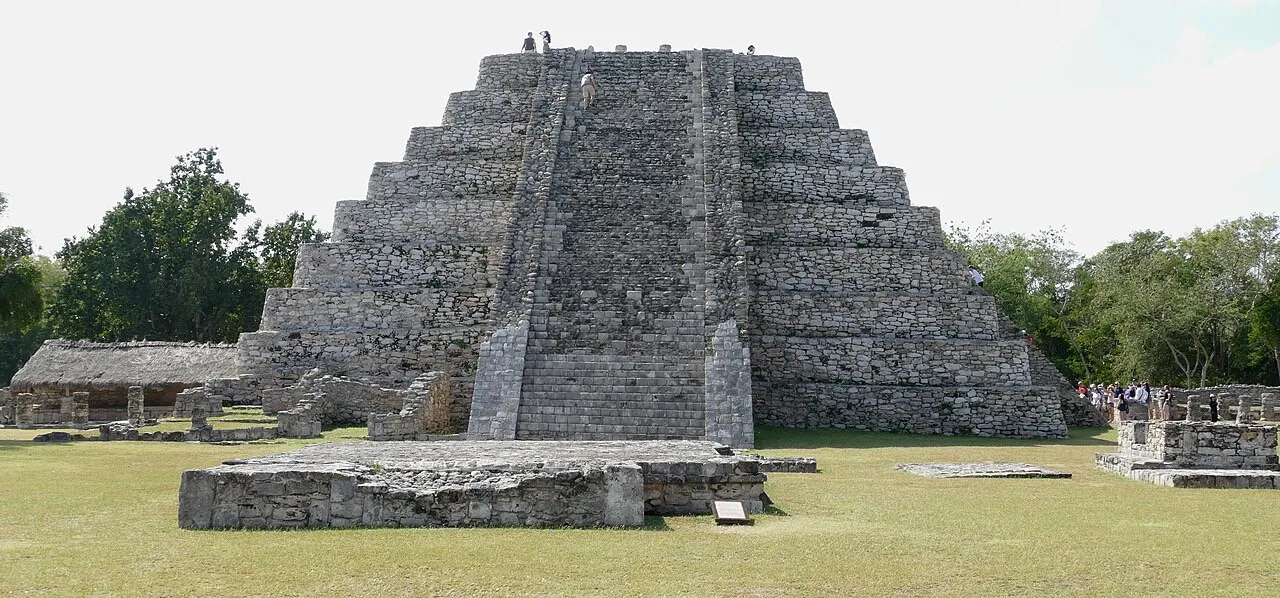 The Temple of Kukulcan at Mayapan, 2020Wikimedia Commons, Bernard Dupont, CC BY-SA 2.0 (The Temple of Kukulcan, Mayapan Yucatan, 2020.jpg)
In the centre the Temple of Kukulcan, a pyramid of nine terraces with four stairways, copies the Castillo of Chichen Itza on a smaller scale. Round temples, colonnaded halls and shrines stand around it. Its murals share many motifs with the art of central Mexico.
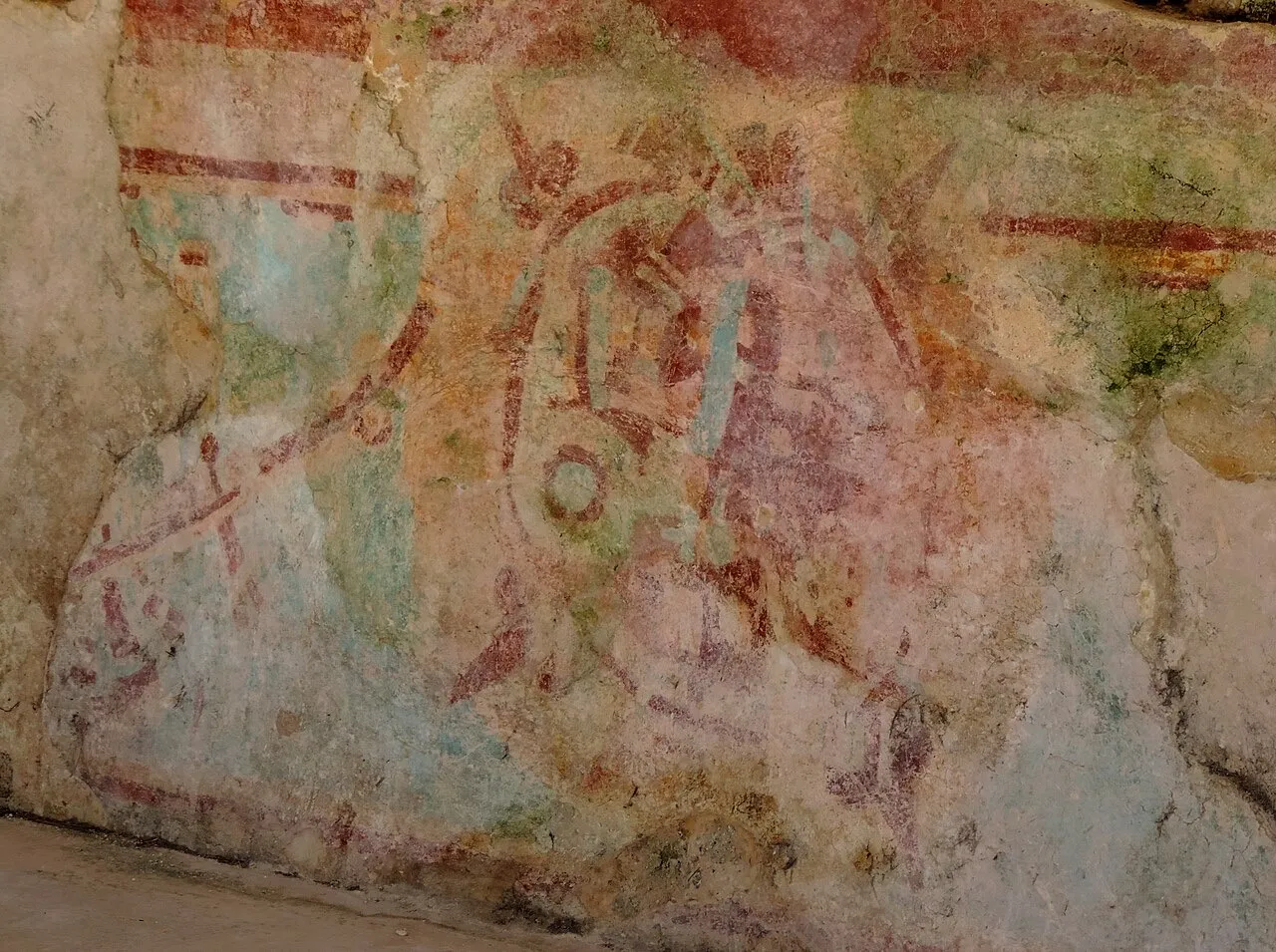 Remains of a painted mural at the foot of the Temple of Kukulcan, Mayapan, 2022Wikimedia Commons, Globetrotteur17, CC BY-SA 2.0 (Mayapan Yucatán 2022-03 Mural.jpg)
The chronicles written after the conquest give several accounts of the city’s rise. By Diego de Landa’s account the lords of Yucatán found Mayapan after the fall of Chichen Itza, divide the towns among them and choose the head of the Cocom family as their leader. The noble families of the provinces keep members at Mayapan, and mercenaries from Tabasco keep order. Other accounts make the Xiu, who trace their line to Uxmal, the first rulers, until the Cocom and their Canul mercenaries take control by 1300. A council governs the league, led by the jalach winik and the high priest.
Mayapan trades cotton, salt and honey for obsidian, metal and cacao. All its obsidian comes from El Chayal in highland Guatemala. Censers and temples like its own appear at Zacpeten and Topoxte in the Petén lakes.
Sources
- Susan Milbrath and Carlos Peraza Lope, Revisiting Mayapan: Mexico’s Last Maya Capital, Ancient Mesoamerica 14 (2003), pp. 1 to 47.
- H. E. D. Pollock, Ralph L. Roys, Tatiana Proskouriakoff and A. Ledyard Smith, Mayapan, Yucatan, Mexico (1962).
- Diego de Landa, Relación de las cosas de Yucatán (c. 1566).
Prev: Chichen ItzaNext: The K'iche' kingdom