c. 2000 – 1000 BC
The Maya area
The Maya area takes in southeastern Mexico, Guatemala, Belize and the western parts of Honduras and El Salvador, about a third of Mesoamerica. In the west it ends near the Isthmus of Tehuantepec, in the southeast along a line from the Lempa River to the Ulúa.
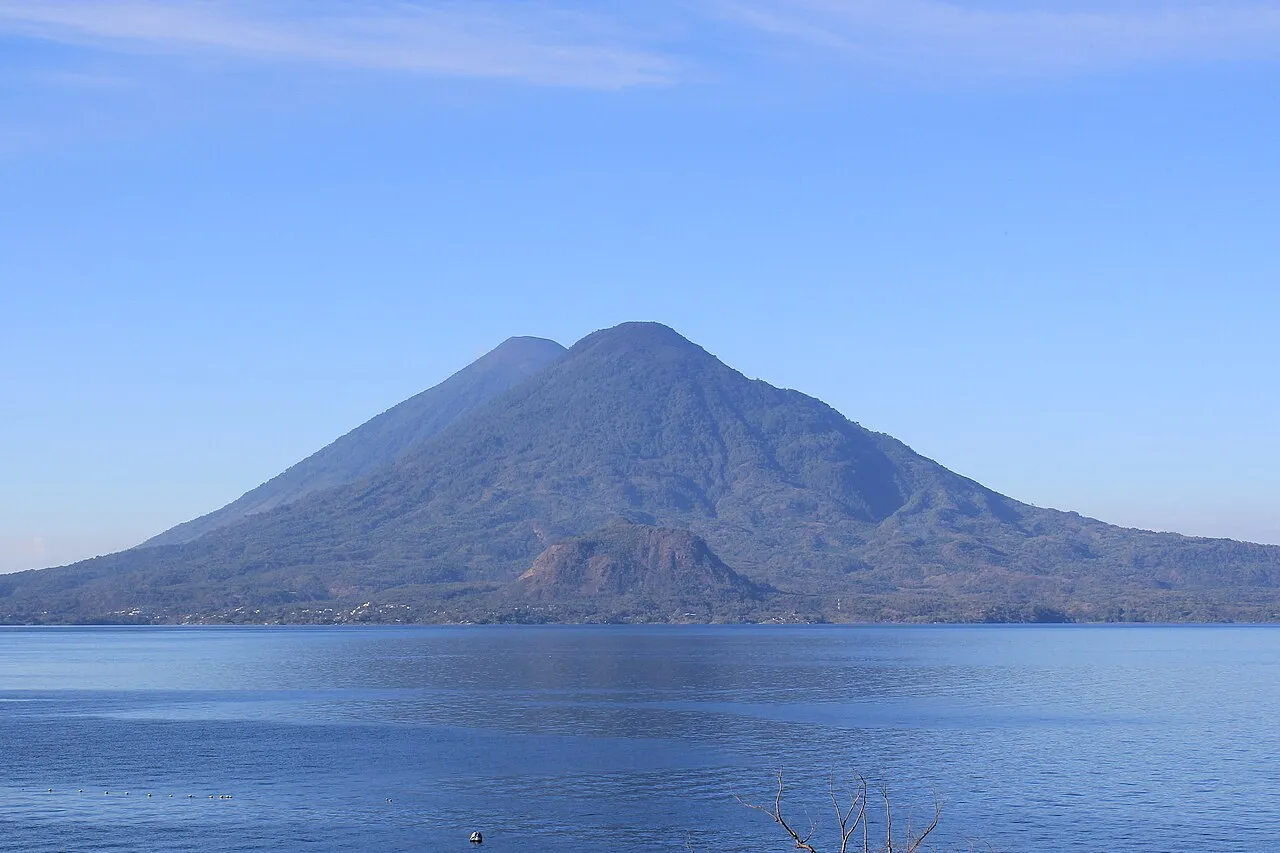 Lake Atitlán and the volcanoes Tolimán and Atitlán in the highlands of Guatemala, 2014Wikimedia Commons, Arian Zwegers, CC BY 2.0 (Lake Atitlan, Volcan Tolimán and Volcan Atitlán.jpg)
The area has three parts. The highlands are a band of volcanoes, ranges and valleys running east from Chiapas through Guatemala, and Tajumulco, at 4,220 m, is the highest peak. A narrow, fertile plain runs along the Pacific coast. North of the highlands lie the lowlands, a limestone plain that covers the whole Yucatán Peninsula. The southern lowlands are forest, drained by the Usumacinta and its tributaries and by the lower Motagua. The northern lowlands are drier and covered in scrub, and much of their water comes from cenotes, sinkholes in the limestone.
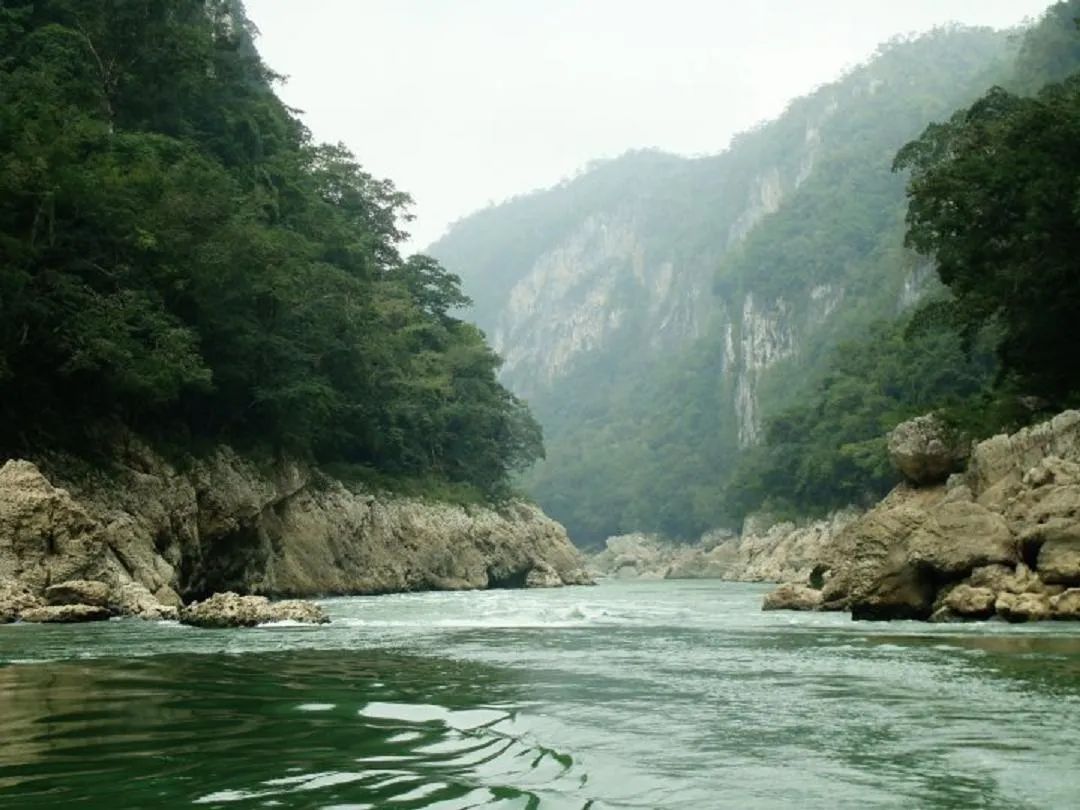 The canyon of the Usumacinta near Tenosique, Tabasco, 2012Wikimedia Commons, Alfonsobouchot, CC BY-SA 3.0 (Cañón del Usumacinta.jpg)
The Mayan languages go back to one language, Proto-Mayan, probably spoken in the Cuchumatanes highlands of Guatemala. By the classification of Lyle Campbell and Terrence Kaufman, the first split comes around 2200 BC, when Huastecan speakers move northwest along the Gulf coast. About 30 Mayan languages are spoken today.
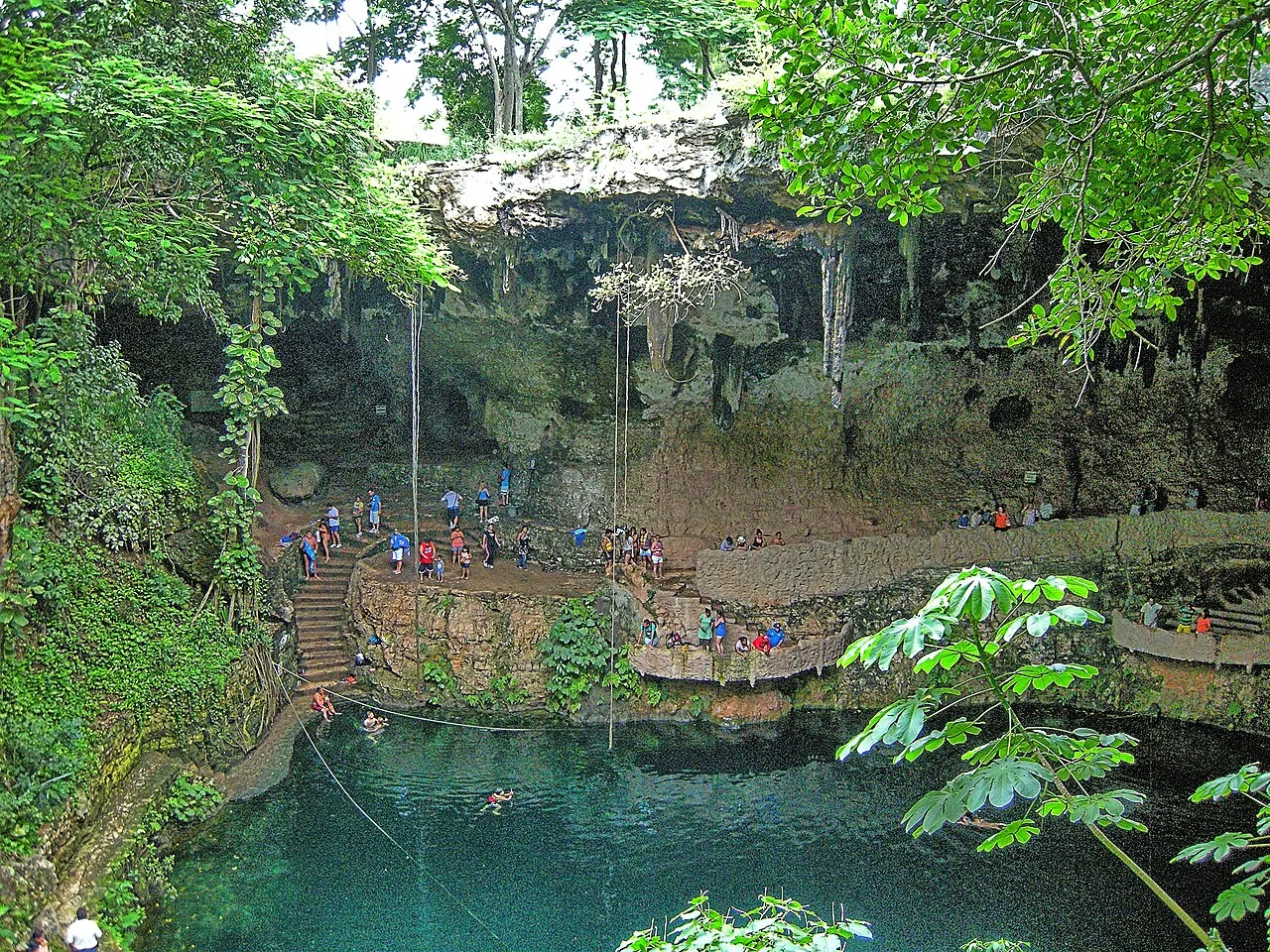 Cenote Zací at Valladolid, Yucatán, a sinkhole open to the water table in the limestone of the northern lowlands, 2012Wikimedia Commons, Kirt Edblom, CC BY-SA 2.0 (Cenote Zaci, Valladolid de Yucatan, Julio 2012 04.jpg)
Farmers are at work in the lowlands by about 3000 BC. Around 1800 BC villages on the Pacific coast of Soconusco grow maize, beans, squash and chili peppers. At Cuello in northern Belize, a village from about 1200 BC, maize makes up less than a third of the diet. Deer supply over half the meat, followed by freshwater turtles and dogs.
Sources
- Robert J. Sharer and Loa P. Traxler, The Ancient Maya (6th ed. 2006), pp. 23 to 52.
- Lyle Campbell, American Indian Languages: The Historical Linguistics of Native America (1997), p. 165.
- Lynn V. Foster, Handbook to Life in the Ancient Maya World (2002), pp. 274, 310 to 312.
Next: The first villages and plazas