1562
Landa and the auto-da-fé of Maní
Diego de Landa, a Franciscan friar from Cifuentes in Spain, arrives in Yucatán in 1549 and works from the mission of San Antonio at Izamal. On 13 September 1561 he becomes provincial, the head of the Franciscans in Yucatán. With no bishop yet in the province, the office gives him the powers of an inquisitor.
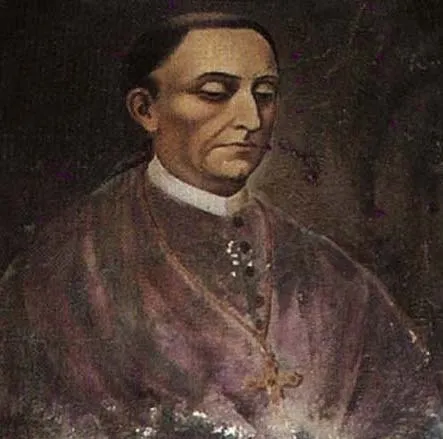 A portrait of Diego de Landa as bishop of Yucatán, by an unknown painterWikimedia Commons, Not recorded, Public domain (Diego de Landa.jpg)
In 1562 Landa learns that baptised Maya in the province of Maní still worship their old images, and he hears reports of human sacrifice. Scores of Maya nobles are jailed, and many nobles and commoners are questioned under hoisting, hung by their bound hands, sometimes with stones tied to the ankles. The lords of Maní, Tekax, Oxkutzcab and Mama are among those punished.
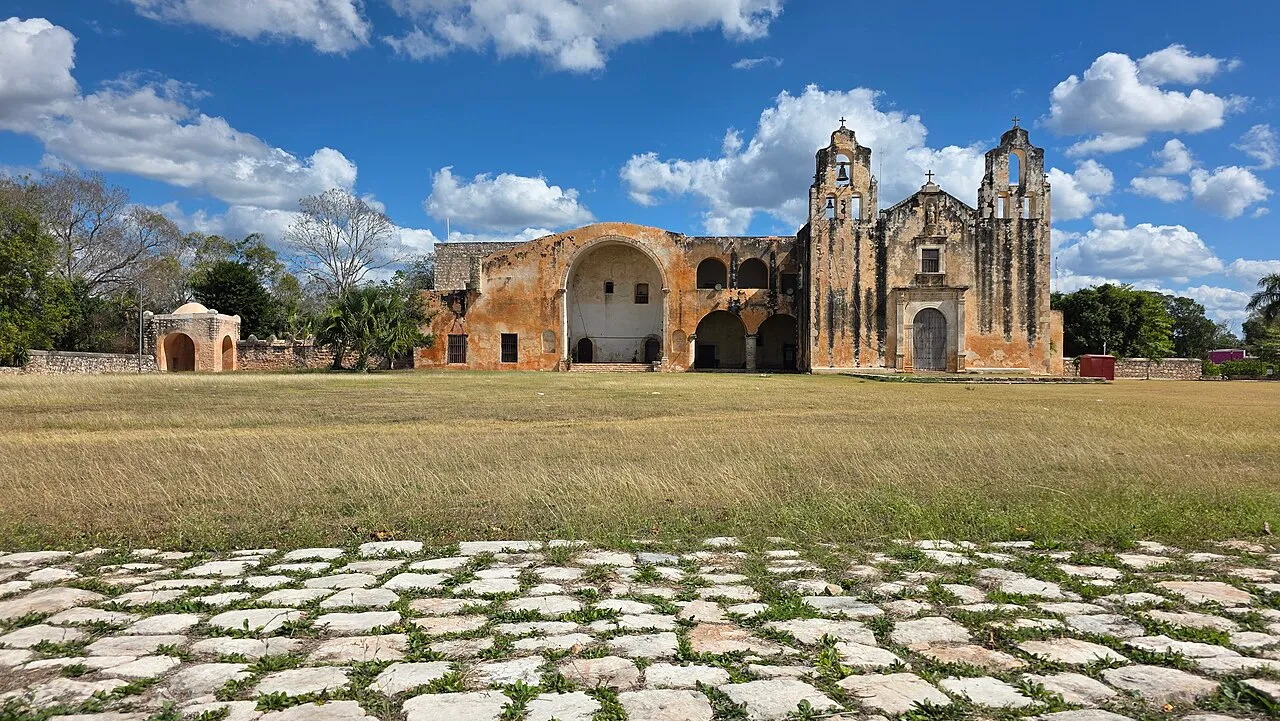 The Franciscan convent of San Miguel Arcángel at Maní, where Landa held the auto-da-fé of 1562Wikimedia Commons, Miguelleugim, CC BY 4.0 (Ex Convento de San Miguel Arcángel (Maní, Yuc.).jpg)
On 12 July 1562 Landa holds an auto-da-fé at Maní. Maya books, 27 by his own count, and about 5,000 images are burned, with altars and carved stones. Of the books Landa writes: “we burned them all, which they regretted to an amazing degree”. Three pre-Columbian Maya books and fragments of a fourth survive.
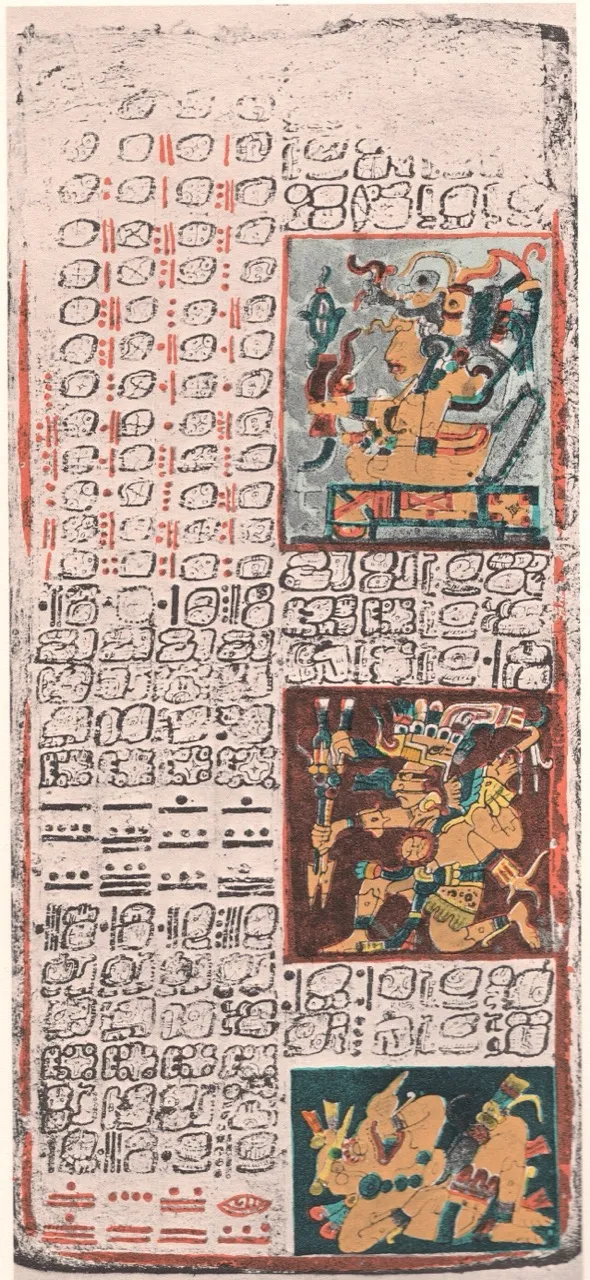 A page from the Venus table of the Dresden Codex, one of the surviving Maya books, Saxon State and University Library, DresdenWikimedia Commons, Not recorded, Public domain (Dresden codex, page 2.jpg)
Bishop Francisco del Toral arrives at Mérida on 14 August 1562, and Spanish settlers complain of the tortures to Philip II. Toral sends Landa to Spain in 1563 to stand trial, and he is cleared in 1569. In Spain, about 1566, Landa writes the Relación de las cosas de Yucatán, the main early account of Maya religion, language and writing. He returns as bishop of Yucatán in 1572 and dies in 1579.
Sources
- Inga Clendinnen, Ambivalent Conquests: Maya and Spaniard in Yucatan, 1517 – 1570 (2nd ed. 2003), pp. 67 to 70.
- David E. Timmer, Providence and Perdition: Fray Diego de Landa Justifies His Inquisition against the Yucatecan Maya, Church History 66 (1997), pp. 477 to 483.
- Diego de Landa, Relación de las cosas de Yucatán (c. 1566), section 41.
Prev: The great Maya revoltNext: The Itza kingdom and Cortés