AD 537 – 553
The Kaanul kingdom
The Kaanul dynasty rules from Dzibanche, in the south of present-day Quintana Roo. The city’s ancient name, Kaanu'l, means "place of snakes", and its kings take the title k'uhul Kaanu'l ajaw, "holy lord of Kaanu'l", with a snake head as their emblem glyph. The earliest dated use of this glyph is on a hieroglyphic stairway at Dzibanche from AD 495, which shows bound captives with the name of the king Yuknoom Ch'een I. A text dated 529 at El Resbalón shows that city under Kaanul rule.
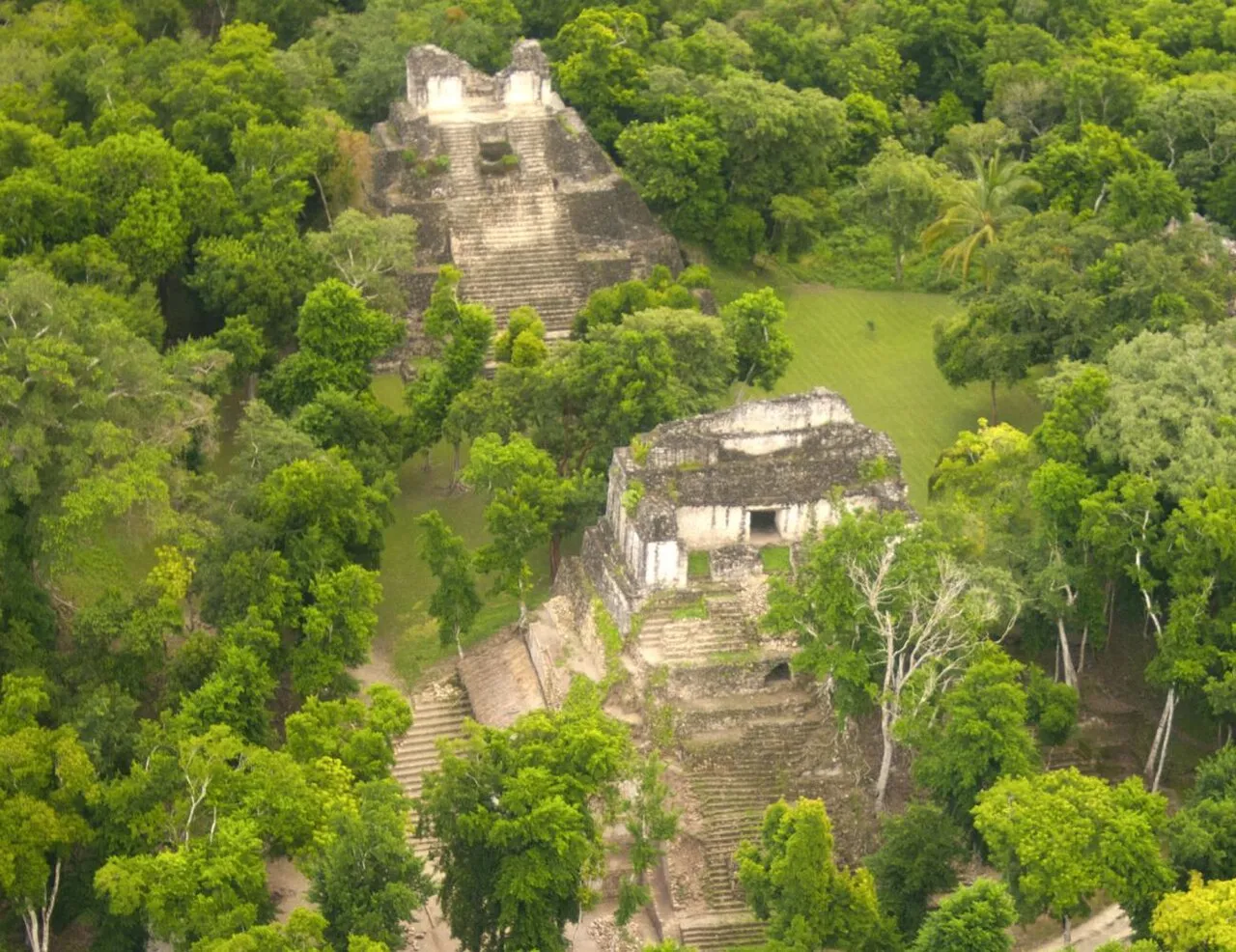 The Temple of the Owl and the Temple of the Cormorants at Dzibanche, seen from the airWikimedia Commons, Lugares INAH, CC BY-SA 4.0 (Dzibanche Maya temples.jpg)
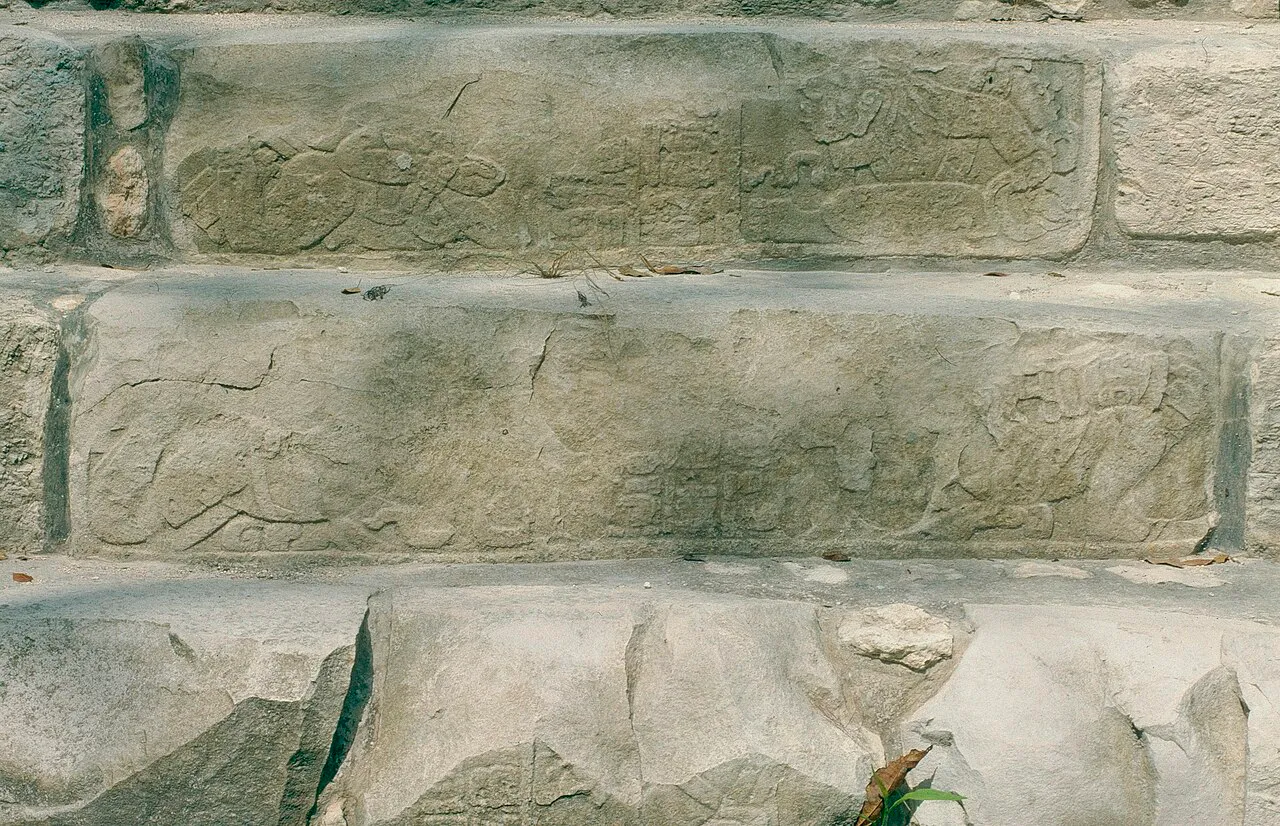 Bound captives with their names on the hieroglyphic stairway of the Building of the Captives at DzibancheWikimedia Commons, HJPD, CC BY 3.0 (Dzibanche Cautivos1.jpg)
In the 6th century the Kaanul kings build a network of vassals and allies around Tikal. In 537 Yaxchilan, on the Usumacinta, captures a vassal of the Kaanul king Tuun K'ab Hix. In 546 Tuun K'ab Hix oversees the enthronement of Aj Wosal as king of Naranjo, 42 km east of Tikal, and takes the city out of Tikal’s alliance.
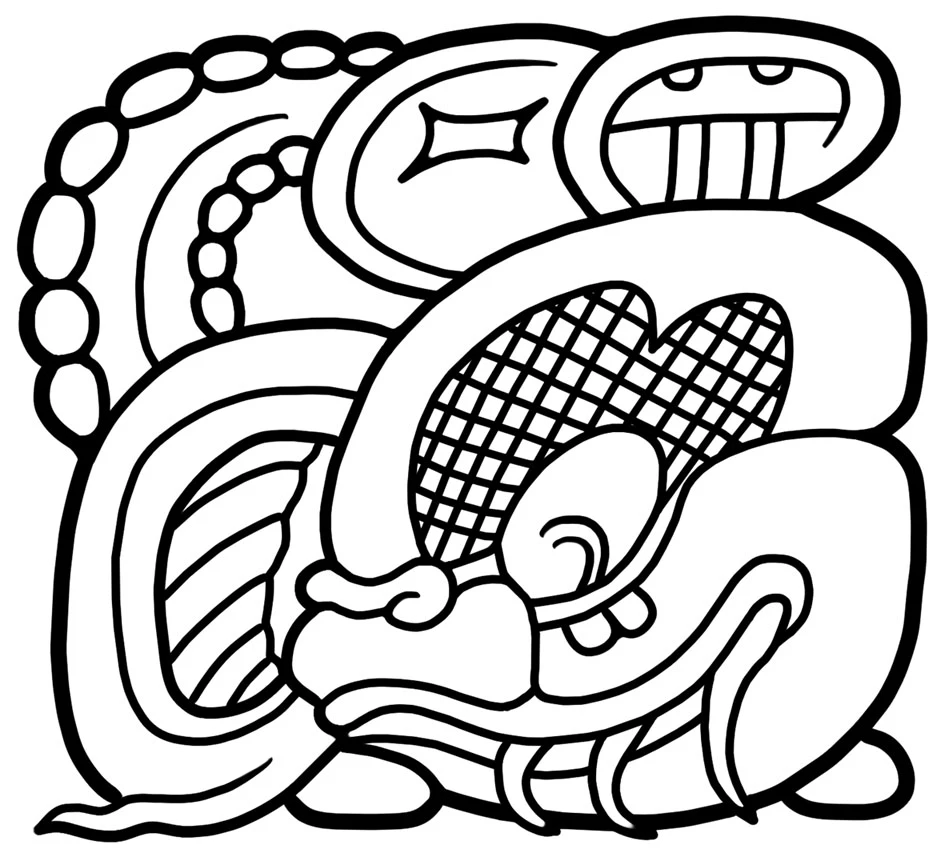 The snake head emblem glyph of the Kaanul kings, drawing by Harri KettunenWikimedia Commons, Harri Kettunen, CC BY-SA 4.0 (The Emblem Glyph of the Kanul dynasty at Calakmul.png)
At Tikal Wak Chan K'awiil, known as Double Bird, takes the throne on 27 December 537, probably after a time in exile. In 553 he oversees the accession of Yajaw Te' K'inich II at Caracol, 76 km southeast of Tikal, as Caracol Altar 21 records. Caracol has been a client of Tikal since the Early Classic. He succeeds his father K'an I, king from 531.
Sources
- Simon Martin and Nikolai Grube, Chronicle of the Maya Kings and Queens (2000), pp. 103 to 104.
- Simon Martin, Caracol Altar 21 Revisited: More Data on Double Bird and Tikal’s Wars of the Mid-Sixth Century, PARI Journal 6 (2005).
- Francisco Estrada-Belli, The First Maya Civilization: Ritual and Power Before the Classic Period (2011), p. 16.
Prev: Copán and QuiriguáNext: Caracol defeats Tikal