1525
The Itza kingdom and Cortés
The Itza kingdom has its capital at Nojpetén, an island city in Lake Petén Itzá in northern Guatemala, where Flores stands today. Its kings bear the title Aj Kan Ek'. The Itza speak a form of Yucatec Maya. Colonial documents say they came south from Yucatán and founded Nojpetén in the mid-15th century, after the fall of Mayapan.
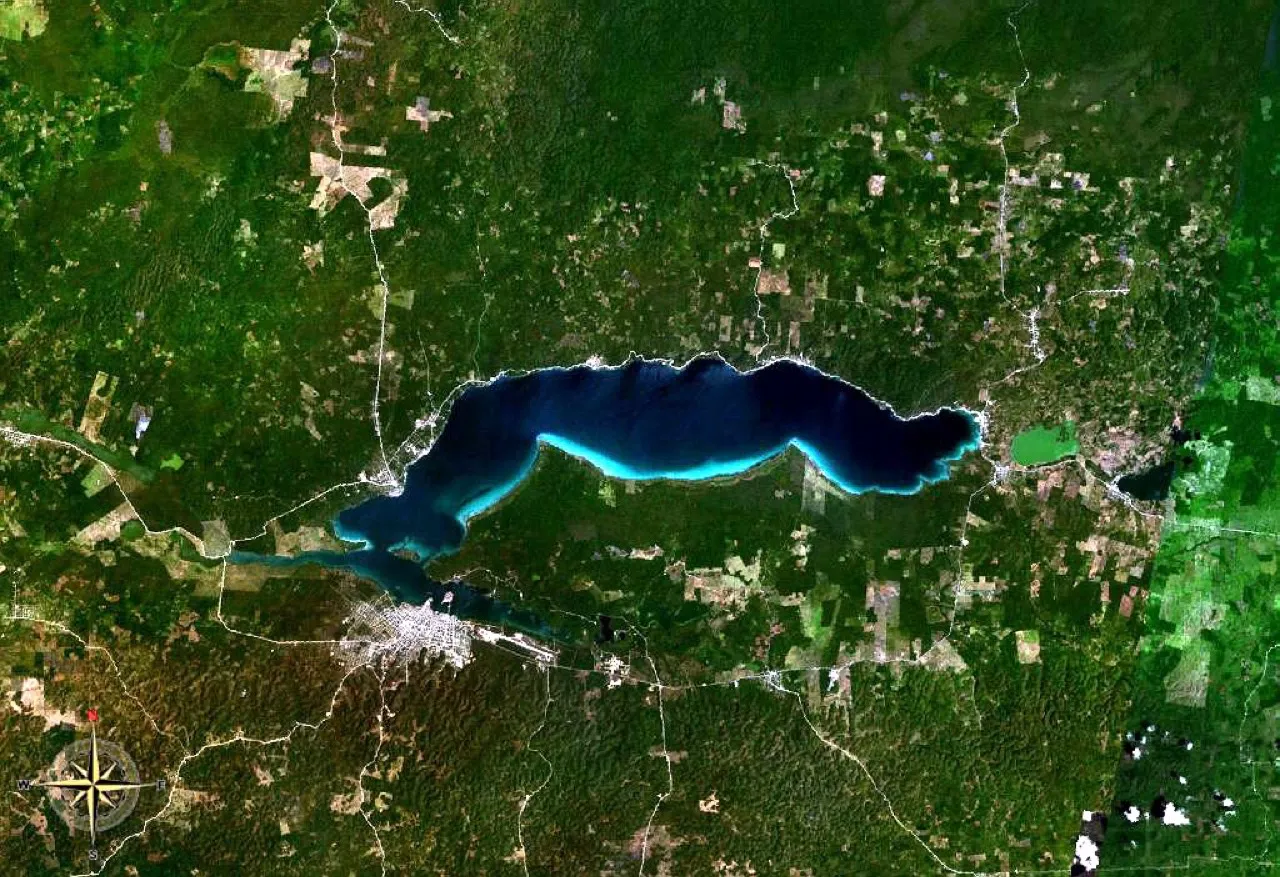 Lake Petén Itzá from space, with the island of Flores, once Nojpetén, by its southern shoreWikimedia Commons, NASA, Public domain (Lake Peten Itza NASA.jpg)
The Kowoj, rivals of the Itza, hold the lakes to the east, and the Yalain, allies of the Itza, the land towards Tipuj in Belize. To the north live the Kejache, and beyond them lies Acalan, a Chontal Maya trading state with its capital at Itzamkanac on the Candelaria River.
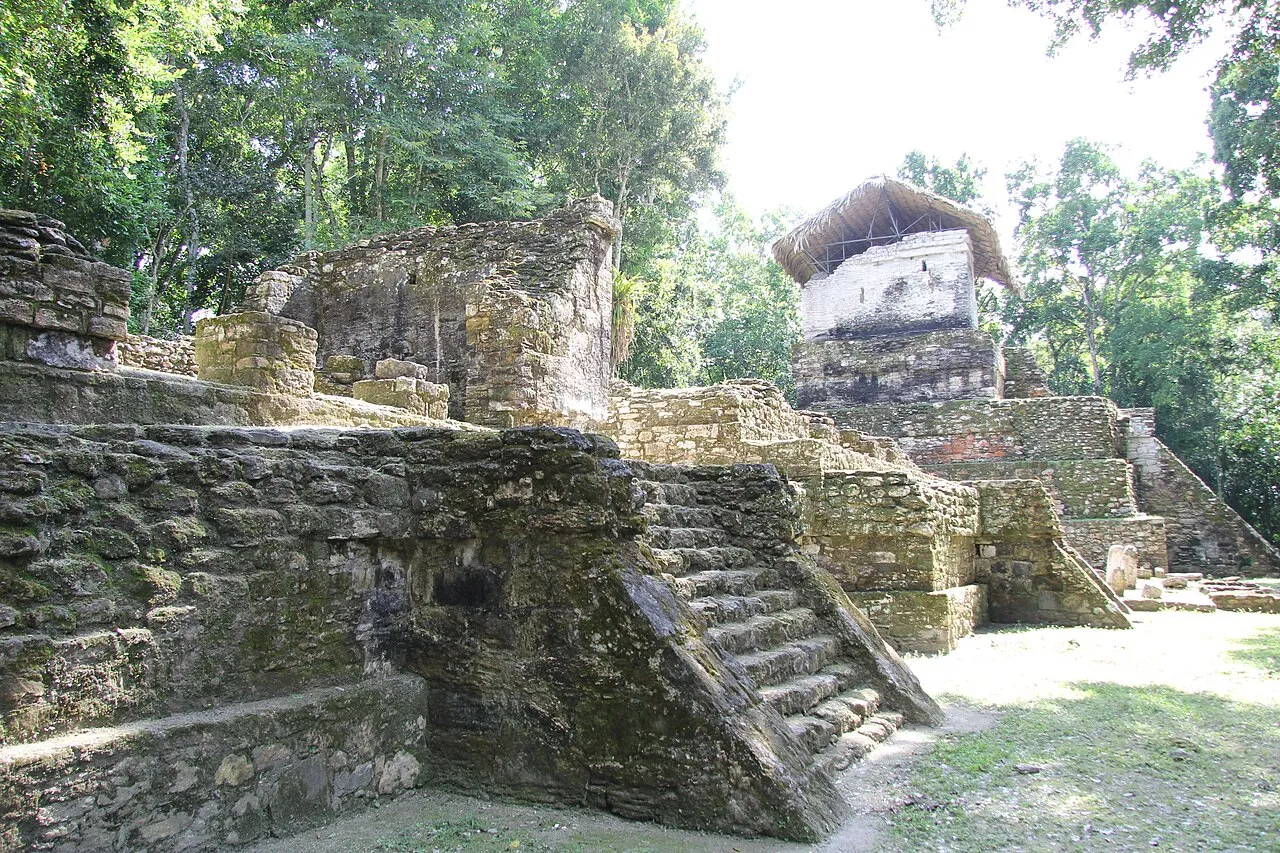 Postclassic temples on the island of Topoxté in Lake Yaxhá, in the Kowoj lands east of the ItzaWikimedia Commons, Jorge Antonio Leoni de León, CC BY-SA 4.0 (Parque Yaxha Nakum Naranjo Sitio Topoxte 2015-01-21-06.JPG)
In October 1524 Hernán Cortés leaves Tenochtitlan to march overland to Honduras against the rebel Cristóbal de Olid. He takes 140 Spanish soldiers, 93 of them mounted, 3,000 Mexican warriors and the captive Aztec ruler Cuauhtémoc. In Acalan he takes on 600 Chontal carriers and has Cuauhtémoc hanged. He leaves Acalan on 5 March 1525 and crosses the Kejache country, where the towns are walled against the Itza.
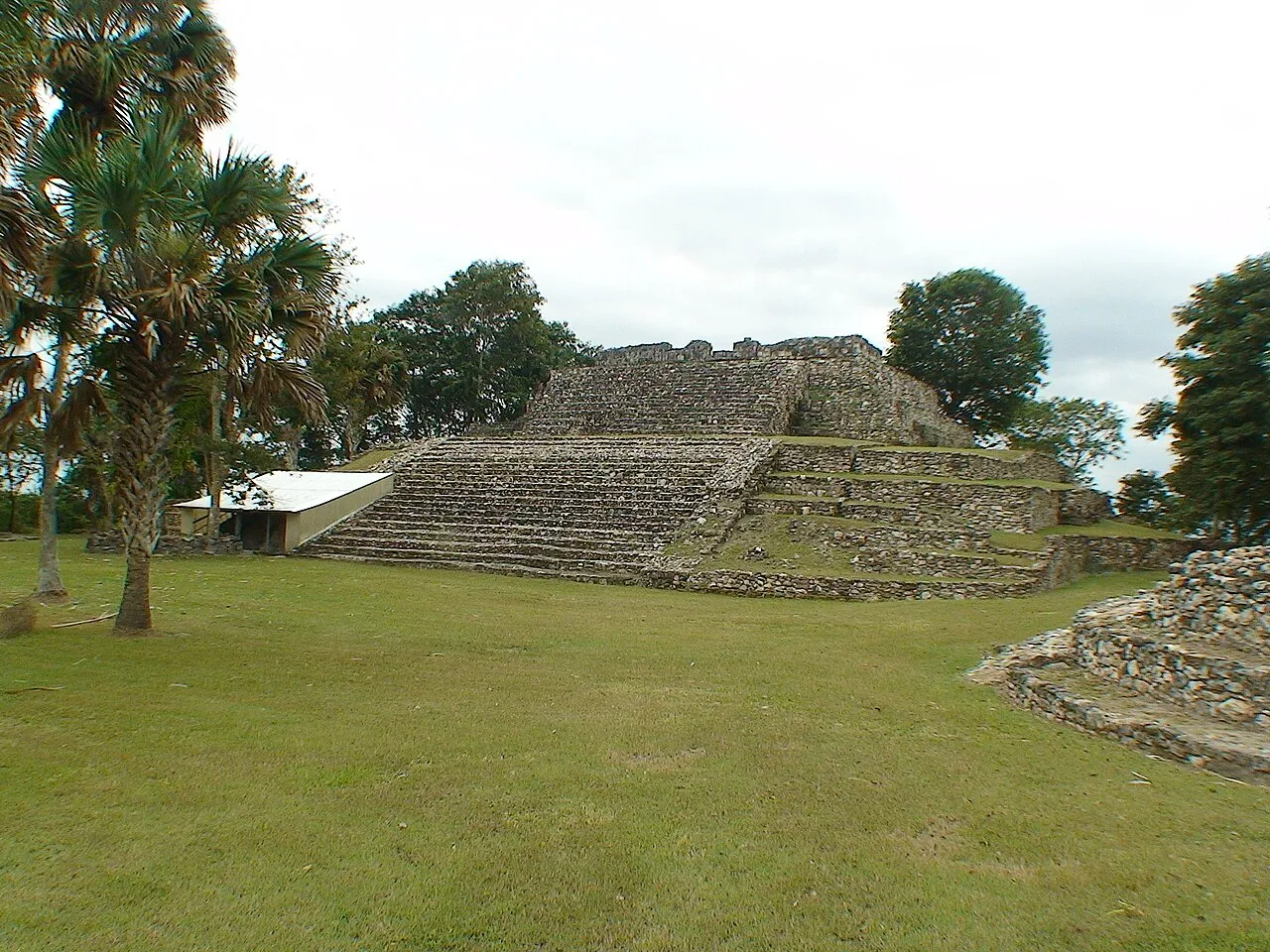 El Tigre in southern Campeche, the site of Itzamkanac, capital of AcalanWikimedia Commons, HJPD, CC BY 3.0 (ElTigre1.JPG)
On 13 March 1525 the army reaches the north shore of Lake Petén Itzá. Priests say mass before Aj Kan Ek', and Cortés crosses to Nojpetén with 20 soldiers while the army goes round the lake. He leaves behind a cross and a lame horse, which the Itza honour as a god. A few hundred men reach Nito on the Bay of Amatique, where Cortés learns that Olid has already been beheaded.
Sources
- Robert J. Sharer and Loa P. Traxler, The Ancient Maya (6th ed. 2006), pp. 761 to 762.
- Grant D. Jones, The Lowland Maya, from the Conquest to the Present, in The Cambridge History of the Native Peoples of the Americas, vol. 2, part 2 (2000), pp. 352 to 358.
- Prudence M. Rice and Don S. Rice, Introduction to the Kowoj and their Petén Neighbors, in Prudence M. Rice and Don S. Rice, eds., The Kowoj (2009), pp. 10 to 12.
Prev: Landa and the auto-da-fé of ManíNext: Friars at Nojpetén