AD 800 – 909
The Classic Maya collapse
The number of dated monuments raised in the Maya lowlands peaks at about 40 a year around AD 750, falls to about ten by 800 and reaches none by 900. Quiriguá raises its last inscriptions in 810. At Copán, Ukit Took' takes the throne on 6 February 822 and leaves his Altar L unfinished. Calakmul raises no monument for the bak'tun ending of 830.
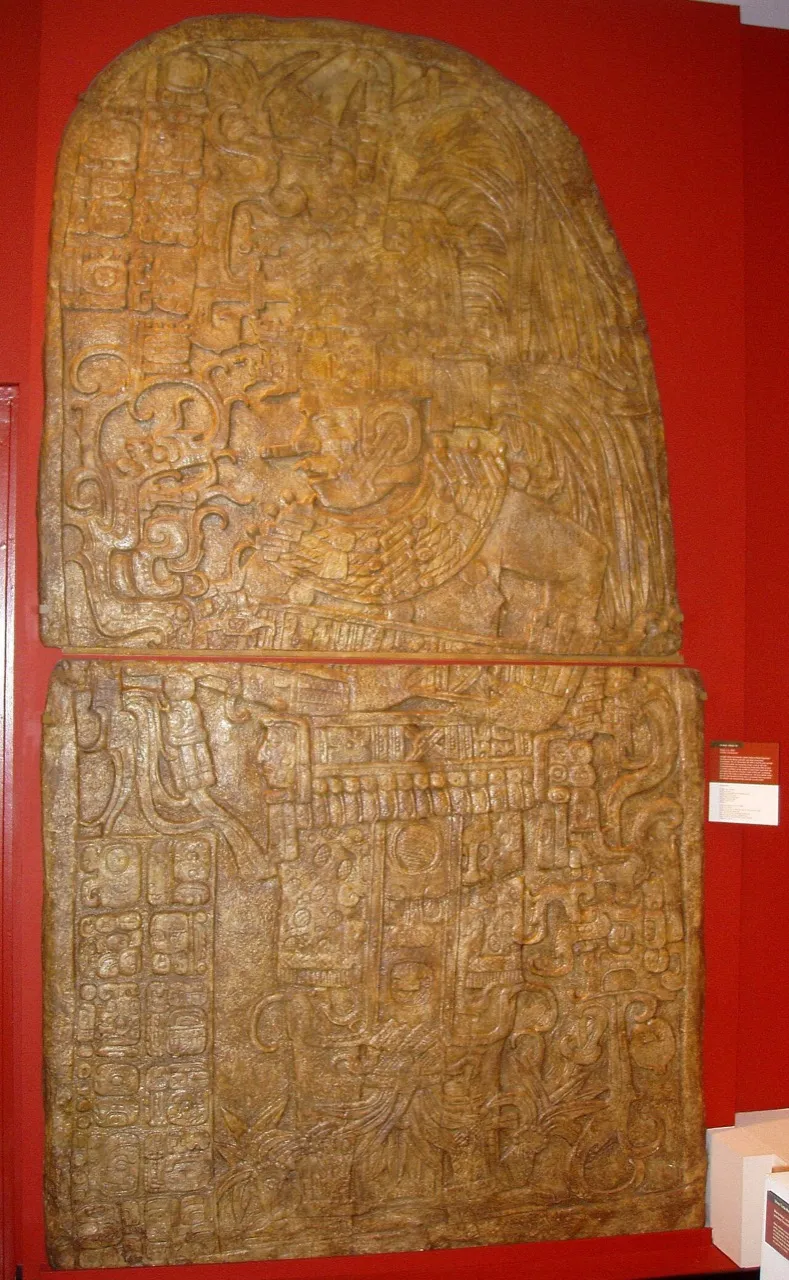 A plaster cast of Seibal Stela 10, raised by Wat'ul Chatel in 849, Peabody Museum, Harvard UniversityWikimedia Commons, Daderot, Public domain (Seibal, Stela 10 (Harvard University).JPG)
Seibal on the Pasión River revives. In 830 Wat'ul Chatel is installed there as a vassal of the king of Ucanal, and lords of Tikal and Calakmul attend his dedication of new buildings and stelae in 849. Seventeen stelae carved at Seibal between 849 and 889 mix Maya and central Mexican styles. Jasaw Chan K'awiil II raises the last stela at Tikal in 869, and the former Tikal satellites Uaxactun and Jimbal raise their last in 889.
Monument 101 at Toniná carries the last known Long Count date, 15 January 909. A stunted stela at Calakmul dates to 899 or 909. Most southern cities lose their populations and are abandoned in the 10th century, while Chichen Itza, Uxmal, Coba and other cities of northern Yucatán continue.
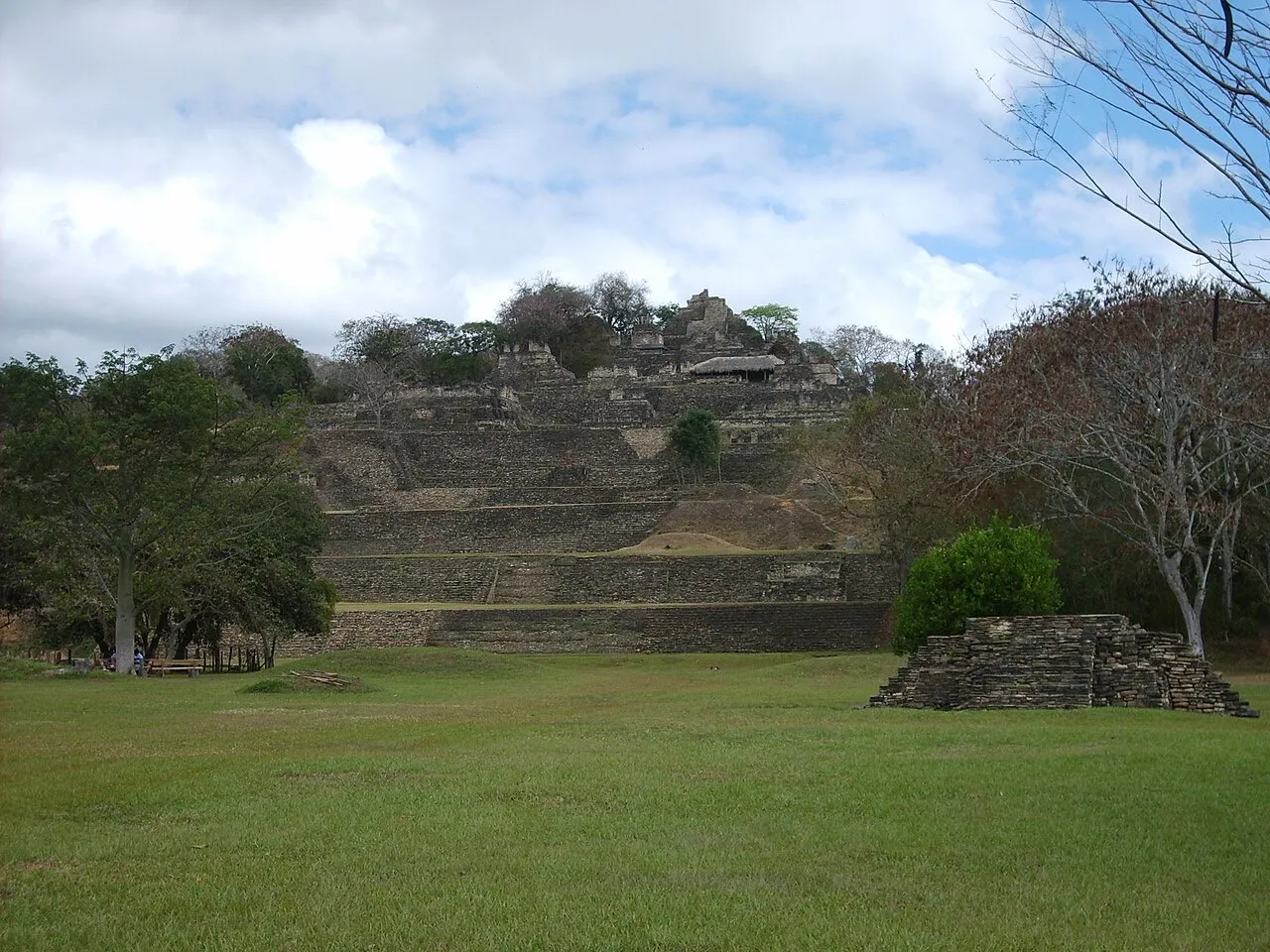 The acropolis of Toniná, Chiapas, built in terraces up a hillside, 2007Wikimedia Commons, Simon Burchell, CC BY-SA 3.0 (Toniná 7.jpg)
Sediment cores from Lake Chichancanab on the Yucatán Peninsula, published in 1995, record a long and severe drought in the 9th century. A study of 2012 estimates the fall in rainfall at 25 to 40 percent. Other proposed causes include foreign invasion, overpopulation, soil exhaustion, the collapse of trade routes and disease. Scholars have put forward more than 80 explanations.
Sources
- Simon Martin and Nikolai Grube, Chronicle of the Maya Kings and Queens (2000), pp. 53, 115, 189 and 212.
- David Webster, The Fall of the Ancient Maya: Solving the Mystery of the Maya Collapse (2002).
- David A. Hodell, Jason H. Curtis and Mark Brenner, “Possible role of climate in the collapse of Classic Maya civilization”, Nature 375 (1995), pp. 391 to 394.
Prev: Jade, obsidian, salt and cacaoNext: Uxmal and the Puuc cities