April 1524
The Tz'utujil of Lake Atitlán
On 14 April 1524 the lords Belehe Qat and Cahi Imox receive the Spanish at Iximche, the Kaqchikel capital. Recinos, following the Spanish records, dates the arrival two days earlier. The Kaqchikel give warriors against the remaining K'iche' and against their neighbours the Tz'utujil, whose capital Tecpan Atitlan lies on Lake Atitlán. At the request of the Kaqchikel lords Alvarado sends two Kaqchikel messengers there, and the Tz'utujil kill both.
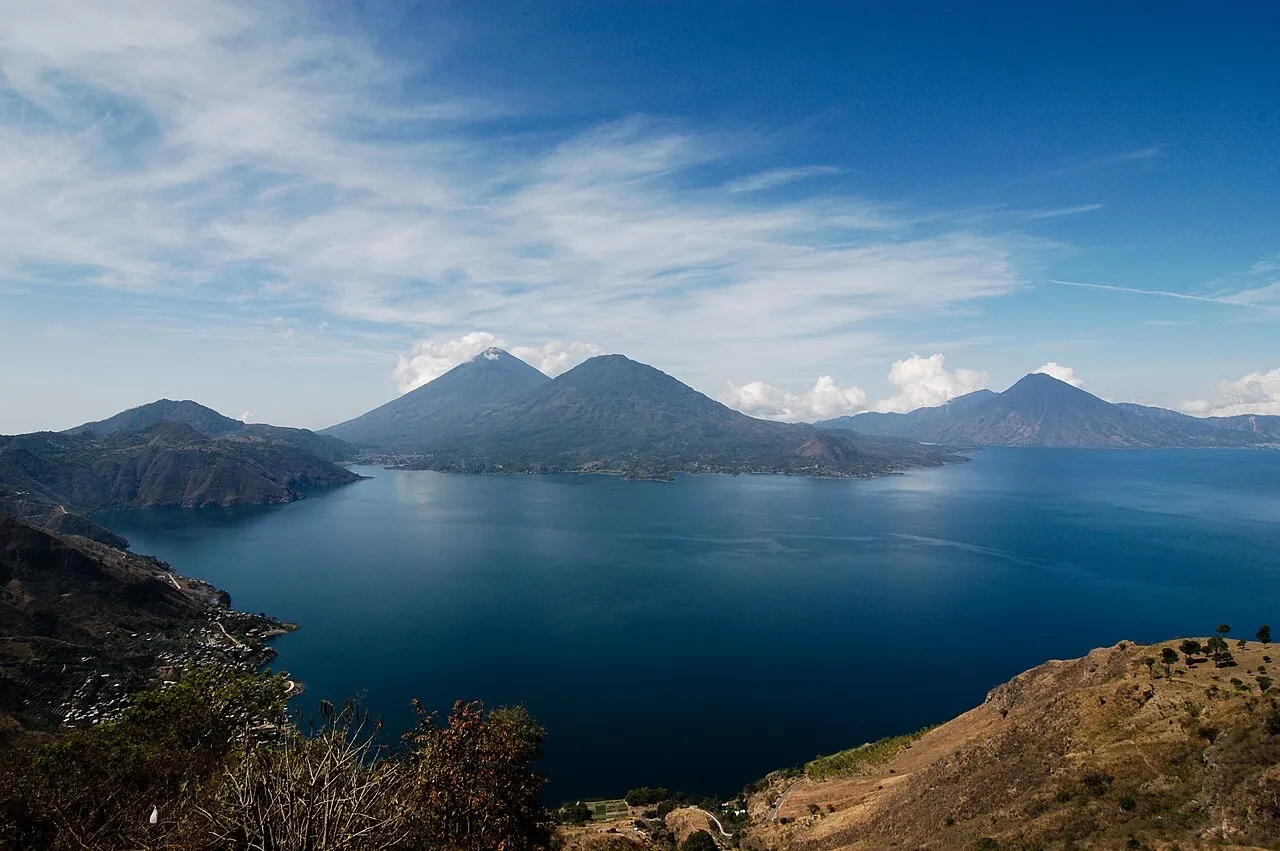 Lake Atitlán with the volcanoes Atitlán, Tolimán and San Pedro, from left to rightWikimedia Commons, alq666, CC BY-SA 2.0 (Volcanoes at Lake Atitlan 2.jpg)
Five days after his arrival Alvarado leaves Iximche with 60 cavalry, 150 Spanish infantry and Kaqchikel warriors. After a day’s hard march the army reaches the lake unopposed, and Alvarado rides ahead along the shore with 30 horsemen. Opposite an inhabited island they meet Tz'utujil warriors, charge them and chase them to a narrow causeway. The riders dismount and cross to the island before the defenders can break the bridges, and the rest of the army comes up and storms it on 18 April. The survivors swim to another island. The 300 canoes the Kaqchikel are sending have not yet arrived, so the Spanish cannot follow.
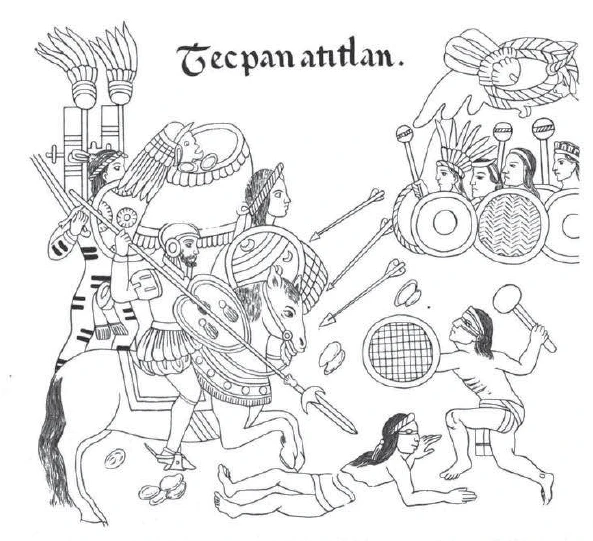 A Spanish horseman and Tlaxcalan warriors against the Tz'utujil at Tecpan Atitlan, from the 16th-century Lienzo de Tlaxcala in its 1892 reproductionWikimedia Commons, unknown artist, Public domain (Lienzo de Tlaxcala Tecpan Atitlan.gif)
The next day the army enters Tecpan Atitlan and finds it deserted. Alvarado sends captured townspeople to the Tz'utujil lords with orders to submit, and the lords swear loyalty to the king of Spain. Three days after Alvarado’s return to Iximche they come there with tribute.
Sources
- Linda Schele and Peter Mathews, The Code of Kings (1999), p. 297.
- Adrián Recinos, Pedro de Alvarado: conquistador de México y Guatemala (2nd ed. 1986), pp. 82 to 84.
- Pedro de Alvarado, letters to Cortés, 1524.
Prev: The burning of Q'umarkajNext: Santiago and the Kaqchikel revolt