November 1523 – February 1524
Alvarado marches into Guatemala
After the fall of Tenochtitlan in 1521 the Kaqchikel of Iximche send envoys to Hernán Cortés. In 1522 his Mexican allies meet envoys from Iximche and from the K'iche' capital Q'umarkaj at Tuxpán in Chiapas, and both kingdoms declare their loyalty to the king of Spain. Cortés’s allies in Soconusco soon report that the K'iche' and the Kaqchikel are attacking them. Cortés sends Pedro de Alvarado south with 180 cavalry, 300 infantry, crossbows, muskets and four cannons.
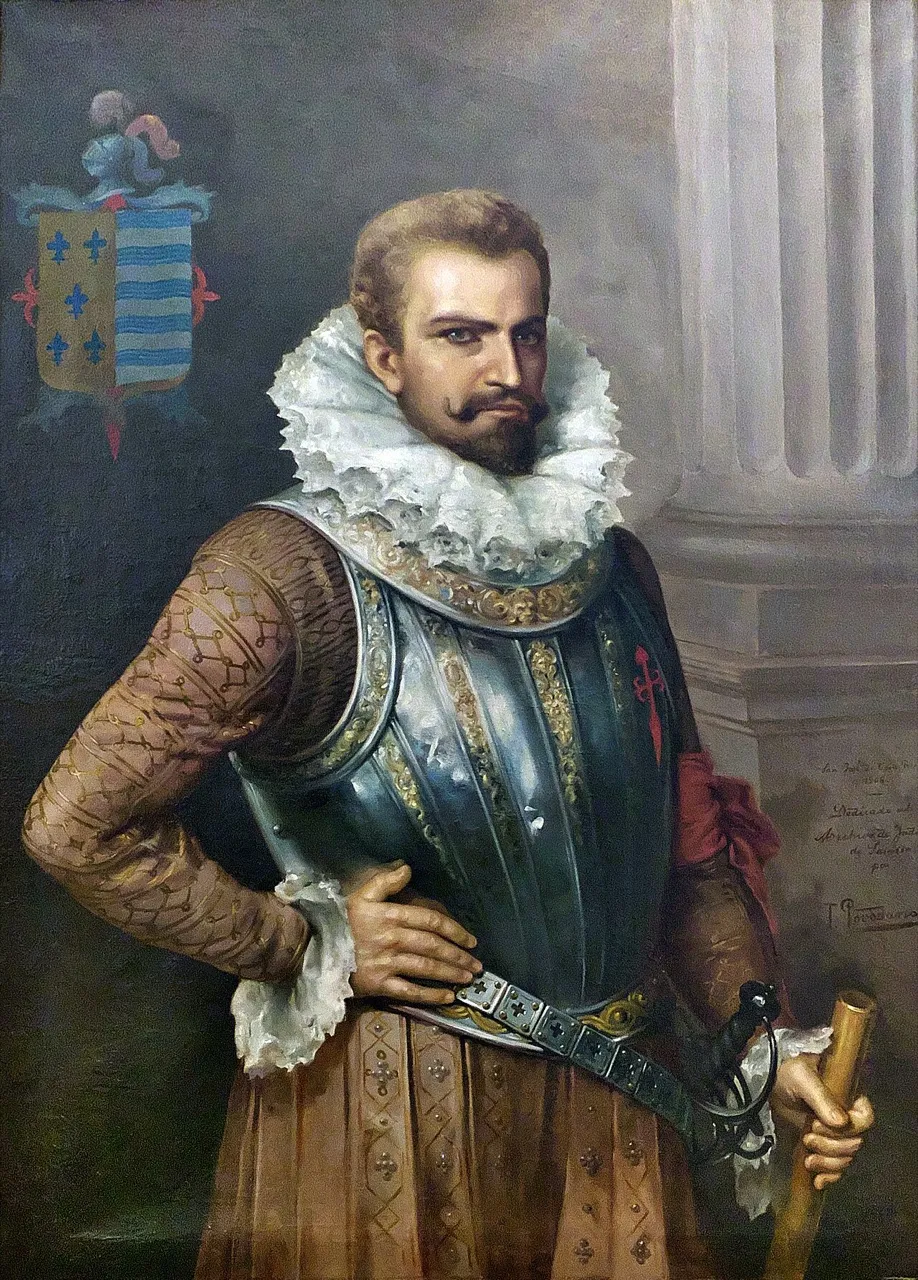 Pedro de Alvarado in armour, a portrait by Tomás Povedano of 1906, Archivo General de Indias, SevilleWikimedia Commons, Tomás Povedano, Public domain (Pedro de Alvarado (Tomás Povedano).jpg)
Alvarado leaves Tenochtitlan between late November and December 1523 with about 200 Tlaxcalan and Cholulan warriors and 100 Mexica, and gathers more on the way. By the Isthmus of Tehuantepec his allies include 800 warriors from Tlaxcala, 400 from Huejotzingo and 1,600 from Tepeaca, and Zapotecs, Mixtecs and the Nahuas of the Aztec garrison in Soconusco join later. Soconusco receives Alvarado in peace and swears allegiance to the Spanish crown.
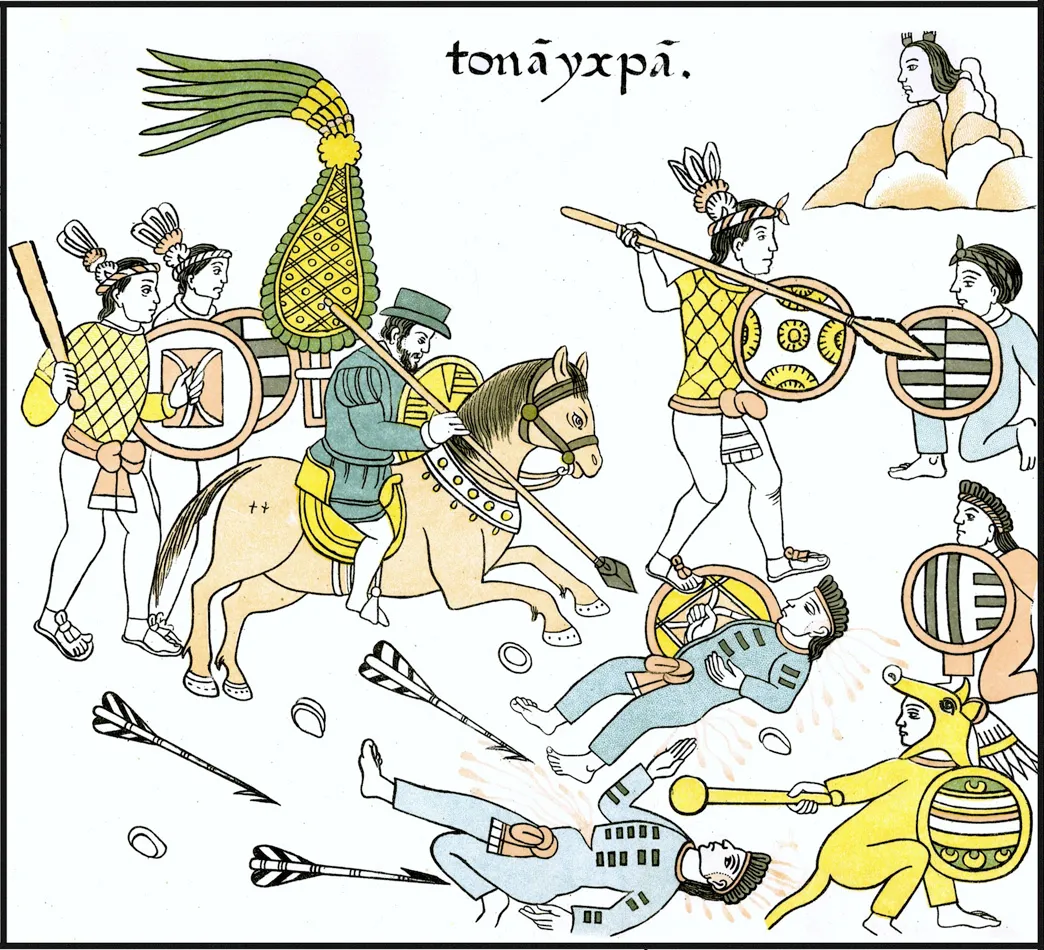 Tlaxcalan warriors fighting beside a Spanish horseman, a scene of the 16th-century Lienzo de TlaxcalaWikimedia Commons, unknown artist, Public domain (Guerreros tlaxcaltecas junto a sus aliados españoles Lienzo de Tlaxcala. Siglo XVI.jpg)
The army follows the Pacific coast unopposed as far as the Samalá River, on the edge of the K'iche' kingdom. A K'iche' army fails to stop the crossing, and the conquistadors plunder the settlements beyond the river. On 8 February 1524 they storm Xetulul, which the Mexican allies call Zapotitlán. K'iche' archers wound many of the attackers, and the army camps in the town’s marketplace.
Alvarado reports the campaign to Cortés in four letters, two of which survive. Bernal Díaz del Castillo, the Tlaxcalan allies and the Kaqchikel annals give their own accounts.
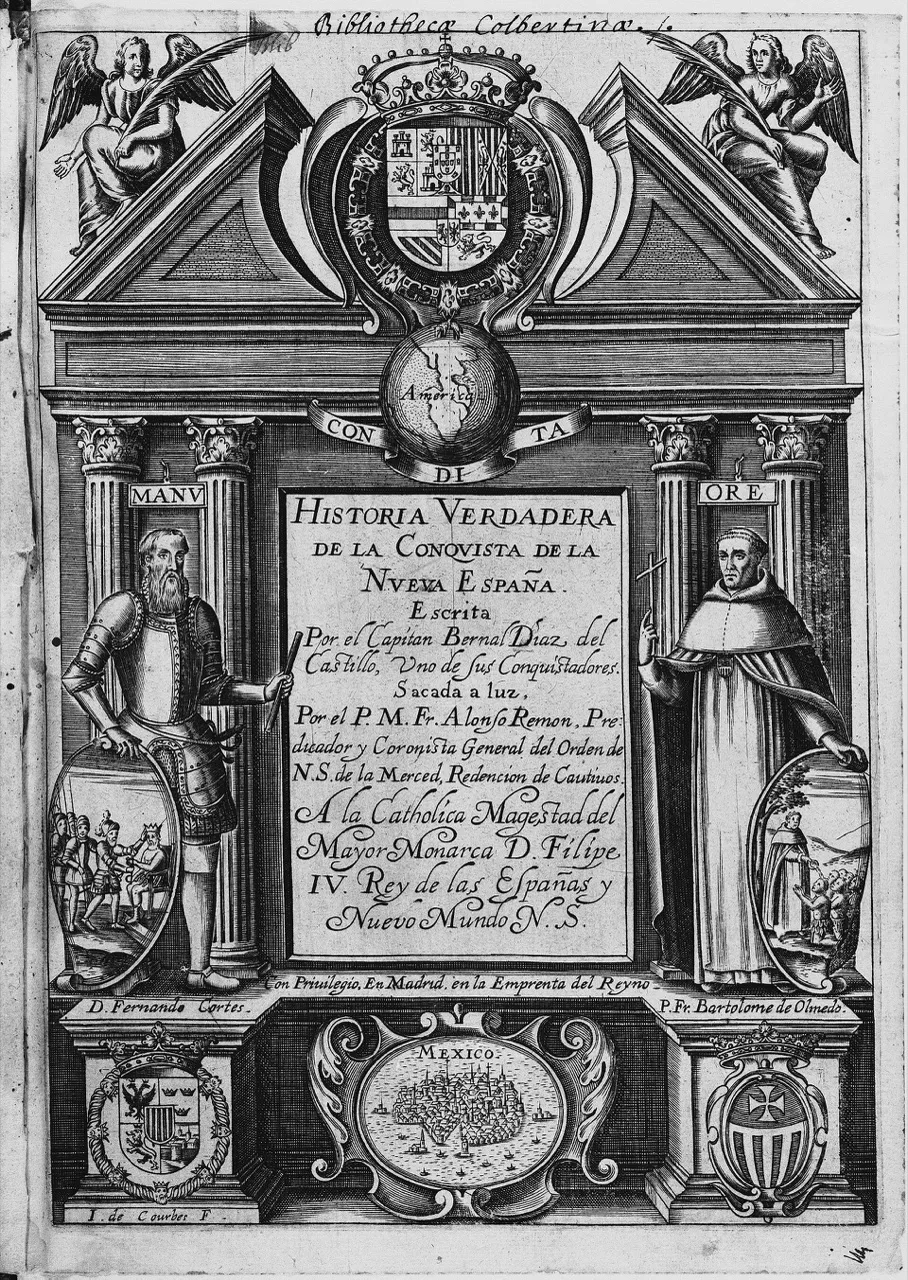 Title page of Bernal Díaz del Castillo’s Historia verdadera de la conquista de la Nueva España, printed in Madrid in 1632, John Carter Brown LibraryWikimedia Commons, Bernal Díaz del Castillo, Public domain (Bernal Diaz del Castillo Historia verdadera de la conquista de la Nueva España 1632.jpg)
Sources
- Robert J. Sharer and Loa P. Traxler, The Ancient Maya (6th ed. 2006), pp. 763 to 764.
- Laura E. Matthew, Memories of Conquest: Becoming Mexicano in Colonial Guatemala (2012), pp. 78 to 81.
- Adrián Recinos, Pedro de Alvarado: conquistador de México y Guatemala (2nd ed. 1986), pp. 62 to 65.
Prev: Cortés’s horsemenNext: The road to Xelajú