1697 – 1708
After Nojpetén
After the fall of Nojpetén Spanish search parties scour Petén. Kan Ek' is soon captured with the help of Chamach Xulu, ruler of the Yalain, and AjKowoj, king of the Kowoj, is taken with other nobles and their families. Ursúa returns to Mérida and leaves a garrison on the island among the hostile Itza and Kowoj of the mainland. The Spanish build a fortress-prison there, the Castillo de Arismendi, finished in 1700.
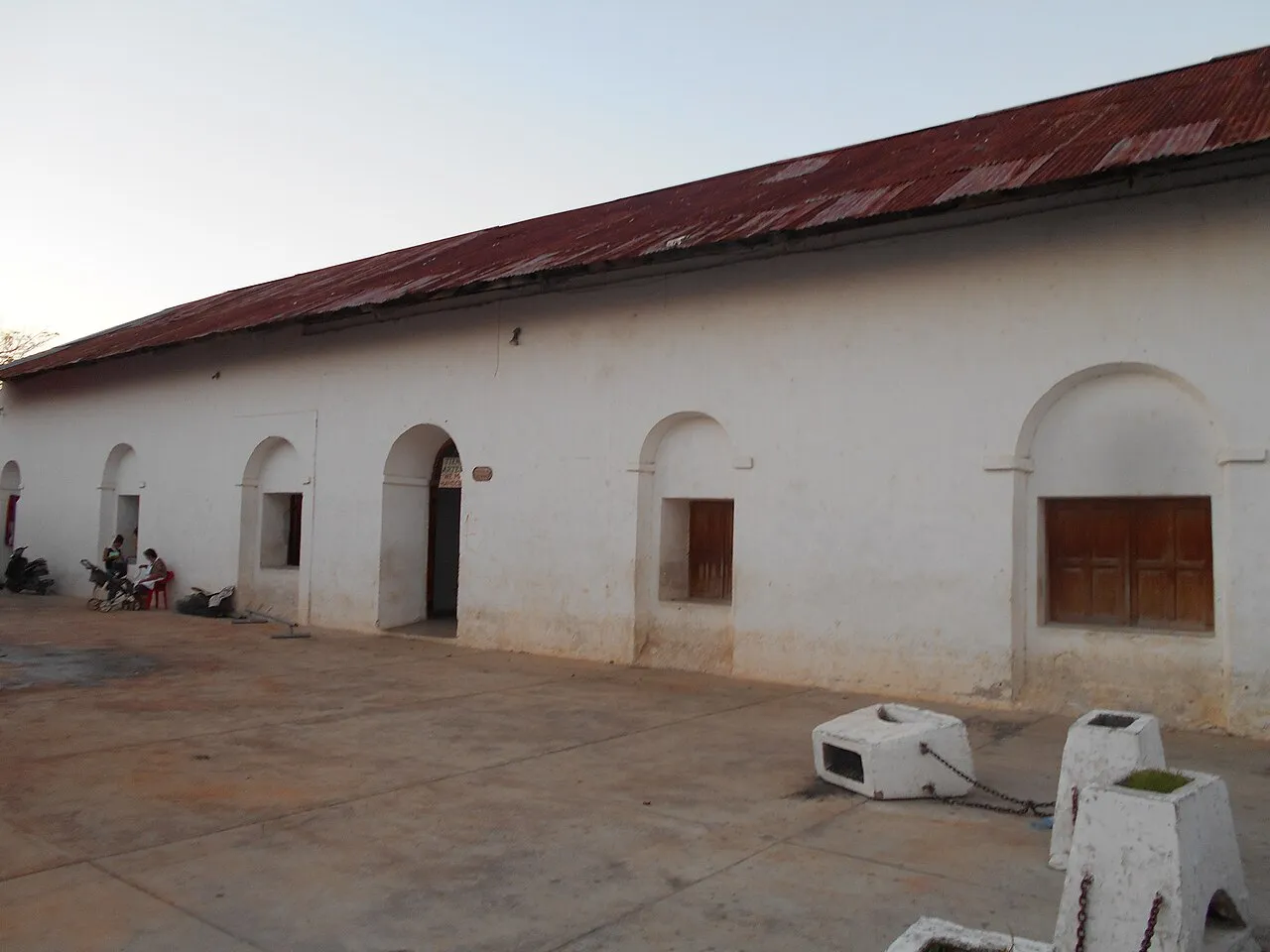 The Castillo de Arismendi in Flores, the Spanish fortress-prison finished in 1700Wikimedia Commons, Simon Burchell, CC BY-SA 4.0 (Castillo de Arismendi, Flores, Guatemala.JPG)
In 1699 an expedition from Santiago de los Caballeros de Guatemala reinforces the garrison, with settlers who bring disease to soldiers and Maya alike. After three months it returns to Santiago with Kan Ek', his son and two of his cousins. The cousins die on the way, and Kan Ek' and his son spend the rest of their lives under house arrest in the colonial capital.
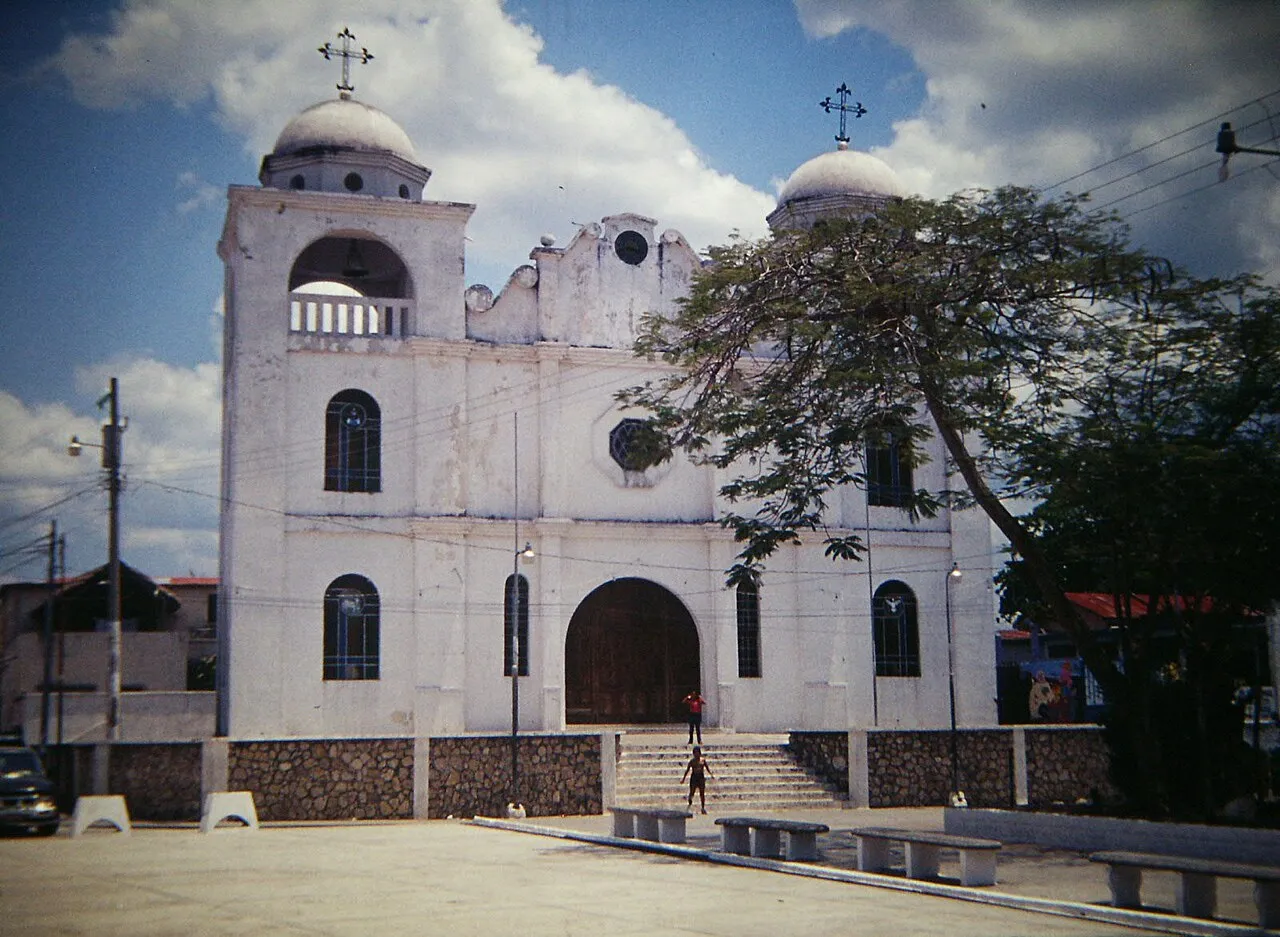 The cathedral of Nuestra Señora de los Remedios y San Pablo on the summit of Flores, 2002Wikimedia Commons, Gary Todd, CC0 (Flores, Guatemala RC Church.jpg)
In 1703 Petén passes from Yucatán to the Audiencia of Guatemala, at Ursúa’s request, because the road from Yucatán has fallen into disrepair. Missions founded in 1702 and 1703 at San José and San Andrés on the lake gather the surviving Itza and Kowoj. In 1704 their leaders rebel and almost retake the island, but the revolt is crushed and its leaders executed.
Estimates for 1697 range from 20,000 to 60,000 Maya around the lake. By 1708, after disease and war, about 6,000 remain in central Petén. San José on the north shore is home to the last speakers of the Itza language today.
Sources
- Grant D. Jones, The Kowoj in Ethnohistorical Perspective, in Prudence M. Rice and Don S. Rice, eds., The Kowoj: Identity, Migration, and Geopolitics in Late Postclassic Petén, Guatemala (2009), pp. 59 to 60.
- Grant D. Jones, The Conquest of the Last Maya Kingdom (1998), pp. 295 and 306.
- Norman B. Schwartz, Forest Society: A Social History of Petén, Guatemala (1990), pp. 37 to 38.
Prev: The fall of NojpeténNext: Stephens and Catherwood