January – April 1421
The western towns, 1421
Early in January 1421 Žižka leads the Taborites against the Catholic league of Plzeň. They take the monasteries of Kladruby and Chotěšov and the castle of Krasíkov, where they capture Bohuslav of Švamberk, and on 2 February burn the suburbs of Tachov. Sigismund besieges Kladruby for three weeks and withdraws when Žižka and the Praguers come up. From 14 February the two Hussite armies besiege Plzeň for four weeks, until the town asks for a truce and promises to accept the chalice, a promise it does not keep.
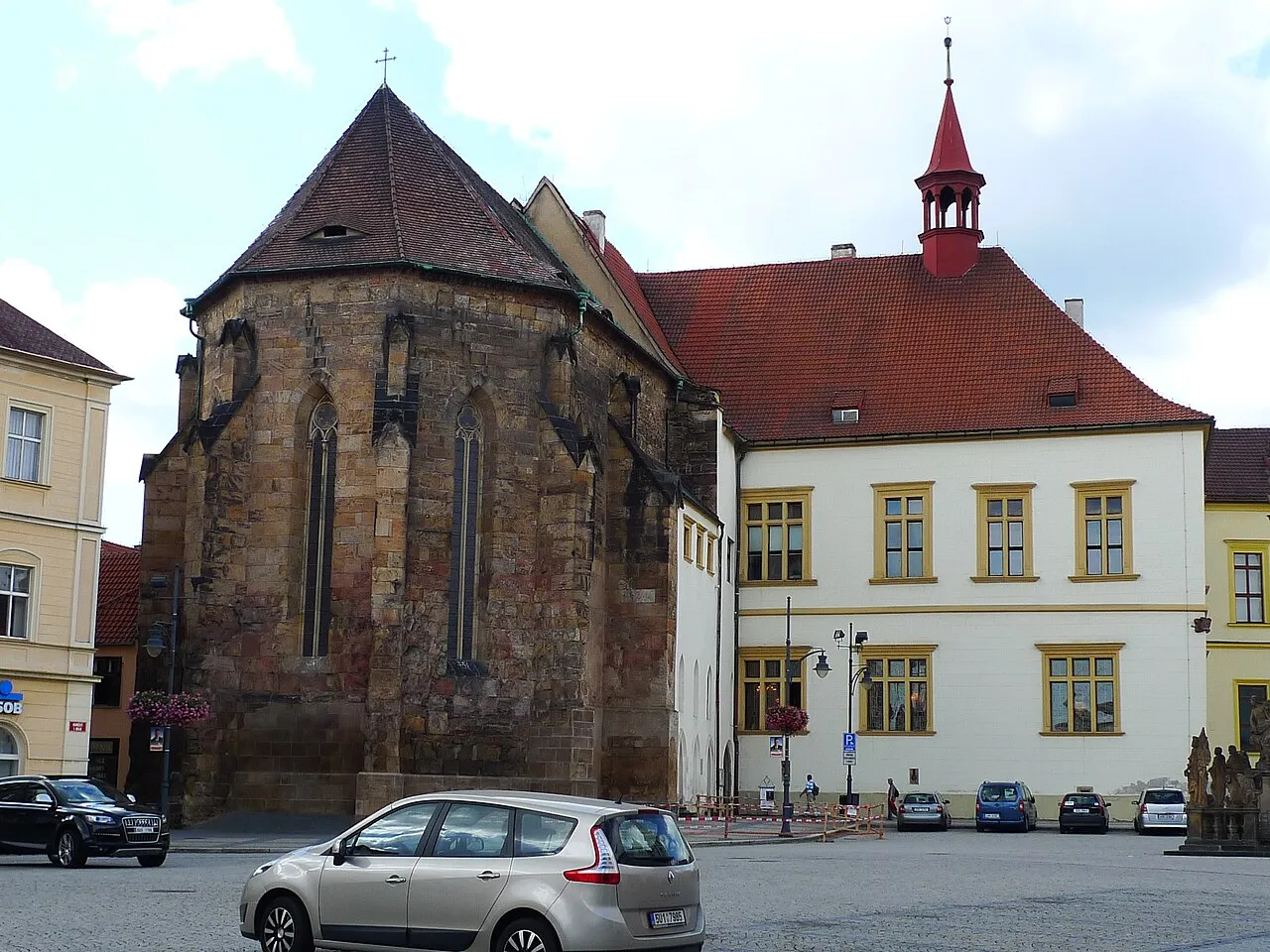 The commandery of the Teutonic Order in Chomutov with the church of St CatherineWikimedia Commons, H2k4, CC BY-SA 3.0 (Chomutov, komenda Řádu německých rytířů s kostelem sv. Kateřiny.JPG)
On 16 March 1421, Palm Sunday, Žižka’s army of about 6,000 men storms Chomutov, a German town at the foot of the Ore Mountains, and burns it. Most of the townspeople are killed, 2,200 to 2,500 by most accounts. Kadaň is taken soon after. On 1 April Žižka and the Praguers storm Beroun, where more than forty priests are burned, three masters of the university among them.
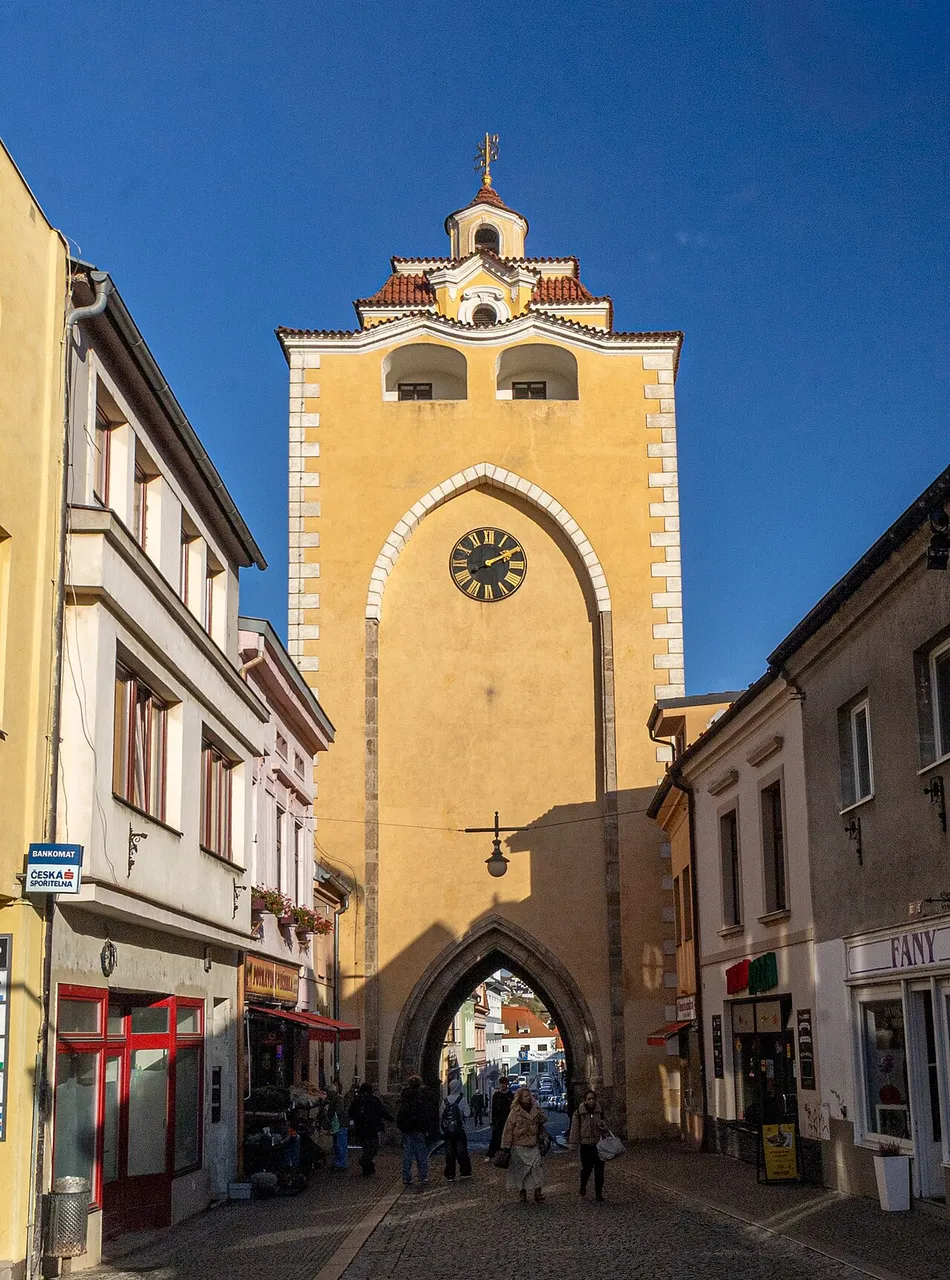 The Plzeň Gate of BerounWikimedia Commons, VitVit, CC BY-SA 4.0 (Beroun Plzeňská brána 1.jpg)
Žatec, Louny and Slaný, Hussite towns since 1420, stand with Prague. On 21 April 1421 Konrad of Vechta, Archbishop of Prague, declares for the Four Articles of Prague at his castle of Roudnice, and the Pope excommunicates him.
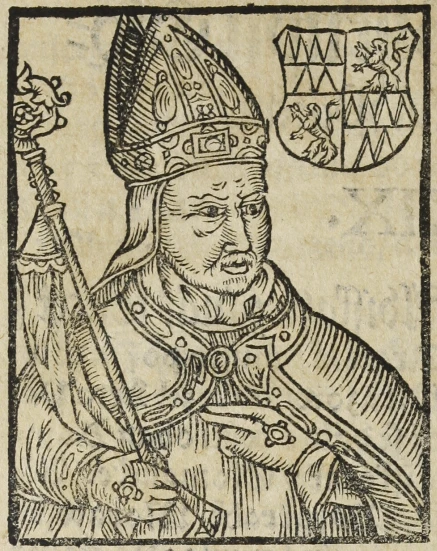 Konrad of Vechta, Archbishop of Prague, in an imagined portrait by Bartoloměj Paprocki, 1593Wikimedia Commons, Bartosz Paprocki, CC BY-SA 4.0 (Konrád z Vechty (B. Paprocki, 1593).png)
Sources
- Frederick G. Heymann, John Žižka and the Hussite Revolution (1955).
- Petr Čornej, Velké dějiny zemí Koruny české V, 1402–1437 (2000).
- František Šmahel, Die Hussitische Revolution (2002).
Prev: South Bohemia, 1420Next: Rabí and the Adamites, 1421