c. 1360–1409
Jan Žižka of Trocnov, c. 1360–1409
Jan Žižka comes from a family of the lesser gentry with a small estate at Trocnov, near Budweis (České Budějovice) in South Bohemia, and a crayfish in its arms. The first record of him is a deed written at Český Krumlov on 3 April 1378, which names “Johannes dictus Zizka de Trocnov” as a witness, and from it historians date his birth to about 1360. Deeds of 1378 to 1384 show him in debt and selling land, the dowry of his wife Kateřina among it. A skull found at Čáslav in 1910, probably his, shows that he lost his left eye to a blade at about ten to twelve years of age.
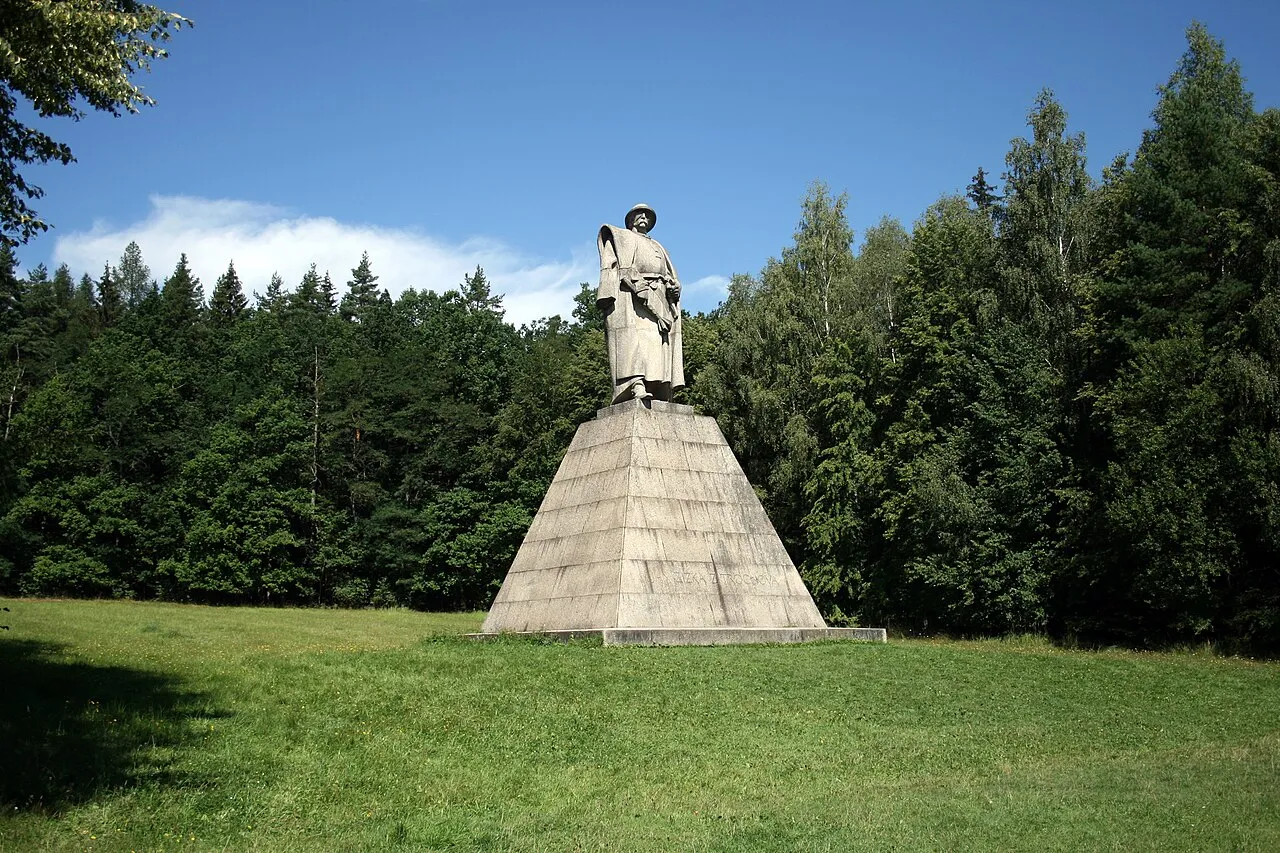 The Žižka monument at Trocnov by Josef Malejovský, 1960Wikimedia Commons, Karelj, Public domain (Trocnov Žižka 1.jpg)
In the years before 1409 Žižka is at feud with Henry of Rožmberk, the greatest lord of South Bohemia, and with the royal town of Budweis. Confessions in the Rožmberk court book name him in a band led by Matěj Vůdce, which robs merchants, sells its loot in Austria and plans to seize the Rožmberk towns of Nové Hrady and Třeboň for other lords. Žižka kills at least one of Henry’s men.
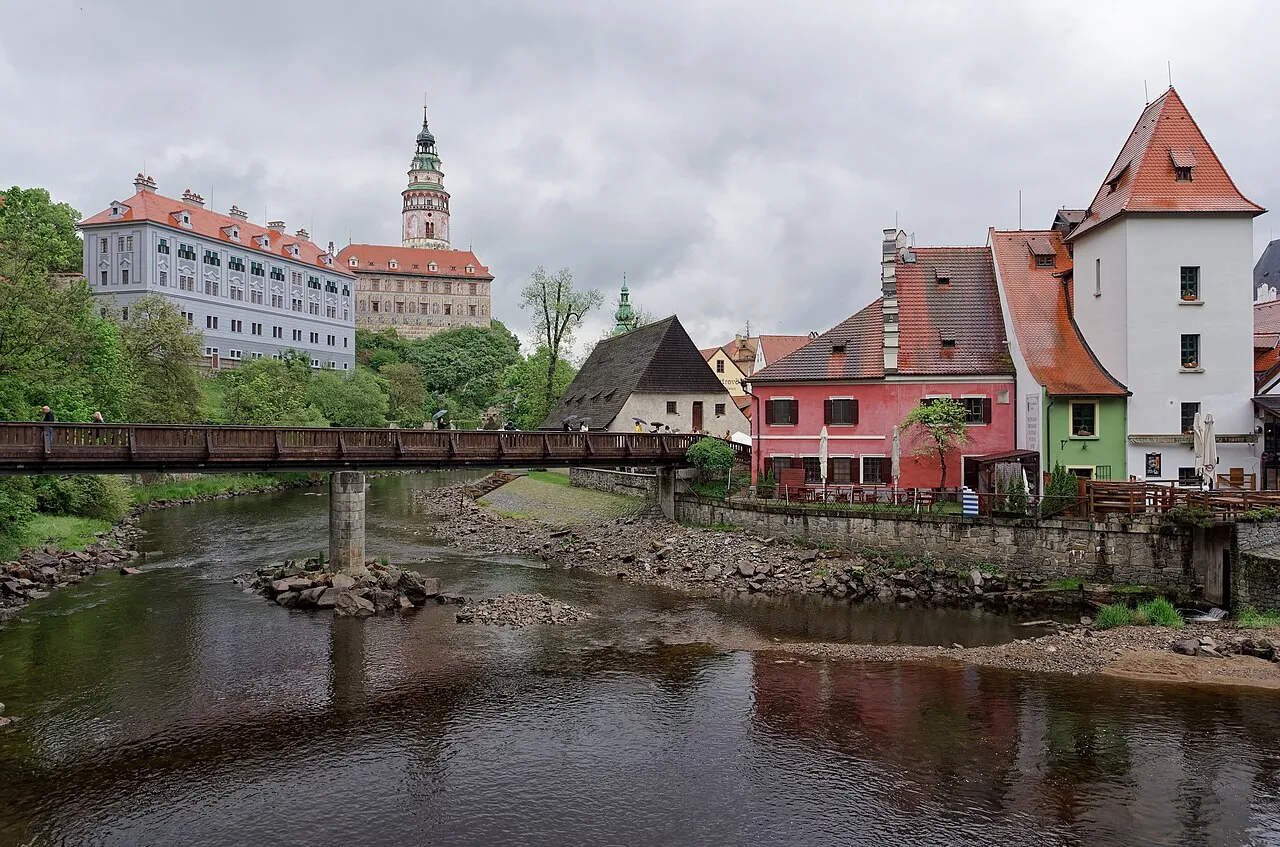 Český Krumlov castle on the Vltava, the seat of the lords of RožmberkWikimedia Commons, Jakub Hałun, CC BY 4.0 (Český Krumlov Castle, Czechia, 20250504 1248 8849.jpg)
Matěj Vůdce is caught in 1409, questioned under torture and hanged. On 25 April 1409, at Žebrák castle, King Wenceslas allows Budweis to make peace with Žižka. On 27 July he pardons “his dear and faithful” Jan called Žižka for all his offences against the town and the crown.
Sources
- Frederick G. Heymann, John Žižka and the Hussite Revolution (1955).
- Petr Čornej, Jan Žižka: Život a doba husitského válečníka (2019).
- František Šmahel, Die Hussitische Revolution (2002), vol. 2.
Prev: Prague and Kutná HoraNext: Grunwald and the king’s court, 1410–1419