August – November 1419
Prague in arms, autumn 1419
The king’s death sets off riots in Prague. On 17 August 1419 crowds burn the Carthusian monastery of the Garden of the Virgin Mary, and Catholics are driven out and churches stripped of their images. Queen Sophia and the highest burgrave Čeněk of Vartenberk govern for Sigismund, and they hold Prague Castle and the Lesser Town below it with troops. On 25 October Jan Řitka of Bezdědice hands the fortress of Vyšehrad to the New Town without a fight.
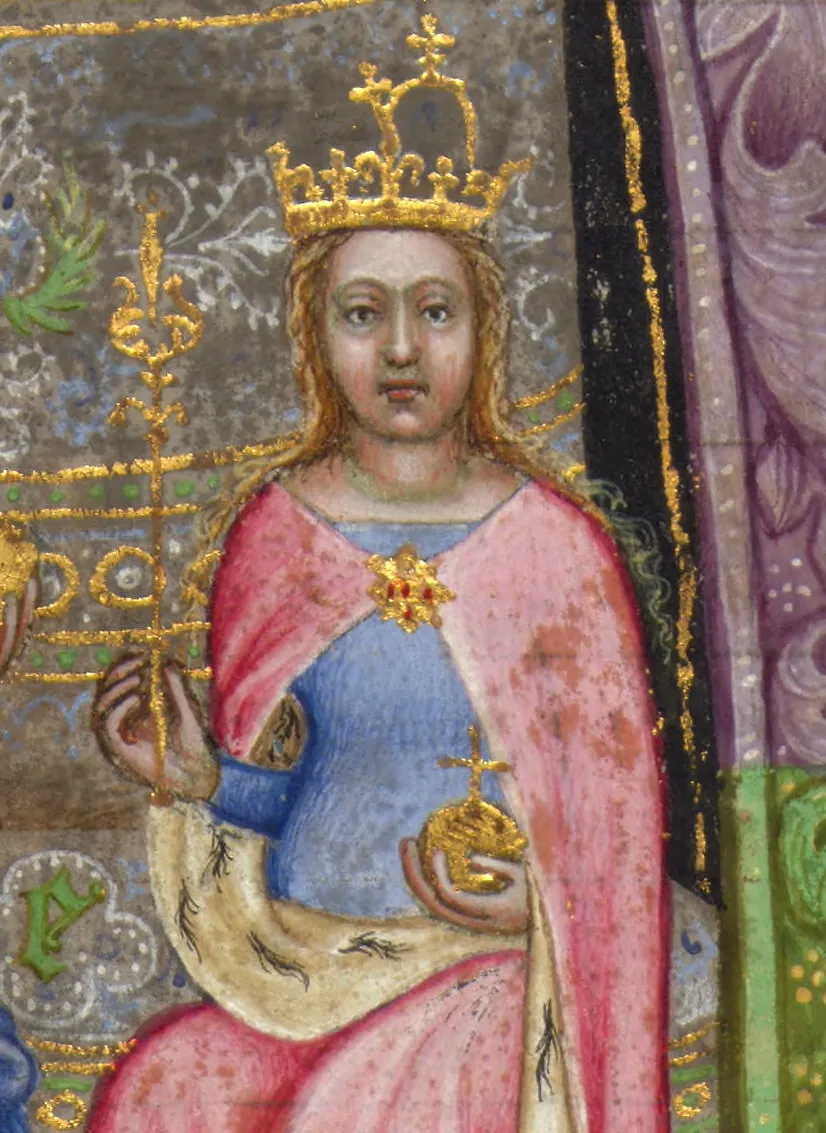 Queen Sophia of Bavaria, wife of Wenceslas IV, in an initial of the Wenceslas Bible, 1390sWikimedia Commons, unknown illuminator, Public domain (Wenzelsbibel 12 – Žofie Bavorská – cr.jpg)
On 30 September Hussites from the countryside and from Prague meet at Křížky, south east of the city, and call an assembly of all Hussites to Prague for 10 November. On 4 November royalist horse under Peter of Sternberg attack about 300 pilgrims from Sezimovo Ústí at Živohošť, but some 4,000 Hussites from West Bohemia come to their aid and the lords withdraw. The same day the Praguers under Mikuláš of Hus cross the stone bridge, take the Lesser Town and plunder and burn much of it, but they fail to take the castle.
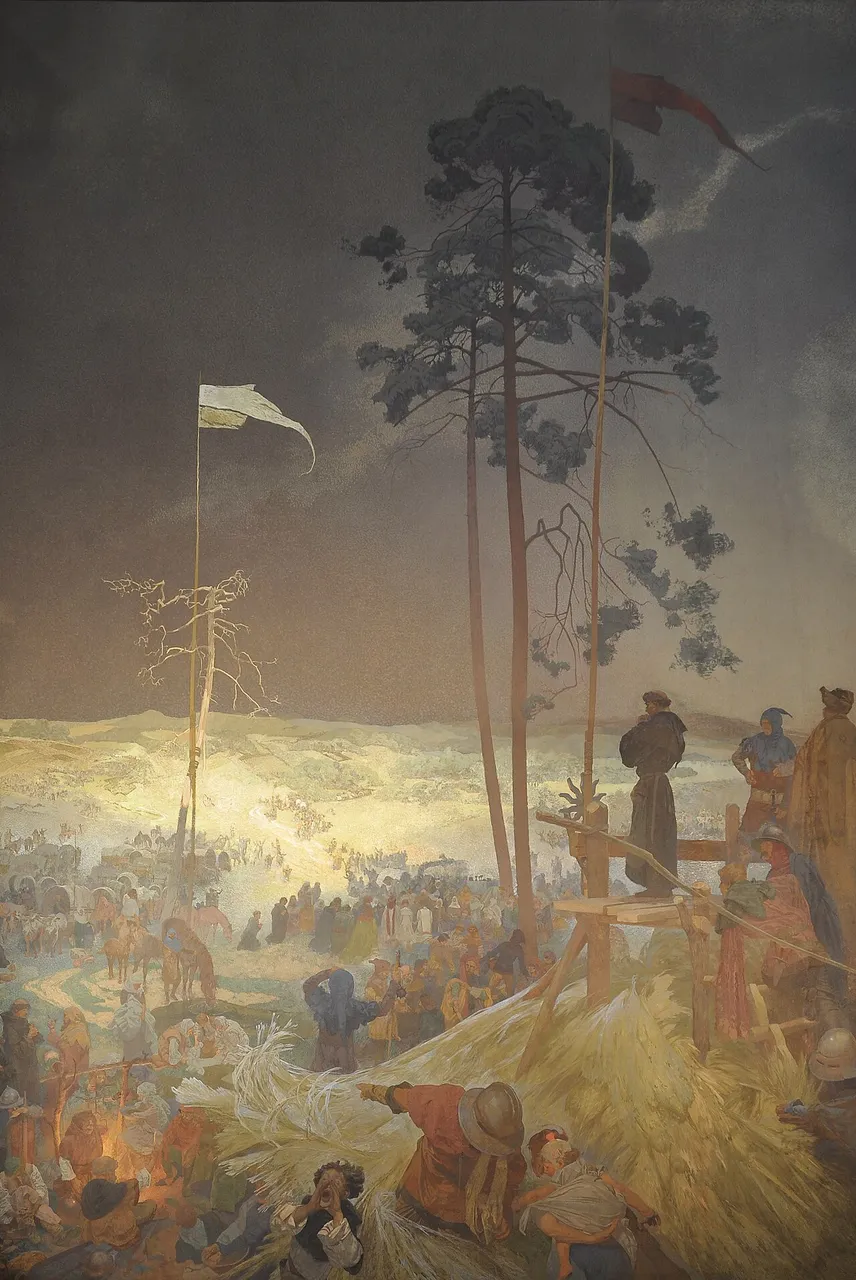 Alfons Mucha, The Meeting at Křížky, 1916, from The Slav EpicWikimedia Commons, Alfons Mucha, Public domain (Mucha Na Krizku.jpg)
On 13 November the two sides agree a truce until St George’s Day, 24 April 1420, and the Praguers return Vyšehrad to the royal side. Žižka, recorded in Prague on 25 October, may have commanded Vyšehrad until then. He and Mikuláš of Hus reject the truce and leave the city, and Žižka goes to Plzeň.
Sources
- Laurence of Březová, Hussite Chronicle, ed. Jaroslav Goll, Fontes rerum Bohemicarum V (1893).
- Frederick G. Heymann, John Žižka and the Hussite Revolution (1955).
- Petr Čornej, Velké dějiny zemí Koruny české V, 1402–1437 (2000).
Prev: The defenestration of Prague, 30 July 1419Next: Plzeň and Nekmíř, 1419–1420