1424 – 1960
Žižka remembered
By the Old Czech Annals, Žižka is buried in the church of the Holy Spirit at Hradec Králové and later moved to the church of St Peter and Paul at Čáslav. Aeneas Silvius Piccolomini writes that he asked for his skin to be made into a drum, so that he could lead his troops after his death. In February 1520 Martin Luther, having read Hus, writes to Georg Spalatin that “we are all Hussites without knowing it”.
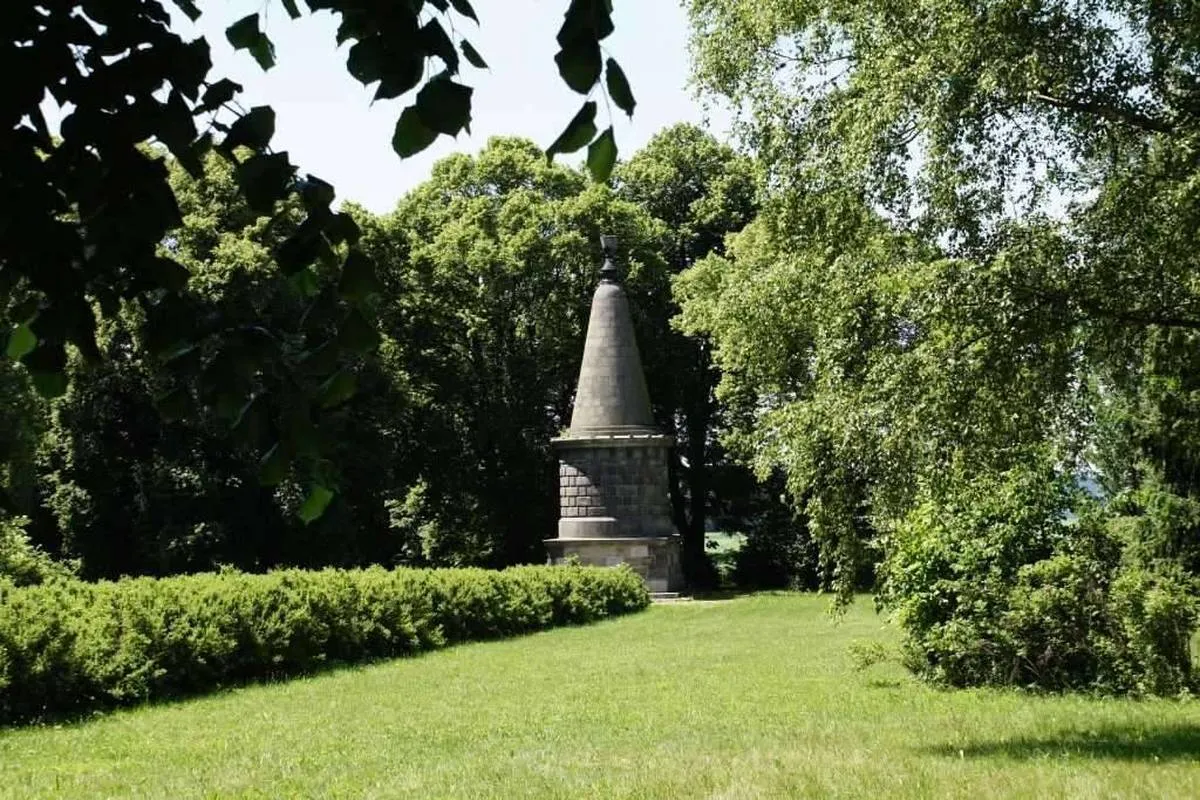 The memorial of 1874 on Žižkovo Pole near Přibyslav, where Žižka died by traditionWikimedia Commons, jib, CC0 (Památník Jana Žižky z Trocnova u silnice Přibyslav - Žižkovo pole (Q16963217) 01.jpg)
After the Bohemian estates are defeated at the White Mountain on 8 November 1620, every church but the Catholic is banned in Bohemia, and in 1623 Emperor Ferdinand II has Žižka’s grave at Čáslav destroyed. The Czech national revival of the 19th century takes him up again: a mound is raised in 1874 on Žižkovo Pole near Přibyslav, where he died, and Tábor puts up Josef Strachovský’s statue of him in 1884. In 1910 part of a skull found in the church at Čáslav is attributed to him, an identification archaeologists still dispute.
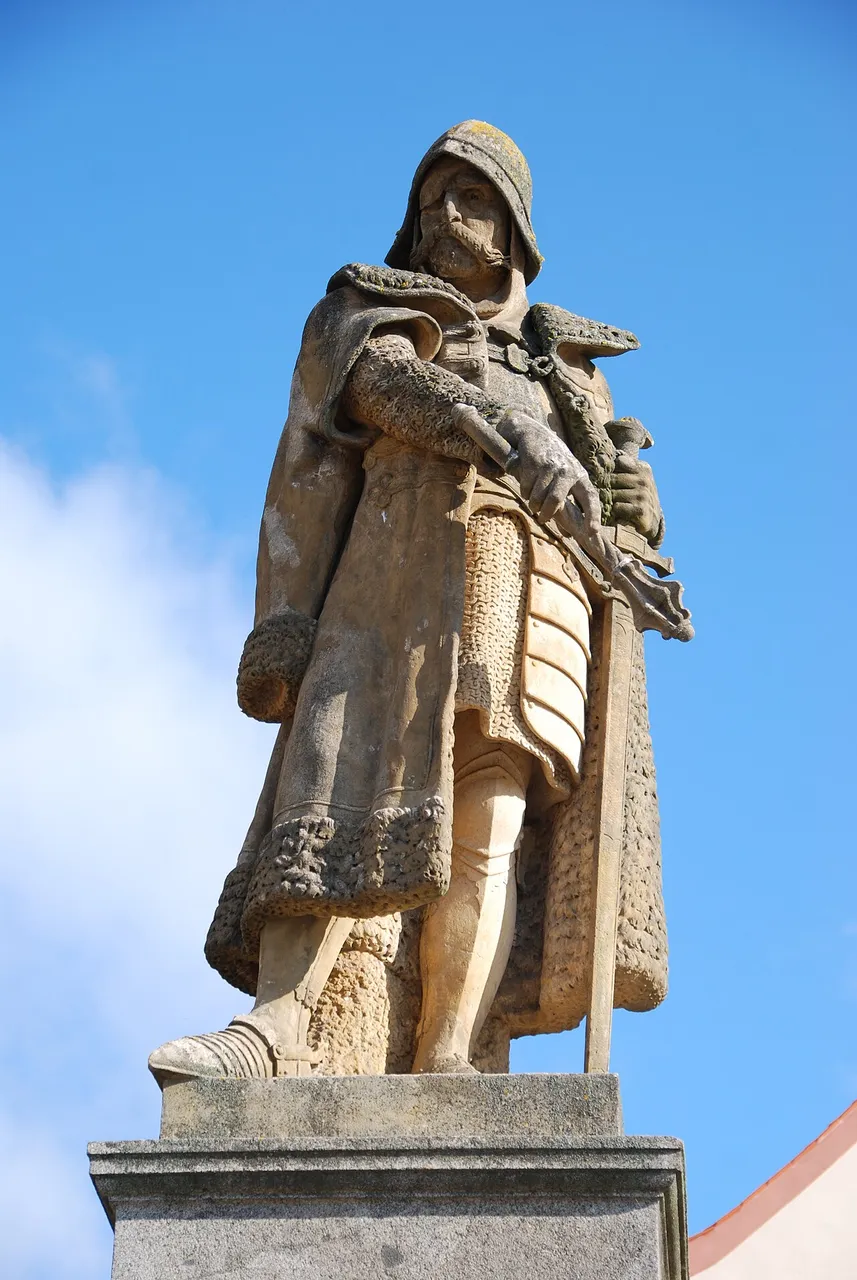 Josef Strachovský’s statue of Jan Žižka on the square of Tábor, 1884Wikimedia Commons, Mil, Public domain (Zizka tabor statue.jpg)
On 14 July 1950, the anniversary of the battle on Vítkov, Bohumil Kafka’s bronze equestrian statue of Žižka is unveiled on the hill. It is 9 metres high and weighs 16.5 tonnes. At Trocnov, where he was born by legend, Josef Malejovský’s granite statue of him on a six-metre pedestal is finished in 1960.
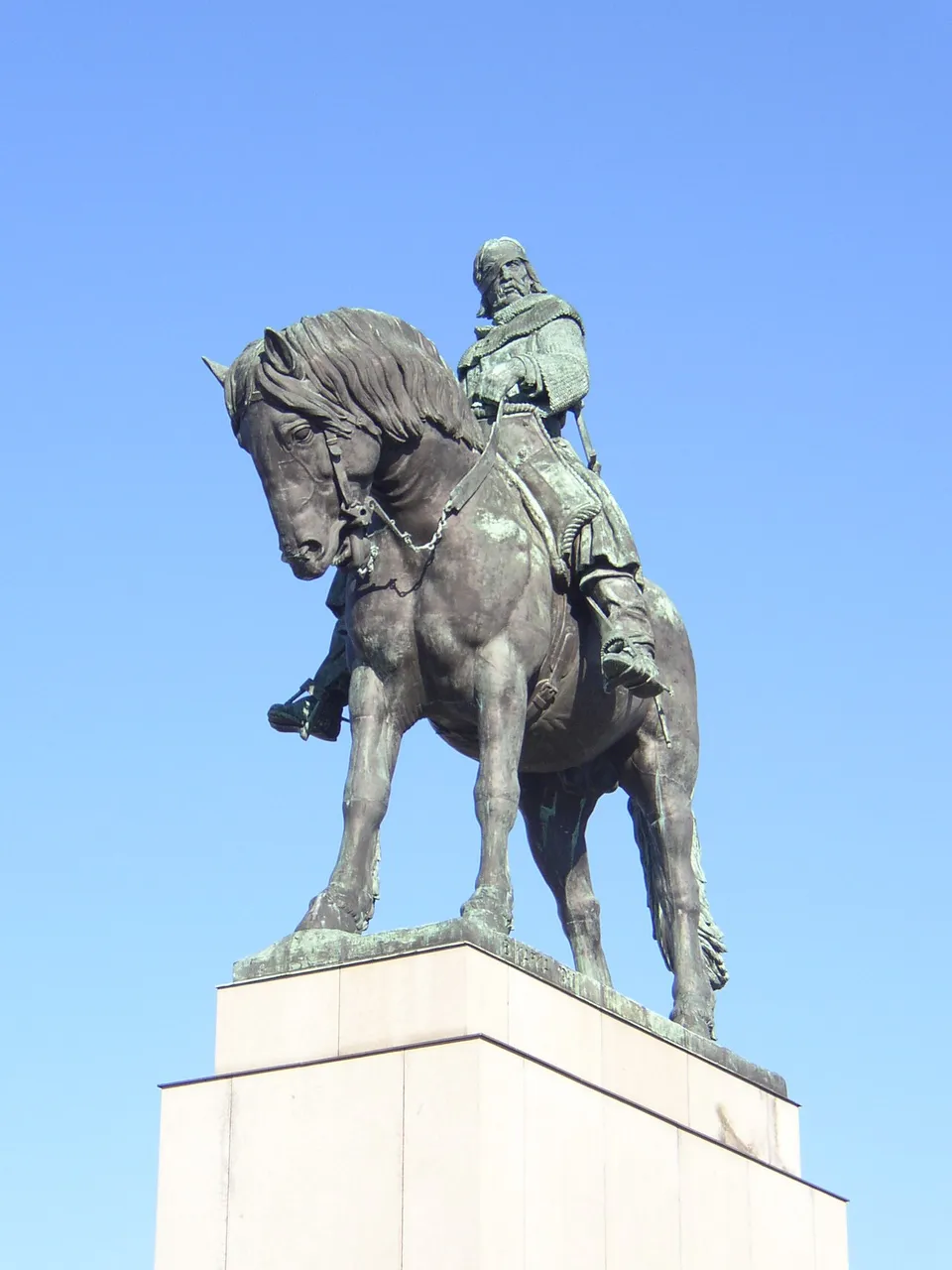 Bohumil Kafka’s equestrian statue of Jan Žižka on Vítkov in Prague, unveiled in 1950Wikimedia Commons, Miaow Miaow, Public domain (Jan Zizka Vitkov Prague CZ 007.jpg)
Sources
- Frederick G. Heymann, John Žižka and the Hussite Revolution (1955).
- František Šmahel, Die Hussitische Revolution (2002), vol. 1.
- Petr Čornej, Jan Žižka: Život a doba husitského válečníka (2019).
Prev: George of Poděbrady, 1448–1471