June – November 1423
Into Hungary, 1423
On 26 June 1423 Tábor and Prague make peace at Konopiště, without Žižka. He moves to Hradec Králové, and in the summer, while the army of Prague is away in Moravia, the party of the radical priest Ambrož lets him take the town, followed by Jaroměř and Dvůr Králové. When the Prague army returns, Žižka defeats it under Diviš Bořek of Miletínek on 4 August at Strachův Dvůr outside Hradec, the first battle of Hussite against Hussite. He then takes Čáslav, and on 13 August he puts a council chosen by lot into Kutná Hora.
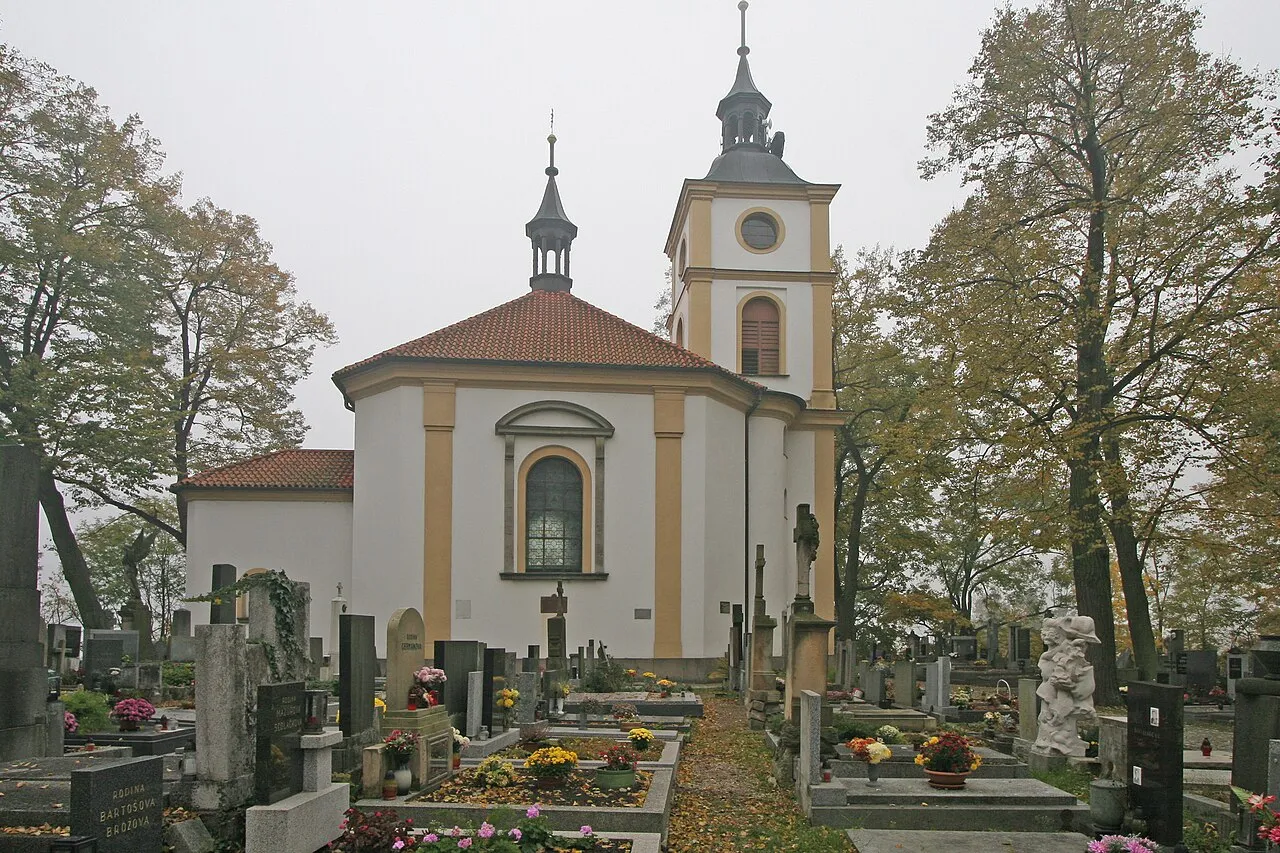 The church of Corpus Christi on the hill of Oreb near Třebechovice, the hill that gave the Orebites their nameWikimedia Commons, Petr1888, CC BY-SA 3.0 (Kostel Božího Těla (Třebechovice pod Orebem), na vrchu Oreb 01.JPG)
In mid September Žižka marches into Moravia, besieges Jihlava and beats back a sally of its men, and on 19 September lays siege to Telč. The Old Czech Annals go on to describe in detail a march into Upper Hungary, the land of today’s Slovakia, and a retreat with the wagons under attack from Hungarian horse. Historians date this record after 1525 and take it either for an invention or for an account of the Orphans’ campaign of 1431. On 22 November the priest Ambrož warns him by letter of a man in his camp paid by the party of Opočno to murder him.
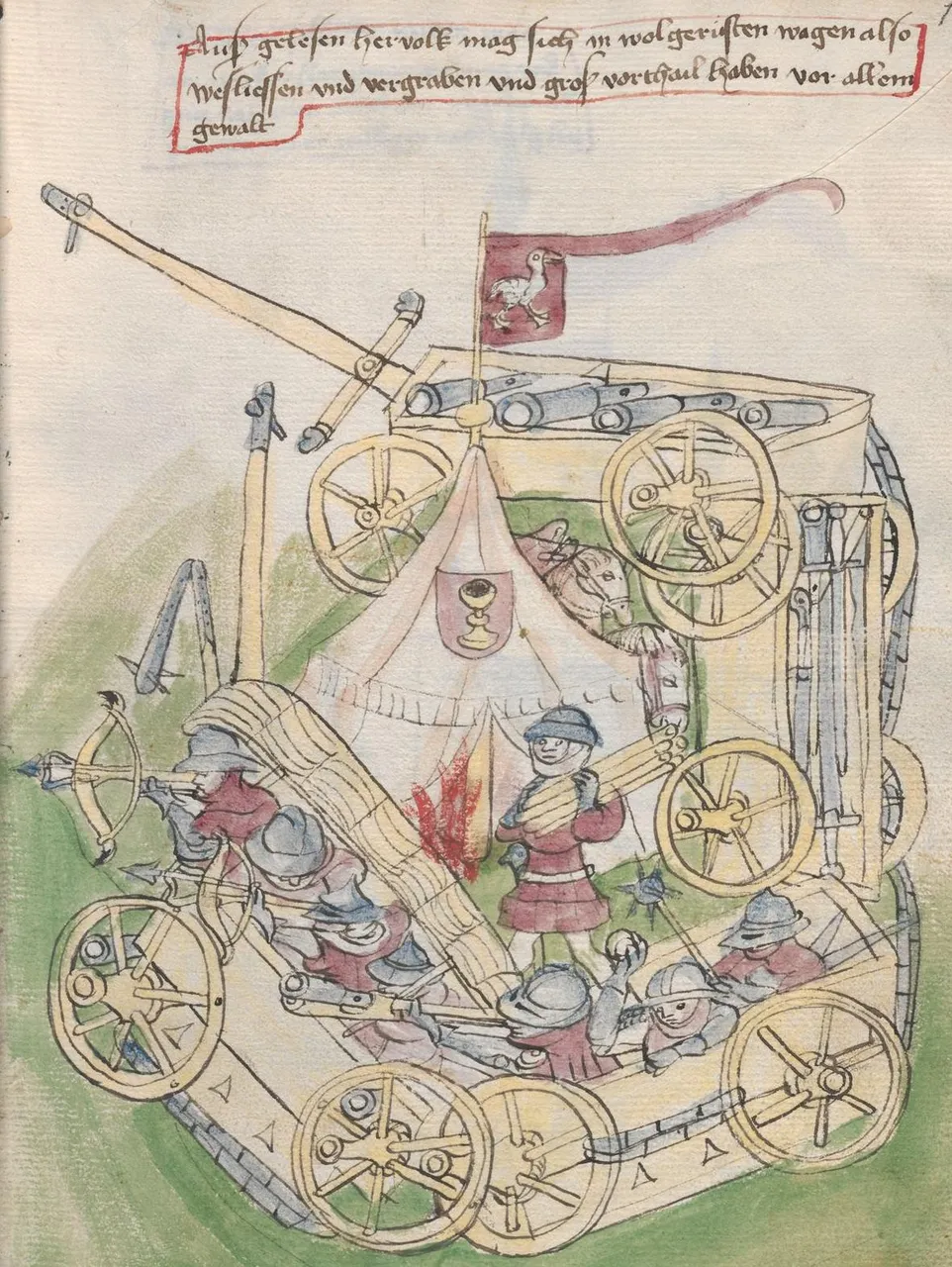 A Hussite war wagon with its crew, handguns and a gun, from a manuscript on the art of war of about 1437Wikimedia Commons, Johannes Wienner, Public domain (War Wagon - Manuscript on the Art of War.jpg)
Sources
- Frederick G. Heymann, John Žižka and the Hussite Revolution (1955).
- Josef Pekař, Žižka a jeho doba III (1992).
- Petr Čornej, Velké dějiny zemí Koruny české V: 1402–1437 (2000).
Prev: The Lesser Tábor and Hořice, 1423Next: Skalice, January 1424