30 July – 16 August 1419
The defenestration of Prague, 30 July 1419
On 6 July 1419 Wenceslas gives Prague’s New Town a new council with a Catholic majority, which arrests several Hussites and forbid Hussite processions. On Sunday 30 July many come armed to the sermon of Jan Želivský at Our Lady of the Snows. Želivský then leads them in procession, carrying the sacrament, to St Stephen’s, where they drive out the congregation at Mass, and on to the New Town hall on the Cattle Market to demand the release of the prisoners.
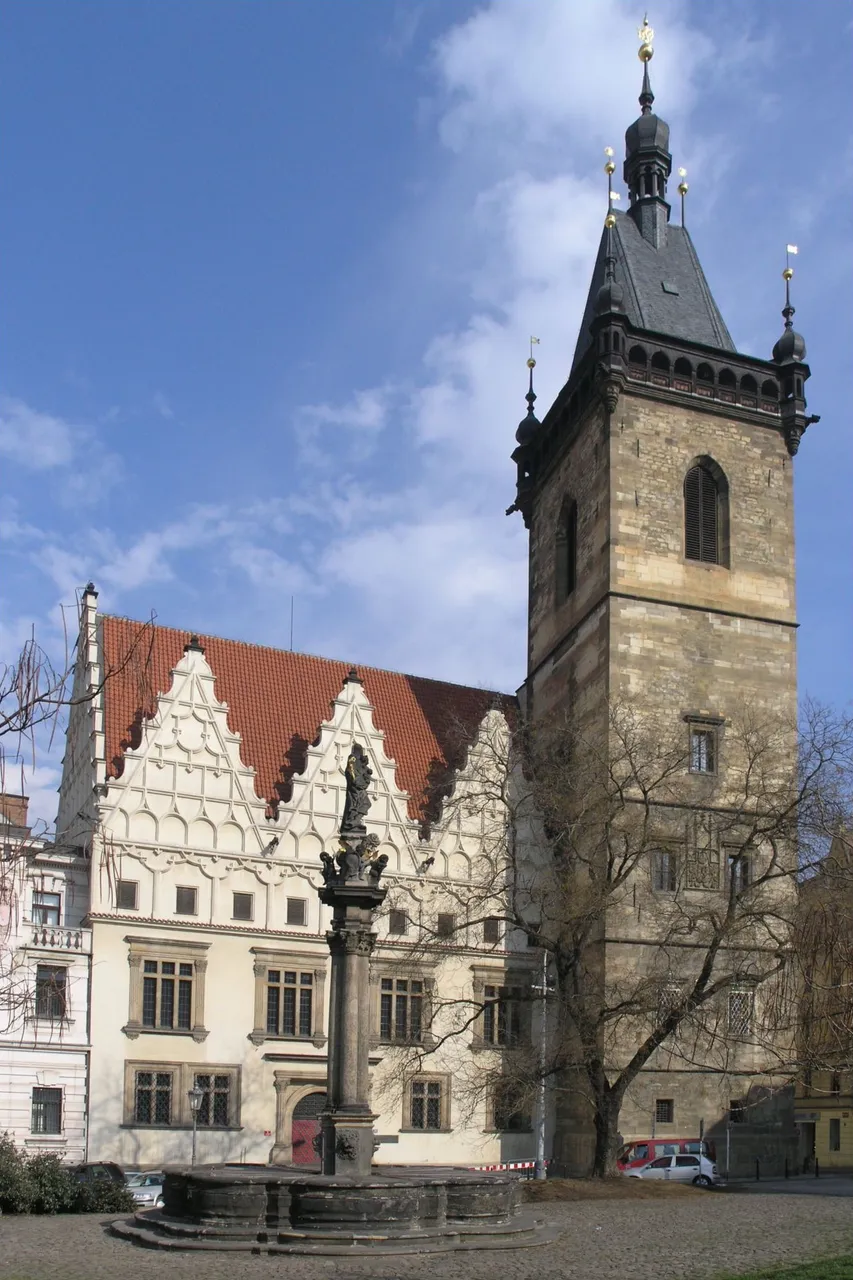 The New Town Hall in PragueWikimedia Commons, Matěj Baťha, CC BY-SA 3.0 (Praha, Nove Mesto - Novomestska radnice III.jpg)
The councillors under the burgomaster Jan Podvinský refuse. The crowd storms the hall and throws the men inside from the windows, and 13 or 14 people die, four of them councillors. Some chronicles tell of a stone thrown at Želivský from a window, but historians take the attack for a planned action. Laurence of Březová names Jan Žižka, a courtier of the king, among the crowd.
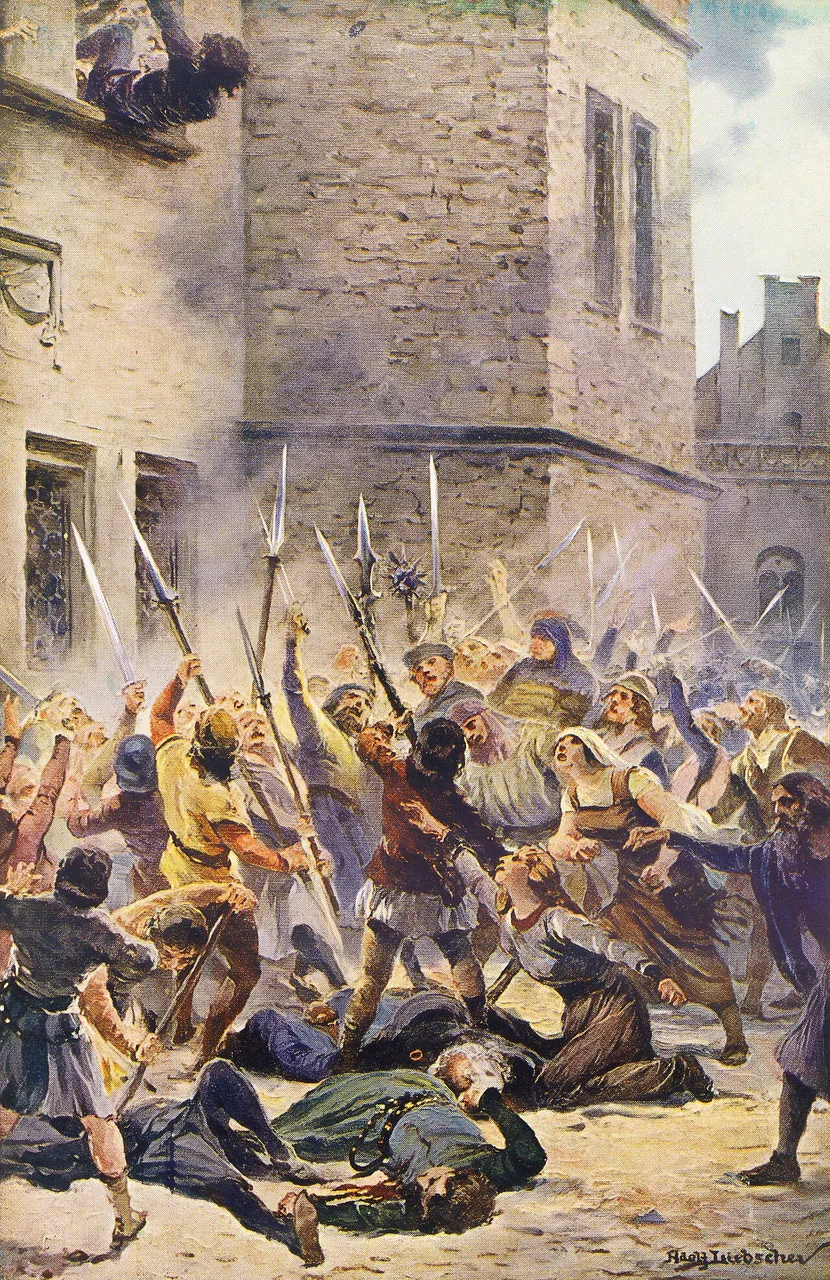 Adolf Liebscher, The councillors thrown from the New Town hall on 30 July 1419, about 1900Wikimedia Commons, Adolf Liebscher, Public domain (Adolf Liebscher - První pražská defenestrace, 1419 (Historie českého národa v obrazech, obr. 037) retouched.jpg)
The New Town elects four captains to keep order, and on 2 August the king, at his castle of Nový Hrad near Kunratice, confirms its new councillors. Wenceslas dies there on 16 August 1419. His heir is his half-brother Sigismund, King of Hungary and King of the Romans, whom the Hussites blame for the death of Hus.
Sources
- Howard Kaminsky, A History of the Hussite Revolution (1967).
- Laurence of Březová, Hussite Chronicle, ed. Jaroslav Goll, Fontes rerum Bohemicarum V (1893).
- Frederick G. Heymann, John Žižka and the Hussite Revolution (1955).
Prev: The chalice and the league, 1415–1419Next: Prague in arms, autumn 1419