1378–1403
The lands of the Bohemian Crown around 1400
The lands of the Bohemian Crown are the kingdom of Bohemia, the margraviate of Moravia, the duchies of Silesia and the margraviates of Upper and Lower Lusatia. Charles IV joins them under the crown of Bohemia in 1348, with Prague as their capital. The king of Bohemia is one of the seven electors who choose the King of the Romans. By some estimates the Church holds a third of the land in Bohemia.
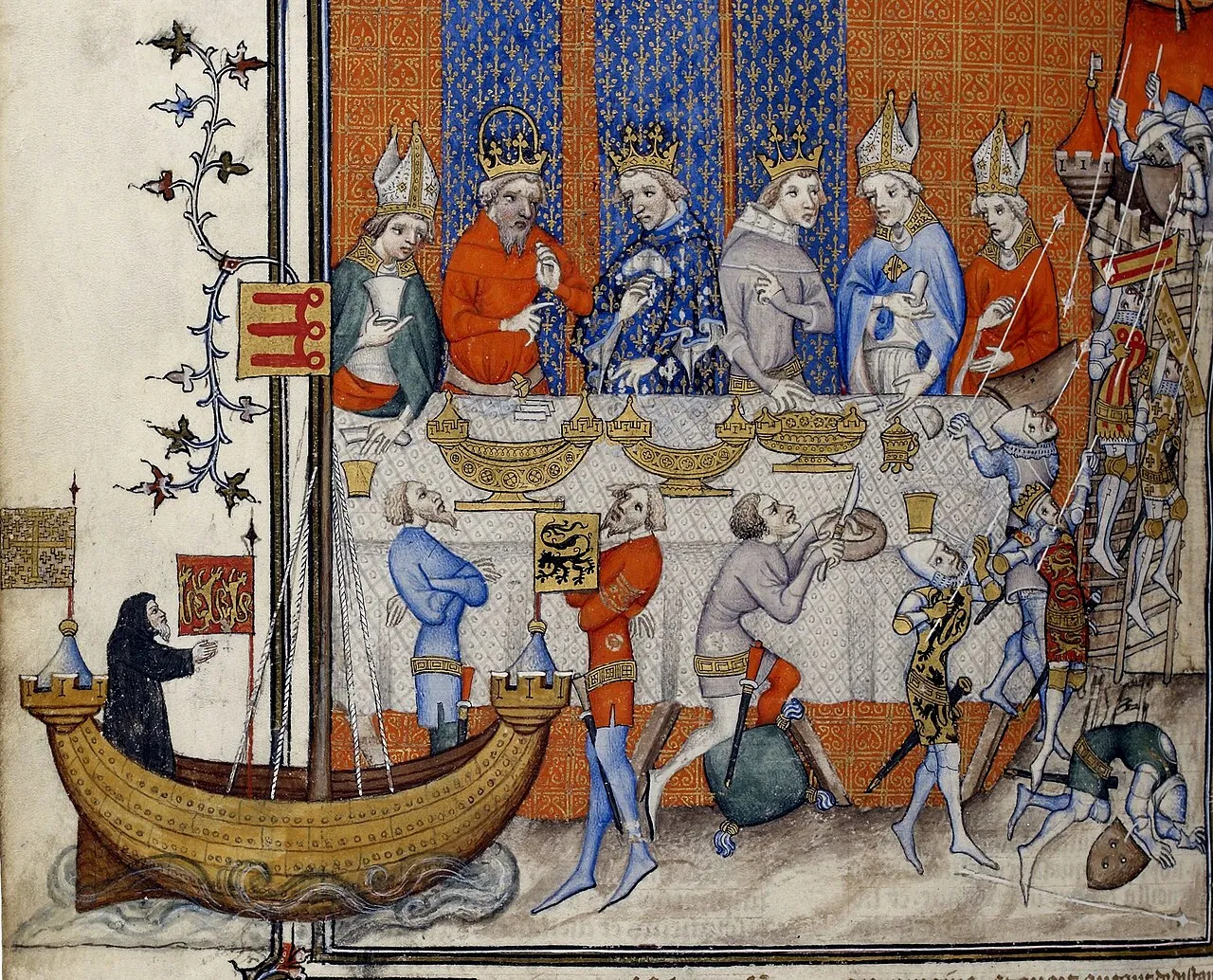 Charles IV, Charles V of France and the young Wenceslas at the banquet in Paris on 6 January 1378, Grandes Chroniques de France of Charles VWikimedia Commons, unknown illuminator, Public domain (Banquet Charles IV (cropped).jpg)
Charles IV’s son Wenceslas IV is King of the Romans from 1376 and King of Bohemia from 1378. On 8 May 1394 the great lords and his cousin Jobst of Moravia take him prisoner at Králův Dvůr. On 20 August 1400 the four Rhenish electors meet at Lahnstein, depose him for idleness and neglect and elect the Count Palatine Rupert the next day. In 1402 his half-brother Sigismund, King of Hungary, takes him prisoner again and hands him to the dukes of Austria in Vienna.
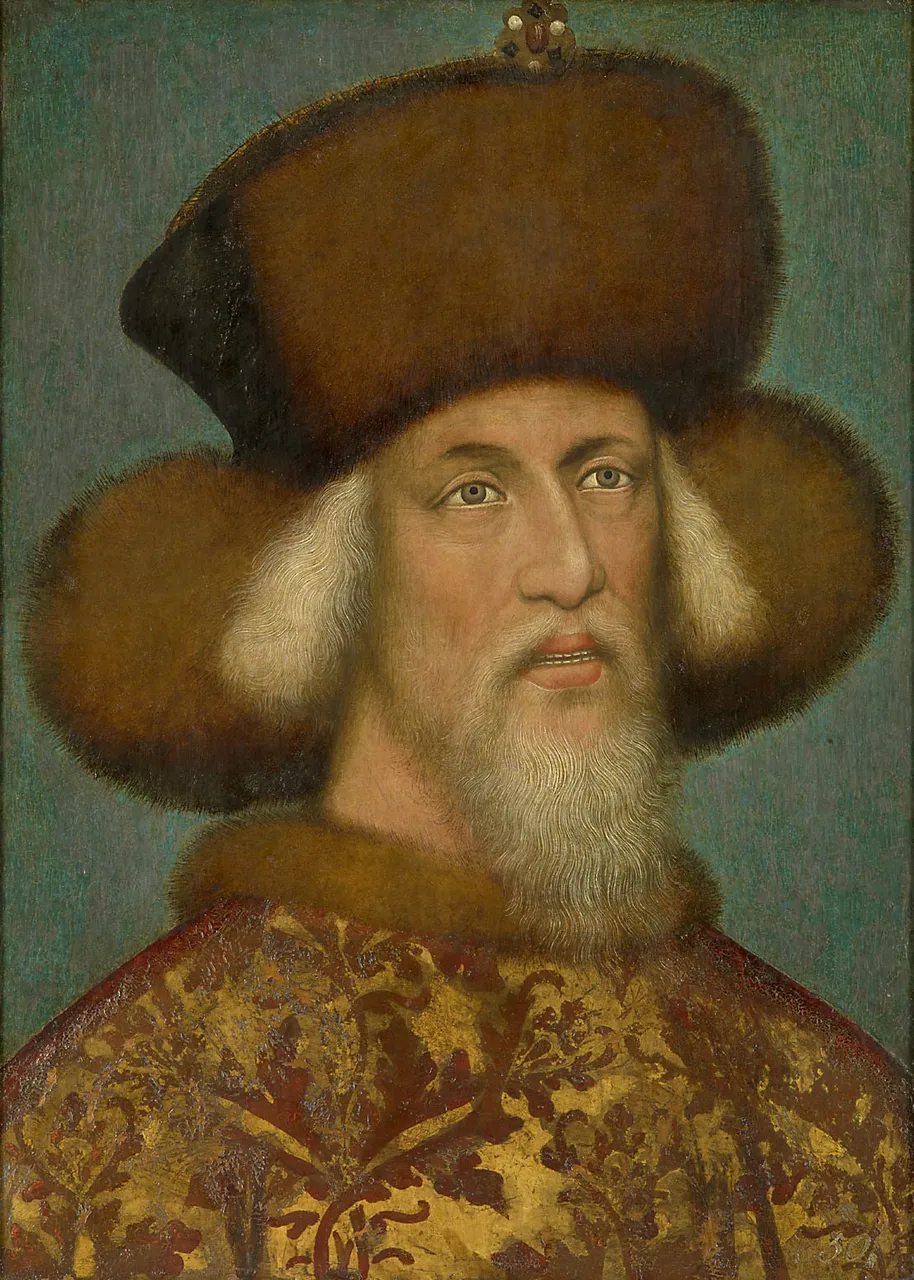 Emperor Sigismund, portrait of about 1433, formerly attributed to PisanelloWikimedia Commons, formerly attributed to Pisanello, Public domain (Pisanello 024.jpg)
Sigismund’s Hungarian troops take Kutná Hora in December 1402 and leave Bohemia in the summer of 1403. Wenceslas escapes from Vienna on 11 November 1403, travels by Mikulov and Kutná Hora and enters Prague at Christmas. His neighbours are the margraves of Meissen to the north, the dukes of Bavaria to the west, the dukes of Austria to the south, Sigismund in Hungary to the south east and Władysław II Jagiełło, King of Poland, to the north east. Wenceslas has no children, and Sigismund is his heir.
Sources
- František Šmahel, Die Hussitische Revolution (2002), vol. 1.
- Jiří Spěváček, Václav IV. 1361–1419 (1986).
- Petr Čornej, Velké dějiny zemí Koruny české V, 1402–1437 (2000).
Next: Prague and Kutná Hora