1435 – 9 December 1437
The Compacts and Sigismund, 1436–1437
After Lipany the moderate Hussites settle with the council and with Sigismund, and the estates elect Jan Rokycana archbishop of Prague, an election the council never confirms. On 5 July 1436 the Compacts of Basel are proclaimed on the square of Jihlava in Moravia before Sigismund, the council’s envoys and the estates of Bohemia and Moravia, and Rokycana reads them out in Latin. They allow communion in both kinds to adults in Bohemia and Moravia wherever it is already the custom. On 14 August the estates accept Sigismund as king at Jihlava, and on 23 August he enters Prague.
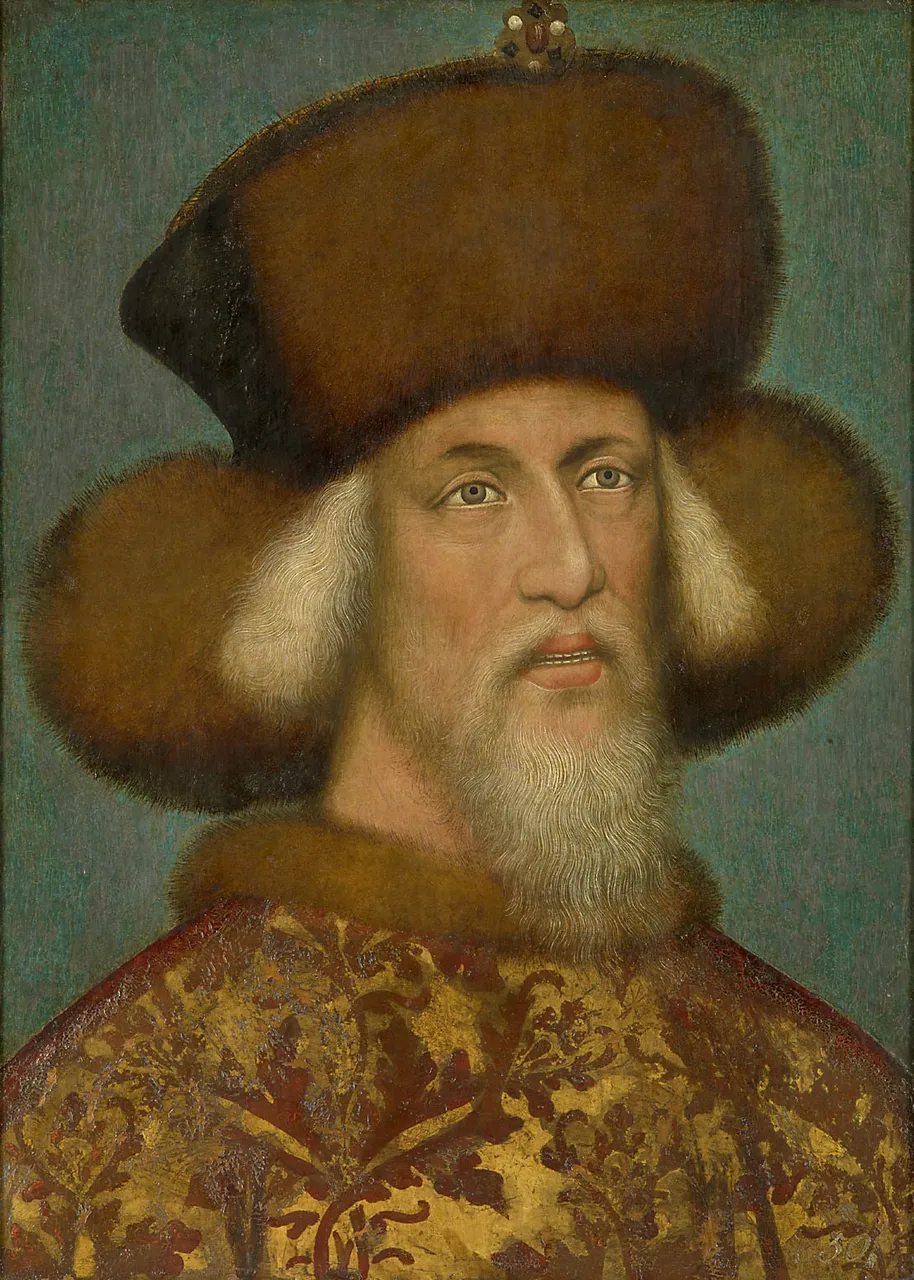 Emperor Sigismund, portrait of about 1433, formerly attributed to PisanelloWikimedia Commons, formerly attributed to Pisanello, Public domain (Pisanello 024.jpg)
Jan Roháč of Dubá leads the Taborites who refuse the settlement. On 19 August 1435 Oldřich of Rožmberk catches a Taborite army at Křeč before it can close its wagon fort, and about 800 are killed. On 25 January 1437 Tábor makes its peace with Sigismund and becomes a royal town, with the imperial eagle in its arms. Roháč holds out in his castle of Sion near Kutná Hora until royal troops under Hynce Ptáček of Pirkštejn take it on 6 September 1437, after a siege of about four months, and on 9 September he is hanged on the Old Town Square of Prague with the surviving defenders.
 The ruins of Sion castle near Kutná Hora, the last stronghold of Jan Roháč of DubáWikimedia Commons, Jiří Sedláček, CC BY-SA 4.0 (Overview of Sion castle in Chlístovice, Kutná Hora District.jpg)
Sigismund rules Bohemia for little more than a year. On 9 November 1437 he leaves Prague for Hungary and dies on the way at Znojmo on 9 December. He is buried at Nagyvárad, beside the tomb of King Saint Ladislaus.
Sources
- František Šmahel, Die Hussitische Revolution (2002), vol. 3.
- Jörg K. Hoensch, Kaiser Sigismund: Herrscher an der Schwelle zur Neuzeit, 1368–1437 (1996).
- Petr Čornej, Velké dějiny zemí Koruny české V (2000).
Prev: The field armies cut offNext: George of Poděbrady, 1448–1471