1414 – 22 July 1419
The chalice and the league, 1415–1419
In 1414, while Hus is at Constance, Master Jakoubek of Stříbro begins to give his parishioners at St Michael’s in Prague’s Old Town communion in both kinds, bread and wine. Other Prague priests follow, and the chalice becomes the sign of Hus’s followers. Hus accepts the practice in a letter shortly before his death, and the council of Constance forbids it in 1415.
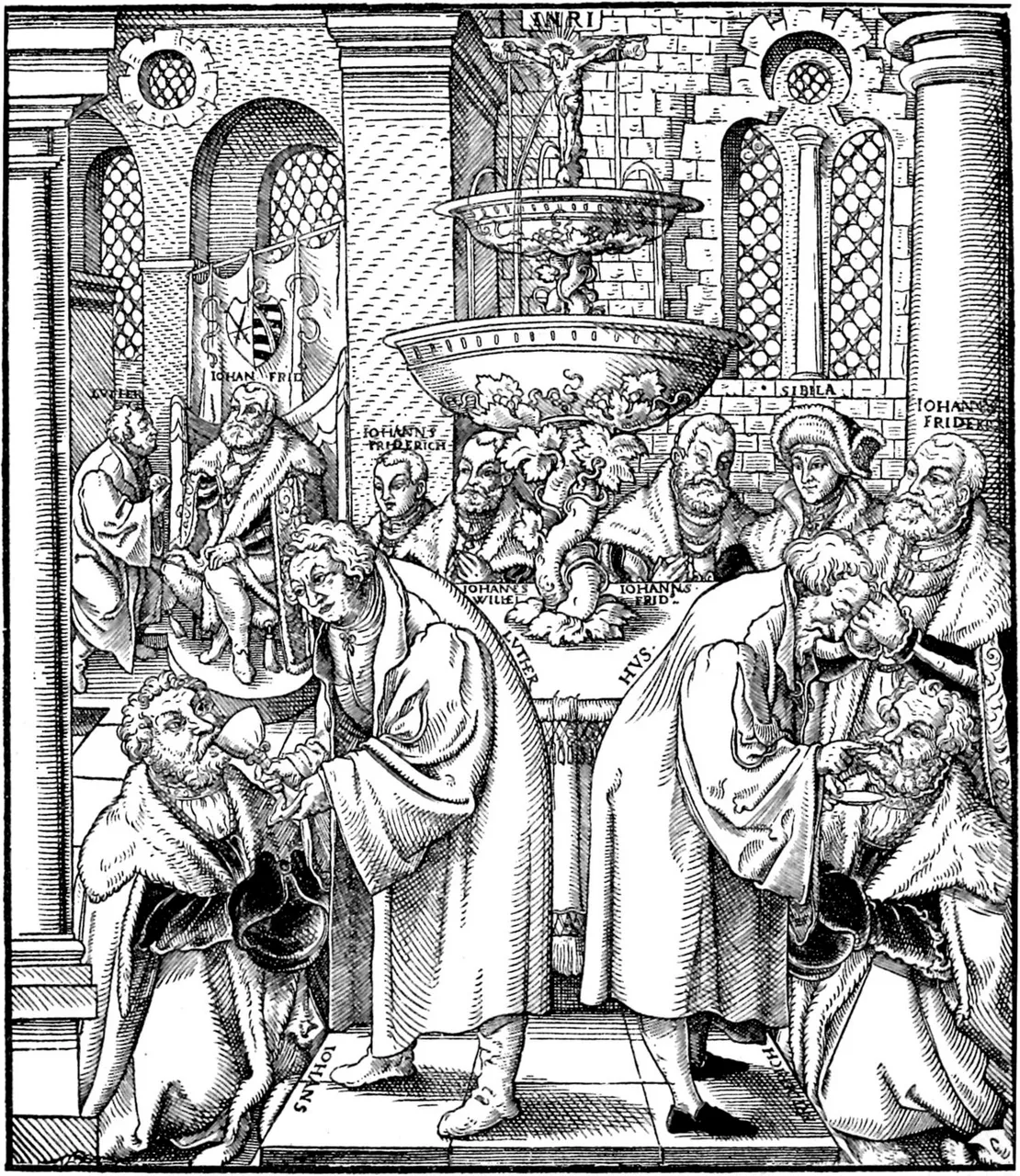 Luther and Hus give communion in both kinds to the princes of Saxony, woodcut from the Cranach workshop, 16th centuryWikimedia Commons, Lucas Cranach the Elder, Public domain (Luther und Hus-Abendmahl.jpg)
On 5 September 1415 the Hussite lords and knights form a league, and on 1 October the Catholic lords answer with a league of their own at Český Brod. On 10 March 1417 the university approves communion in both kinds. When the archbishop forbids the chalice in the whole diocese that year, Čeněk of Vartenberk, the highest burgrave of the kingdom, carries off Bishop Hermann of Mindelheim to his castle of Lipnice and makes him ordain Hussite priests.
On 25 February 1419 Wenceslas, pressed by Sigismund, allows public Hussite services and sermons in Prague in three churches only. Hussites from the countryside begin to gather on hills, and the first great pilgrimage goes to Burkovák near Bechyně, which they name Mount Tábor after the hill of the Gospels, on 16 April 1419. On 22 July a crowd put at up to 42,000, Prague Hussites among them, gathers there to hear the priests preach.
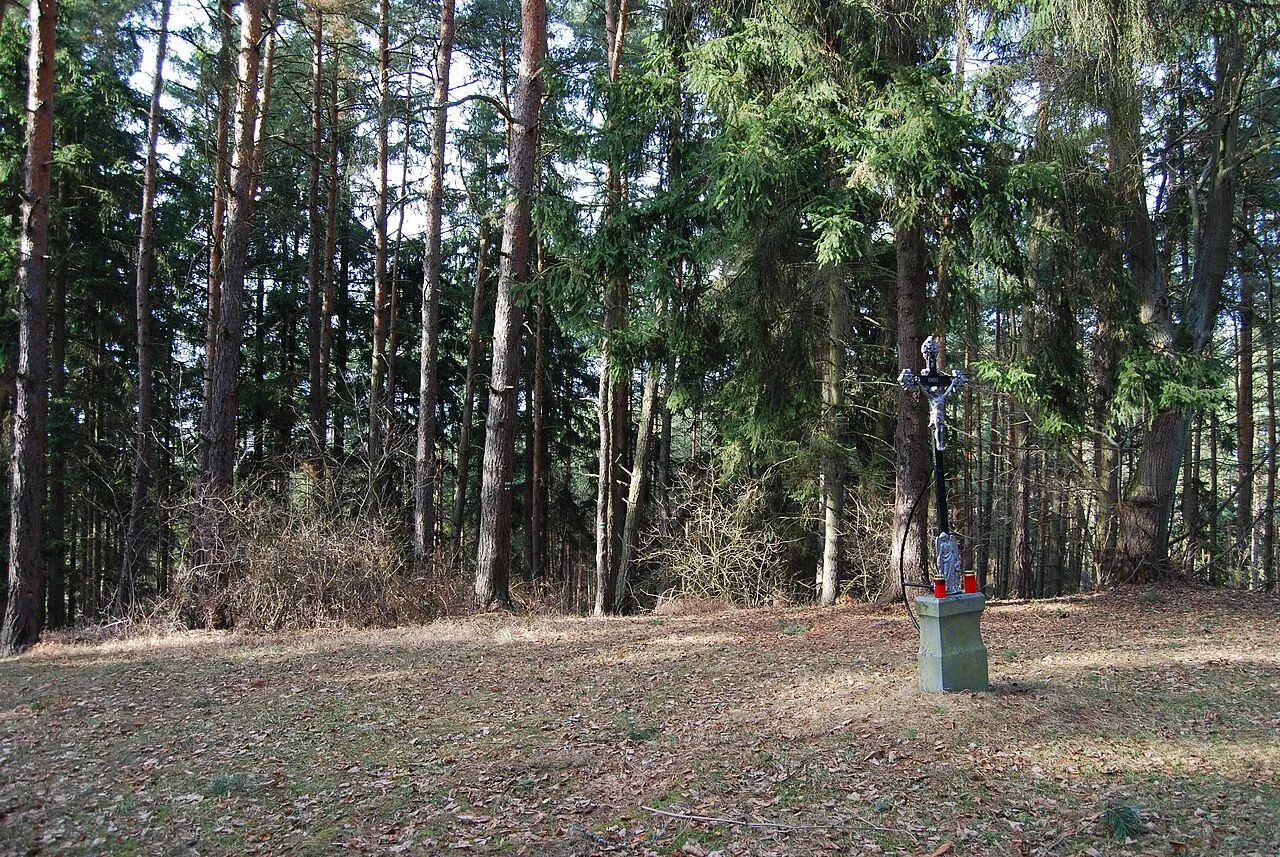 The summit of Burkovák near Nemějice, the Mount Tábor of the pilgrimages of 1419Wikimedia Commons, Richenza, CC BY-SA 3.0 (Nemějice (Slabčice) (3).jpg)
Sources
- Howard Kaminsky, A History of the Hussite Revolution (1967).
- František Šmahel, Die Hussitische Revolution (2002), vol. 2.
- Laurence of Březová, Hussite Chronicle, ed. Jaroslav Goll, Fontes rerum Bohemicarum V (1893).
Prev: Constance, 1414–1416Next: The defenestration of Prague, 30 July 1419