June 1421
The diet of Čáslav, 1421
The diet meets in the church of St Peter and St Paul at Čáslav from 3 to 7 June 1421. The Praguers, the Taborites and the Orebites come, with some Catholic lords, lords from Moravia, Archbishop Konrad and two envoys of Sigismund. The diet adopts the Four Articles of Prague, the Catholics on condition that the masters of the university defend them before a council of the Church, and declares Sigismund unworthy of the crown of Bohemia. The royal garrison of Prague Castle surrenders in the same month.
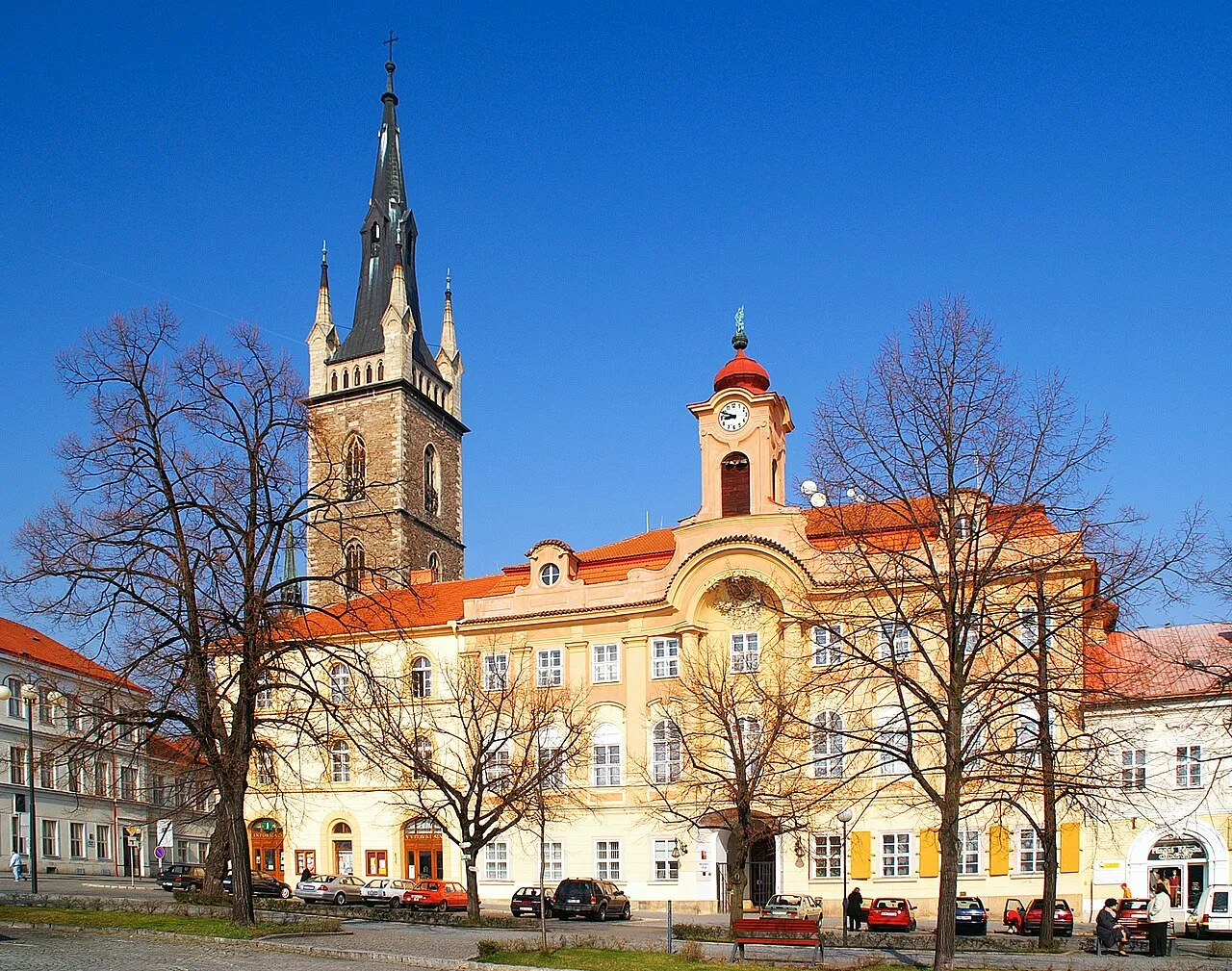 The town hall of Čáslav, with the tower of the church of St Peter and St Paul behind itWikimedia Commons, Stanislav Dusík, CC BY-SA 4.0 (Čáslav , radnice.jpg)
The diet elects a government of twenty to rule until 28 September 1421, unless a king is accepted before then. Two members each come from the Old Town and the New Town of Prague, four from the royal towns of Žatec, Hradec Králové, Kouřim and Kutná Hora and two from Tábor, Žižka and Zbyněk of Buchov, with five lords and five knights. The lords include Čeněk of Vartenberk and the Catholic Oldřich of Rožmberk. The government hardly ever meets, and the Moravian lords renounce the agreement at a diet in Brno from 11 to 14 June.
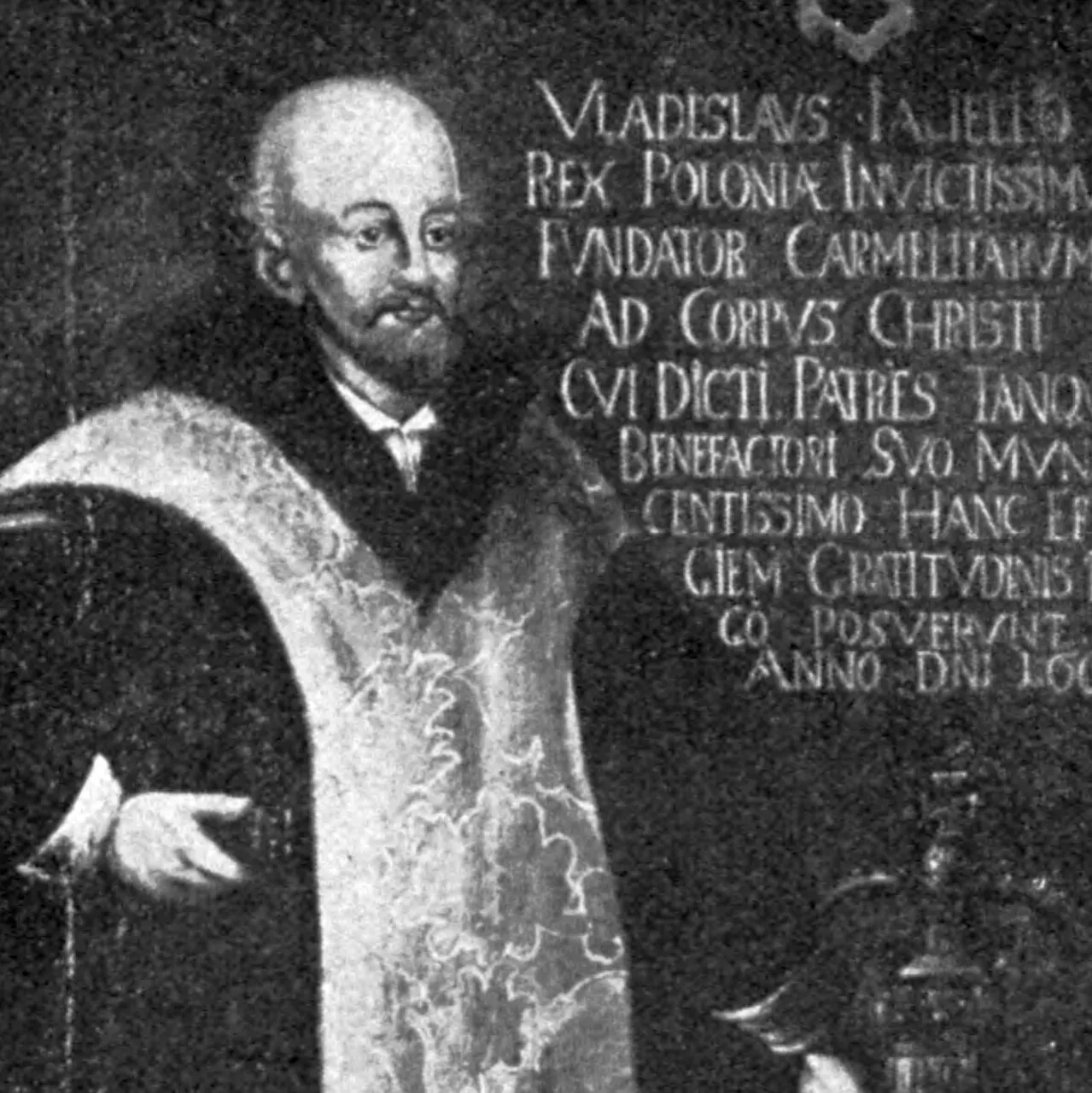 Władysław II Jagiełło, King of Poland, in a later portrait in PoznańWikimedia Commons, anonymous painter, Public domain (Poznań - Jogaila of Lithuania (detail).jpg)
The crown is offered to Vytautas, Grand Duke of Lithuania, after his cousin Władysław II Jagiełło, King of Poland, has declined it. Vytautas accepts on condition that the Hussites return to the Church of Rome. By the summer of 1421 most of Bohemia is with the Hussites, while Plzeň and Tachov in the west, the royal towns of České Budějovice and Most and the castles of Karlštejn and Loket hold for Sigismund.
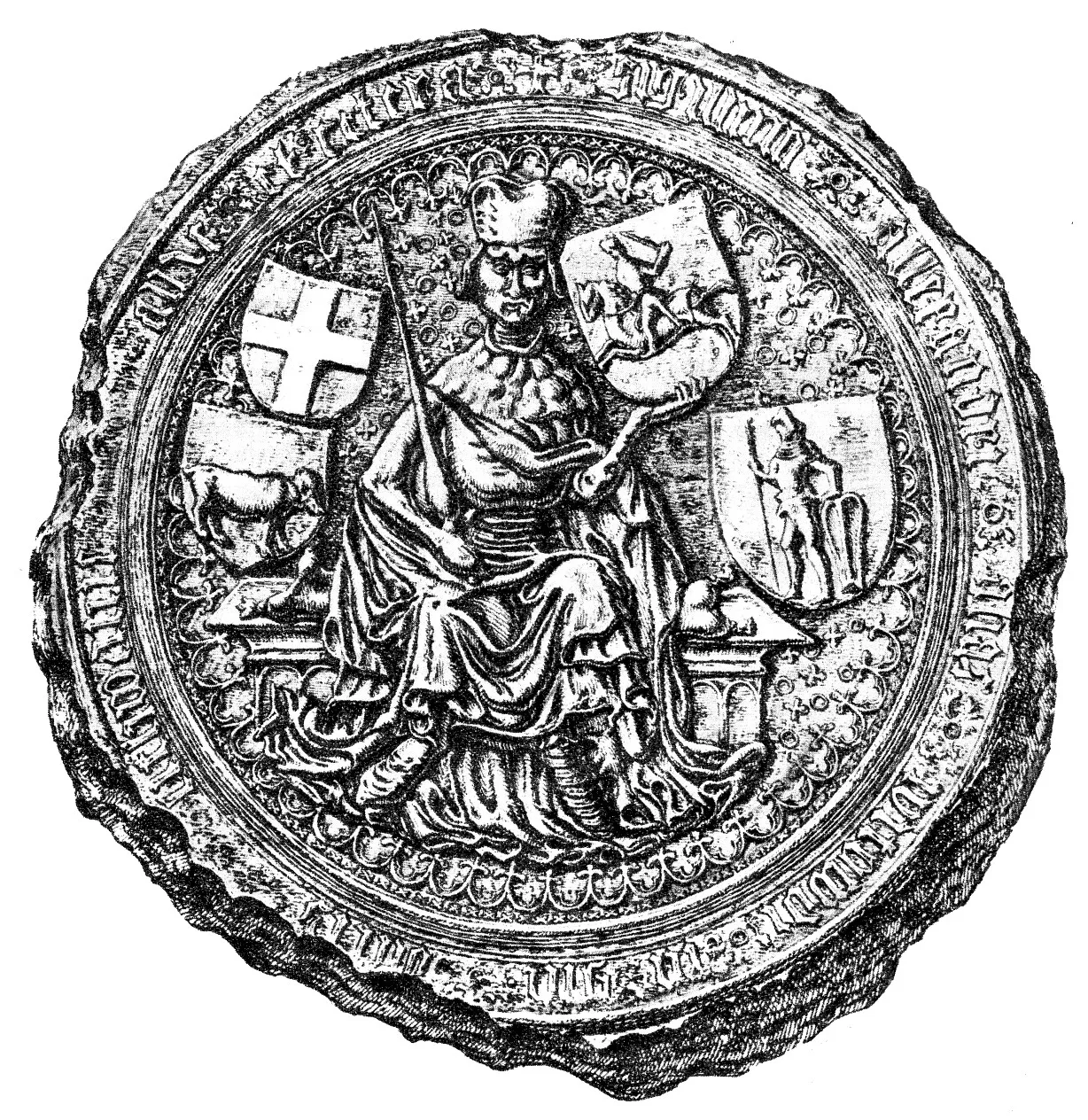 The seal of Vytautas, Grand Duke of LithuaniaWikimedia Commons, unknown author, Public domain (Seal of Vytautas the Great.jpg)
Sources
- Frederick G. Heymann, John Žižka and the Hussite Revolution (1955).
- Petr Čornej, Velké dějiny zemí Koruny české V, 1402–1437 (2000).
- František Šmahel, Die Hussitische Revolution (2002).
Prev: Rabí and the Adamites, 1421Next: The second crusade and Žatec, 1421