1402–1409
Hus and the Bethlehem Chapel, 1402–1409
Jan Hus is born about 1370 at Husinec in South Bohemia and takes his name from the village. He studies at the university of Prague, becomes a master of arts in 1396 and is ordained priest in 1400. On 14 March 1402 he becomes preacher at the Bethlehem Chapel in the Old Town, founded in 1391 for sermons in Czech, which holds about 3,000 people. From its pulpit he criticises the morals and wealth of the clergy and calls for reform of the Church.
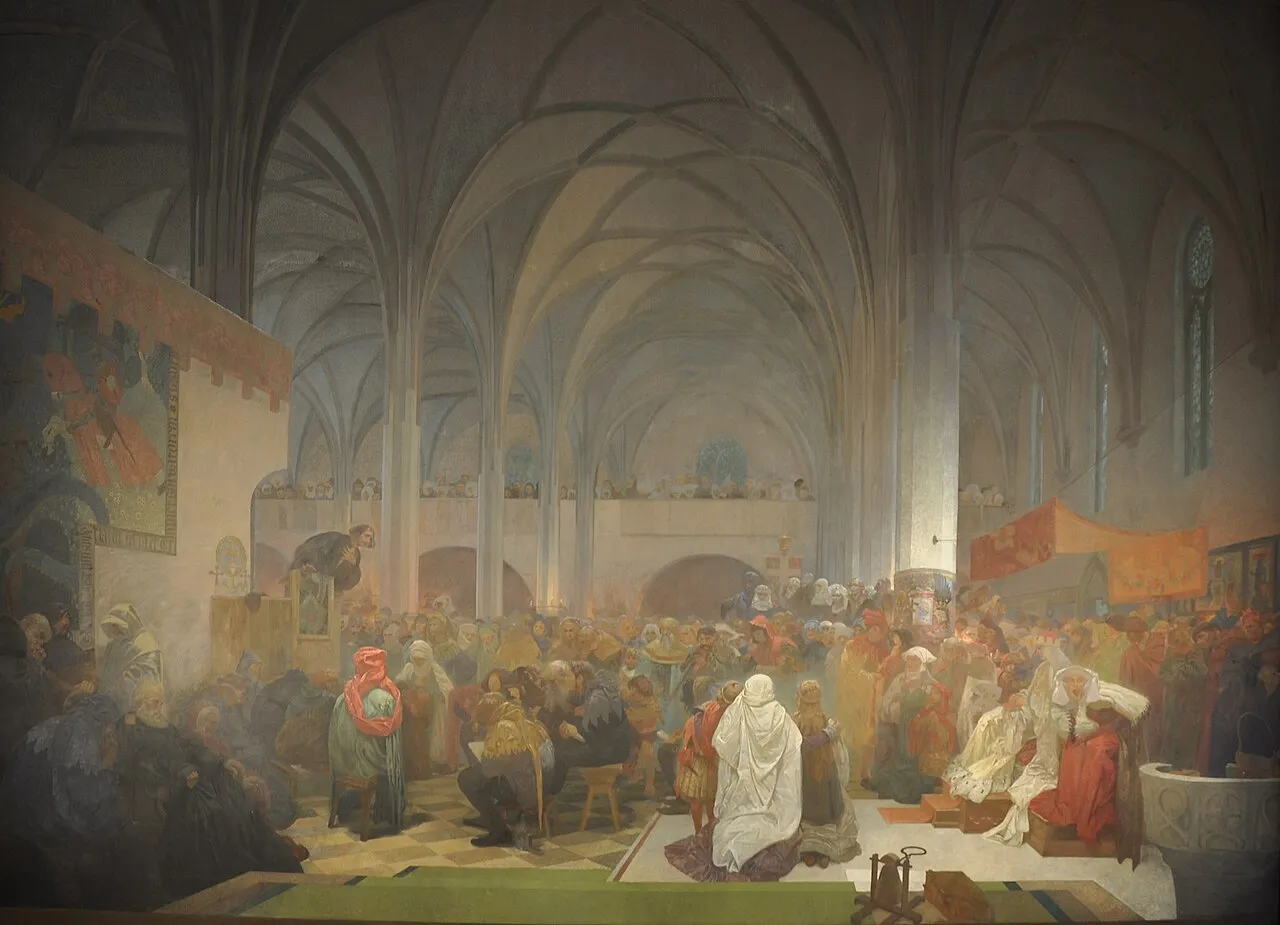 Alfons Mucha, Master Jan Hus Preaching at the Bethlehem Chapel, 1916, from The Slav EpicWikimedia Commons, Alfons Mucha, Public domain (Kazani mistra jana husa v kapli betlemske 81x61m.jpg)
Czech students, Jerome of Prague among them, bring the works of the Oxford theologian John Wycliffe to Prague. In 1403 the university disputes 45 articles drawn from Wycliffe’s writings. Reformers of the Bohemian nation of masters defend Wycliffe, and most masters of the Bavarian, Saxon and Polish nations call for his condemnation. From 1408 Archbishop Zbyněk Zajíc of Hazmburk acts against the Wycliffites.
When the Church has two popes, Gregory XII in Rome and Benedict XIII in Avignon, Wenceslas IV wants the university to support the council at Pisa, which is to end the schism. On 18 January 1409, at Kutná Hora, he gives the Bohemian nation three votes in the university and the other three nations one vote together. Between one and two thousand masters and students leave Prague that year, many of them for Leipzig, where a new university is founded for them. Hus is rector for the winter term of 1409–1410.
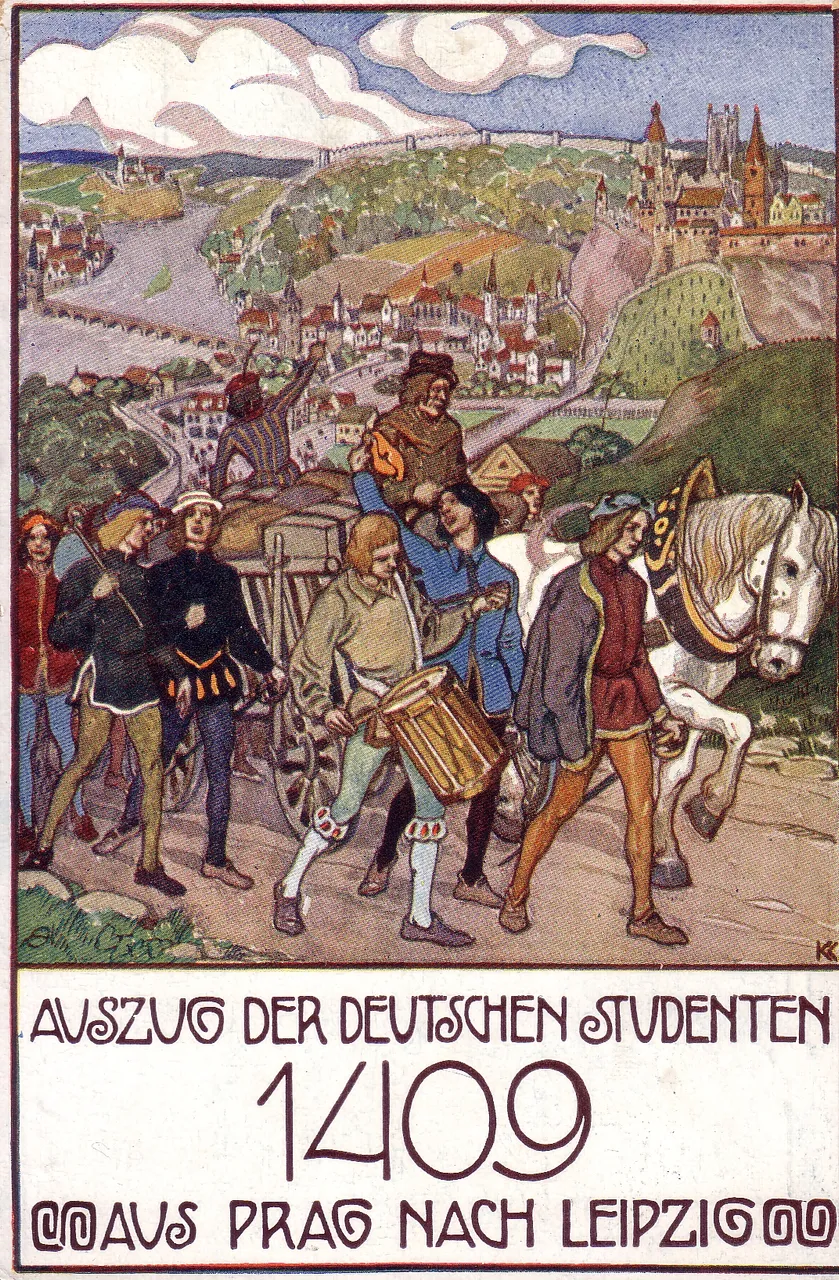 “Departure of the German students from Prague to Leipzig, 1409”, a German postcard of the early 20th centuryWikimedia Commons, unknown artist, Public domain (Auszug aus Prag 1409.jpg)
Sources
- Thomas A. Fudge, Jan Hus: Religious Reform and Social Revolution in Bohemia (2010).
- Matthew Spinka, John Hus: A Biography (1968).
- František Šmahel, Die Hussitische Revolution (2002), vol. 2.
Prev: Grunwald and the king’s court, 1410–1419Next: Indulgences and exile, 1410–1414