April – September 1433
To the Baltic, 1433
In 1432 the Orphans agree at Pabianice to help King Władysław II Jagiełło of Poland against the Teutonic Order, for pay and for an alliance with Poland. At the end of April 1433 Jan Čapek of Sány leads about 7,000 foot, 700 horse and 350 wagons north through Silesia and crosses the Oder at Głogów in mid May. With the Polish army they take Santok and Strzelce Krajeńskie in the Neumark, which the Order holds, and besiege Gorzów in vain.
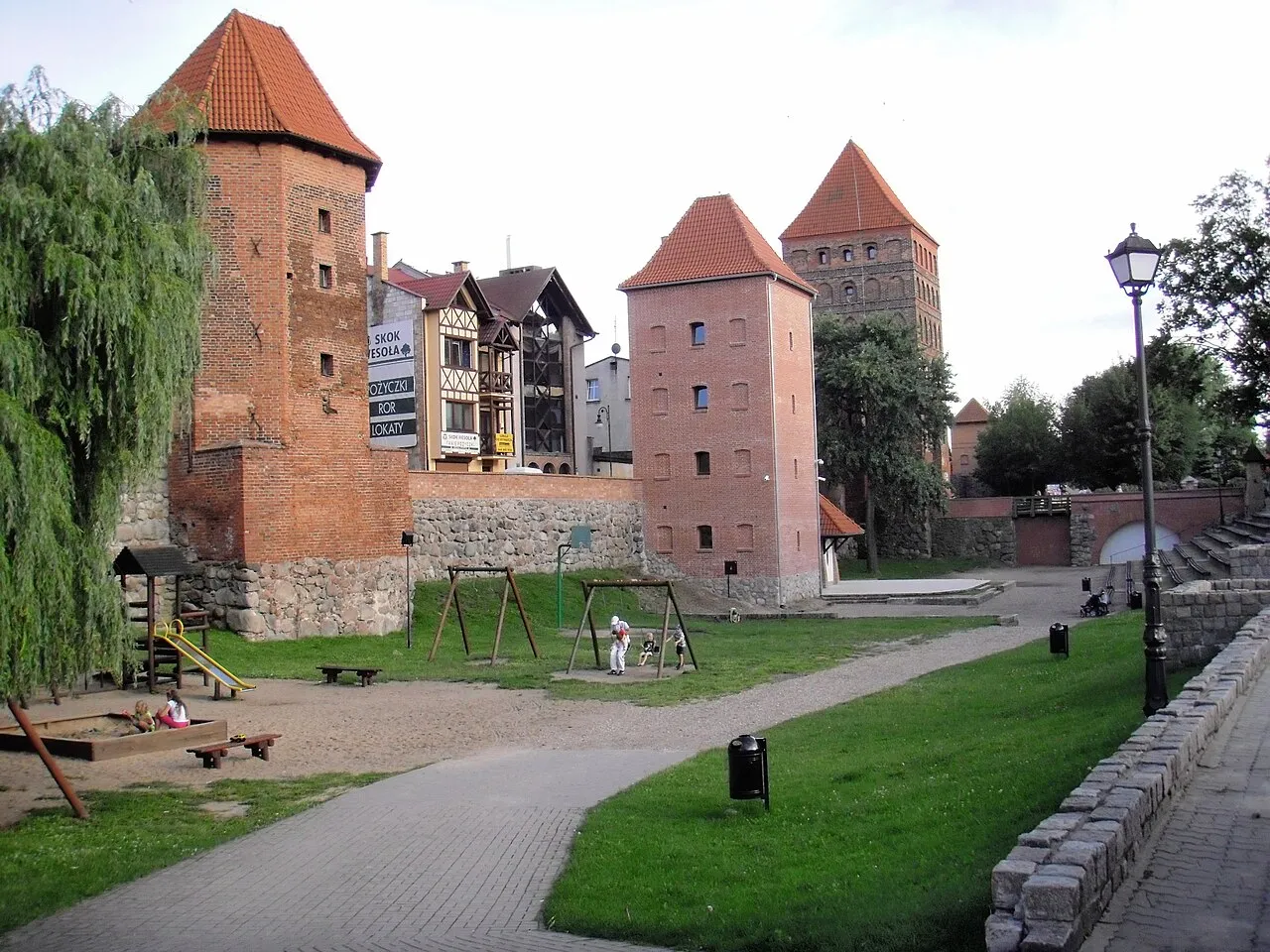 The walls and towers of Chojnice, built in the second half of the 14th century, besieged by the Poles and the Orphans in 1433Wikimedia Commons, Autostopowicz, CC BY-SA 3.0 pl (Chojnice, mury obronne z basztami, 2 poł. XIV.JPG)
From early July to 15 August the Polish and Hussite army besieges Chojnice, and its assault on 22 July fails. They march north along the Vistula, burn the abbey of Pelplin and take Tczew on 29 August. On 1 September they camp before Gdańsk, and on 4 September they ravage the abbey of Oliwa and reach the sea. By the Czech accounts the soldiers fill bottles with sea water to take home, and some are knighted on the shore.
 The Vistula at Tczew, which the Poles and the Orphans took on 29 August 1433Wikimedia Commons, Andrzej Otrębski, CC BY-SA 3.0 (Tczew Wisla.jpg)
 The church of the Cistercian abbey of Oliwa near Gdańsk, ravaged by the Hussites on 4 September 1433Wikimedia Commons, kallerna, CC BY-SA 4.0 (Oliwa Cathedral Gdańsk.jpg)
The army turns back by Starogard, and on 13 September 1433 the Order agrees to the truce of Jasieniec. The Polish king pays the Orphans their wages and gives Čapek gifts, among them a camel. The Orphans march home and join the siege of Plzeň in the autumn.
Sources
- Marian Biskup, Wojny Polski z Zakonem Krzyżackim 1308–1521 (1993), pp. 168 to 185.
- Josef Macek, Husité na Baltu a ve Velkopolsku (1952).
- David Papajík, Jan Čapek ze Sán (2011).
Prev: Brandenburg and Silesia, 1432Next: The Cheb Judge and Basel, 1432–1433