April – June 1348
Tunis and the Maghreb, April 1348
In April 1348 a ship from Sicily, which has had the plague since October 1347, brings it to Tunis. The city has a new master. Abu al-Hasan Ali, the Marinid sultan of Fez, took Tunis from the Hafsid dynasty in 1347 and now rules the Maghreb from the Atlantic to Ifriqiya. Many scholars of Fez and Tlemcen have come to Tunis with his court.
In April 1348 the Arab tribes of the south defeat the sultan near Kairouan, and he falls back on Tunis, where the plague is spreading. At Tlemcen his son Abu Inan hears that his father has died and declares himself sultan. Abu al-Hasan does not win back his throne.
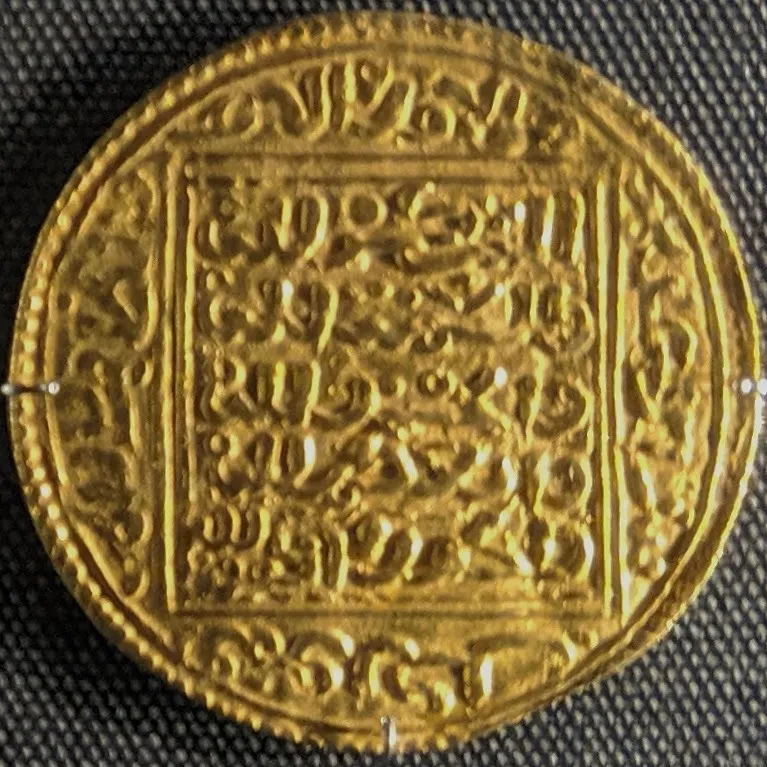 A gold dinar of the Marinid sultan Abu al-Hasan AliWikimedia Commons, Waleedcop2, CC BY-SA 4.0 (Abu al-Hasan Ali Marinid gold coin.jpg)
Ibn Khaldun, born in Tunis in 1332, is 16 years old. The plague kills his father and his mother and many of the scholars who taught him. In 1377 he writes the Muqaddima, the introduction to his history of the world. A plague, he writes there, struck the East and the West alike, emptied towns and buildings, and swept away much of what people had built.
From Tunis the plague moves west along the coast and the caravan roads, to Béjaïa, then called Bougie, and to Tlemcen. When the sultan’s soldiers go home from Tunis, it breaks out in Fez, the Marinid capital.
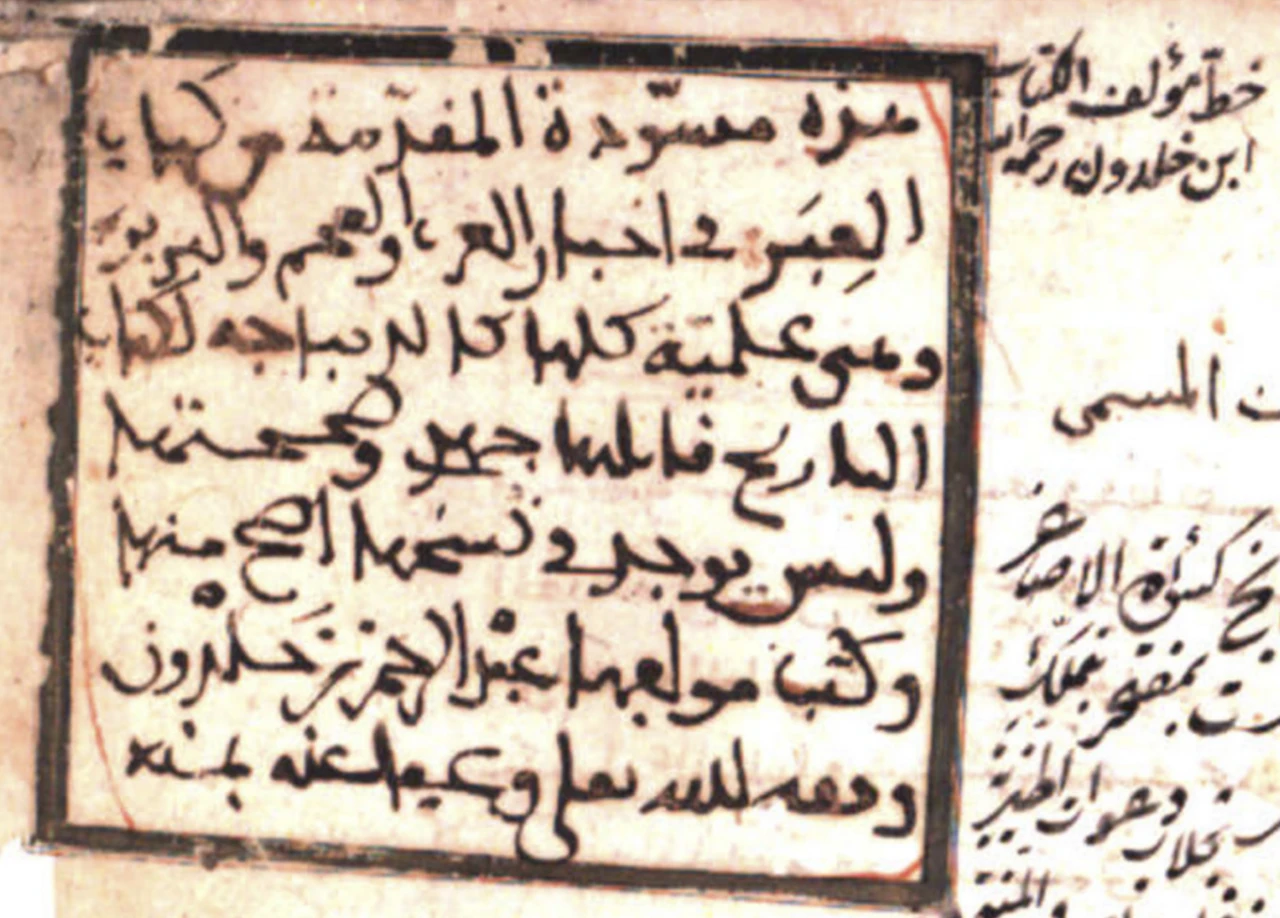 Ibn Khaldun’s own handwriting in a manuscript of his Muqaddima, Süleymaniye Library, IstanbulWikimedia Commons, Ibn Khaldun, Public domain (Handwriting of Ibn Khaldūn, al-Muqaddima, MS Atıf Efendi 1936, f. 7a.png)
Sources
- Ibn Khaldun, al-Taʿrīf (autobiography, about 1395), and al-Muqaddima (1377), translated by Franz Rosenthal (1958).
- Michael W. Dols, The Black Death in the Middle East (1977).
- Ole J. Benedictow, The Complete History of the Black Death (2021).
Prev: Florence, spring 1348Next: Mallorca and Catalonia, April – May 1348