1348
Pistoia and Venice, 1348
Two Italian towns write down rules against the plague in the spring of 1348, and their texts survive. Both act on the belief of the time that the plague spreads through foul air, and through the sick and their belongings.
On 30 March 1348 the Great Council of Venice elects three men to take charge of the public health. On their advice the dead are taken by boat to two islands of the lagoon, San Marco in Boccalama and San Leonardo in Fossamala, and buried there in deep graves, away from the crowded parishes of the city. So many Venetians flee, officials among them, that in July the councils threaten those who leave with the loss of their offices and rank.
Pistoia, a town of Tuscany between Florence and Lucca, issues its ordinances on 2 May 1348 and changes them in the weeks after. Its citizens may not travel to Pisa or Lucca, where the plague is raging, and no one from those towns may enter. Old clothes and linen may not be brought in. The dead are to be carried in closed wooden coffins and buried at least two and a half arm’s lengths deep, about 1.5 metres. Only the family may follow a body to the grave, the bells may not be rung for the dead, and no one may wear mourning, so that the sick do not lose heart. Butchers and tanners get new rules to keep foul smells out of the streets.
Neither town keeps the plague out. These rules are among the oldest public health measures of a town government that survive, and the health offices, quarantine and isolation hospitals of later centuries grew from them. Venice made its health office permanent in 1486.
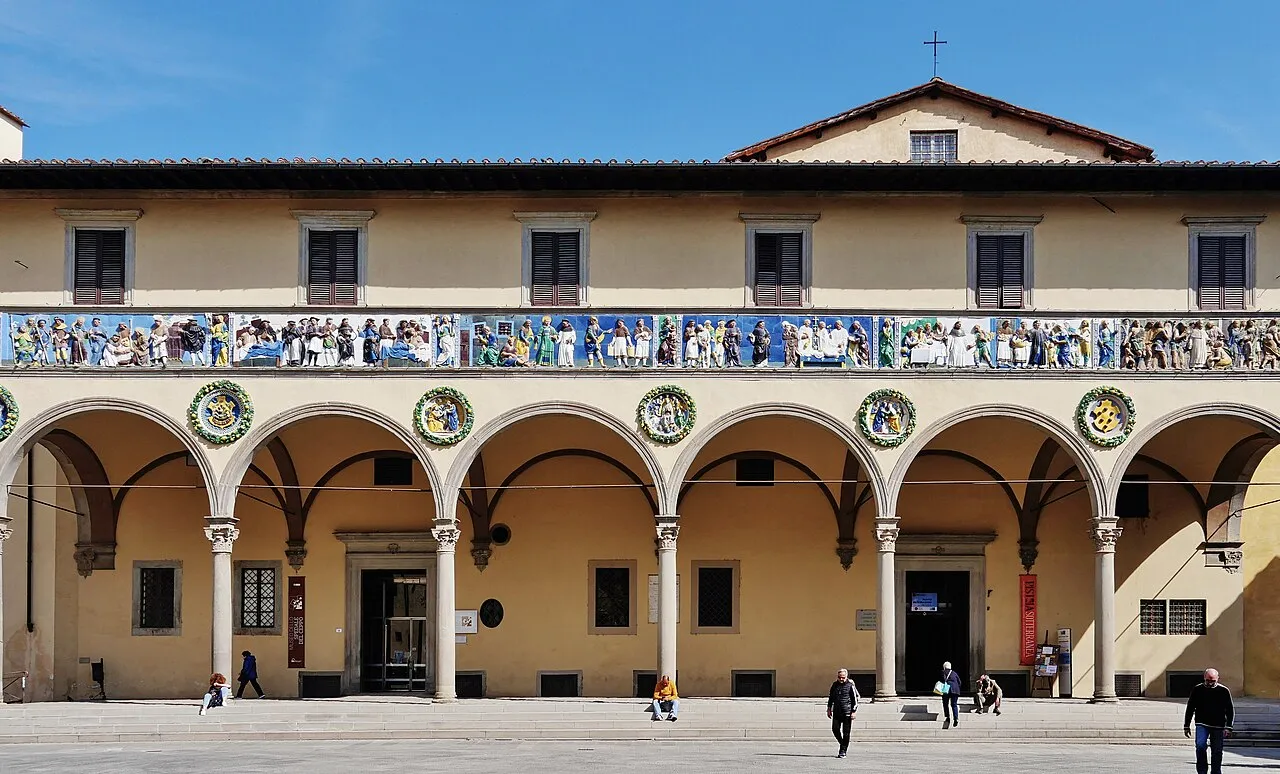 The Ospedale del Ceppo, the hospital of Pistoia since the 13th century. Its painted frieze was added in the 16th century.Wikimedia Commons, Zairon, CC BY 4.0
Sources
- Ordinances for sanitation in a time of mortality, Pistoia, 2 May 1348, in Rosemary Horrox (ed.), The Black Death (1994).
- Acts of the Great Council of Venice, 30 March – April 1348, in Rosemary Horrox (ed.), The Black Death (1994).
- Ole J. Benedictow, The Complete History of the Black Death (2021).
Prev: Clement VI at Avignon, 1348Next: The doctors of 1348