1347
Orhan’s lands, 1347
Across the Bosporus from Constantinople lie the lands of Orhan, the second ruler of the Ottomans. From his capital, Bursa, he holds İznik, taken in 1331, İzmit, taken in 1337, and the southern and eastern shores of the Sea of Marmara. In 1346 he marries Theodora, a daughter of John Kantakouzenos, and Ottoman troops fight for Kantakouzenos in Thrace.
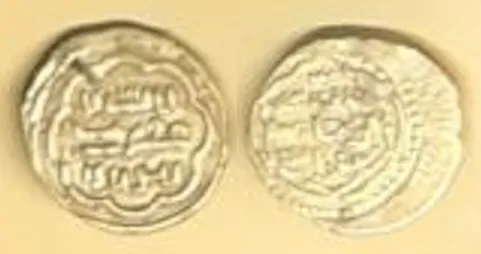 A silver coin of Orhan, in the İznik MuseumWikimedia Commons, Mkadioglu2020, CC BY-SA 4.0
The plague probably reaches these lands from Constantinople and the ports of the Marmara in 1347, but the sources are almost silent. Orhan’s state keeps few written records, and the Ottoman chronicles, written a century later, do not mention it. No figure of the dead survives for Bursa or İznik.
The historian Uli Schamiloglu argues that the plague struck the people of crowded towns harder than nomads who moved with their herds. In his view it weakened the Byzantine towns of the region more than the Turkmen around them, and so it helped the Ottomans grow. The sources for Anatolia in these years are too few to test his view.
Muslim jurists teach a saying of the Prophet Muhammad on plague: when you hear of it in a land, do not go there, and when it breaks out in the land where you are, do not leave. They also teach that a believer who dies of plague dies a martyr. The Ottoman state sets up its first quarantine system only in 1838.
Sources
- Uli Schamiloglu, “The Rise of the Ottoman Empire: The Black Death in Medieval Anatolia and its Impact on Turkish Civilization”, in Views from the Edge: Essays in Honor of Richard W. Bulliet, ed. Neguin Yavari, Lawrence G. Potter and Jean-Marc Ran Oppenheim (2004).
- Michael W. Dols, The Black Death in the Middle East (1977).
- Birsen Bulmuş, Plague, Quarantines and Geopolitics in the Ottoman Empire (2012).
- Colin Imber, The Ottoman Empire, 1300–1481 (1990).
Prev: Constantinople, 1347Next: Alexandria, autumn 1347