June – August 1348
Bologna, Padua and the Alps, June 1348
By June 1348 the plague has spread from the ports and from Tuscany into the towns of the Po valley, among them Padua and Bologna. At Bologna it strikes the university, and Giovanni d’Andrea, its best known teacher of law, dies on 7 July. The city’s notaries write wills by the hundred that summer. Their registers survive, and the historian Shona Kelly Wray has used them to follow the plague through the city’s streets and families.
Petrarch, the poet, is living at Parma. On 19 May a letter from his friend Ludovico at Avignon tells him that Laura, the woman of his poems, died there on 6 April. He writes the news in Latin on a page at the front of his copy of Virgil. He first saw her in the church of Saint Clare at Avignon on 6 April 1327, he notes, and on the same sixth of April in 1348 “that light was taken from this light, while I was by chance at Verona, alas, unaware of my fate.” The book is now in the Biblioteca Ambrosiana at Milan.
In the north-east the plague crosses the Alps. Carinthia is still clearing the ruins of the earthquake of 25 January 1348, which wrecked Villach and brought down a mountainside on the villages below. Later in 1348 the plague comes over the passes from Friuli. The chronicle of the monastery of Neuberg in Styria dates its outbreak in Austria to 11 November 1348. The chroniclers of the region wrote of the earthquake and the plague as one disaster, and the historian Christian Rohr has shown how their accounts mix the two.
Milan, the largest city of the region, has few deaths in 1348 by its chroniclers’ account. Historians still debate why, and the last page of the next chapter follows that debate.
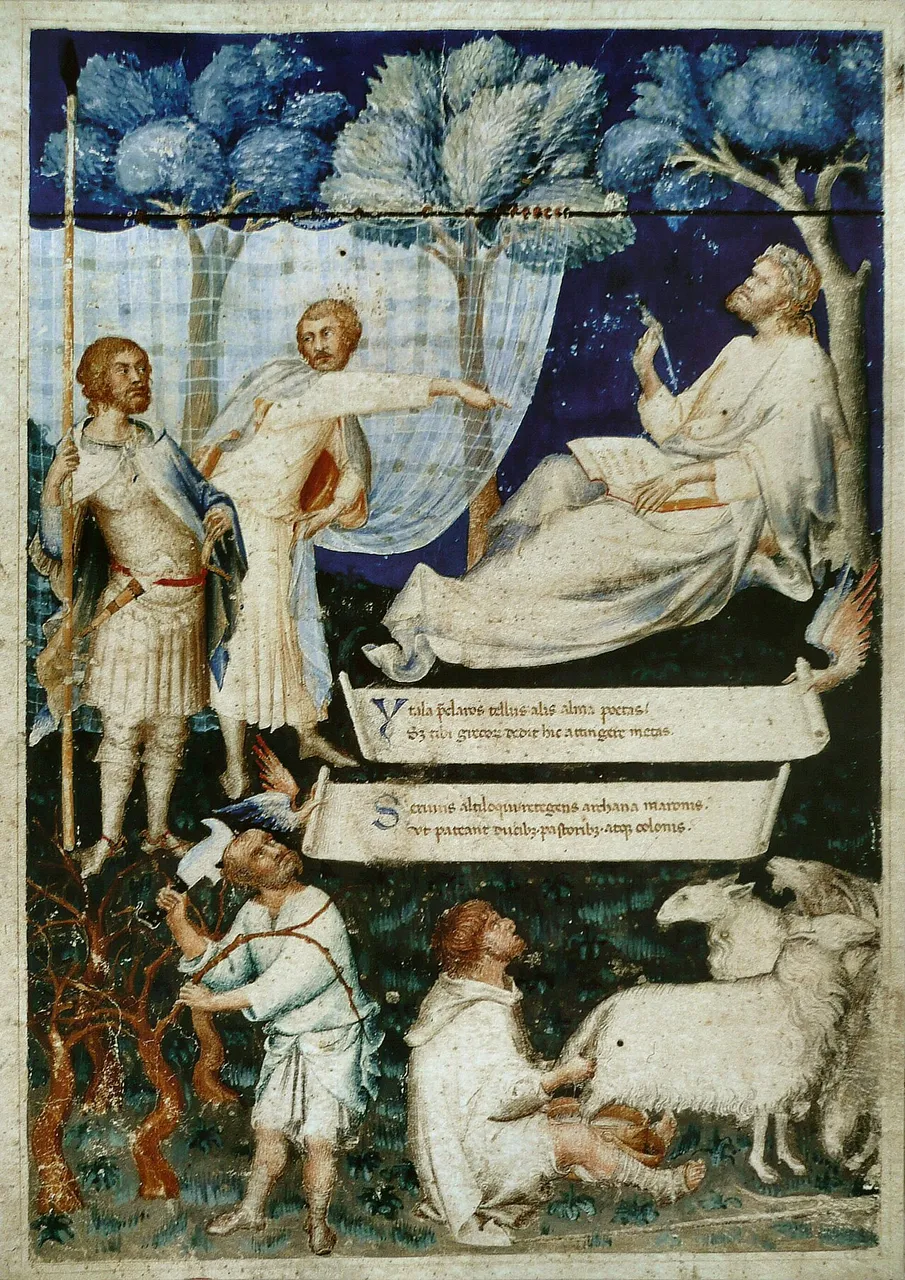 Simone Martini’s frontispiece for Petrarch’s copy of Virgil, about 1336. Petrarch wrote his note on Laura’s death in this book.Wikimedia Commons, Simone Martini, Biblioteca Ambrosiana, public domain
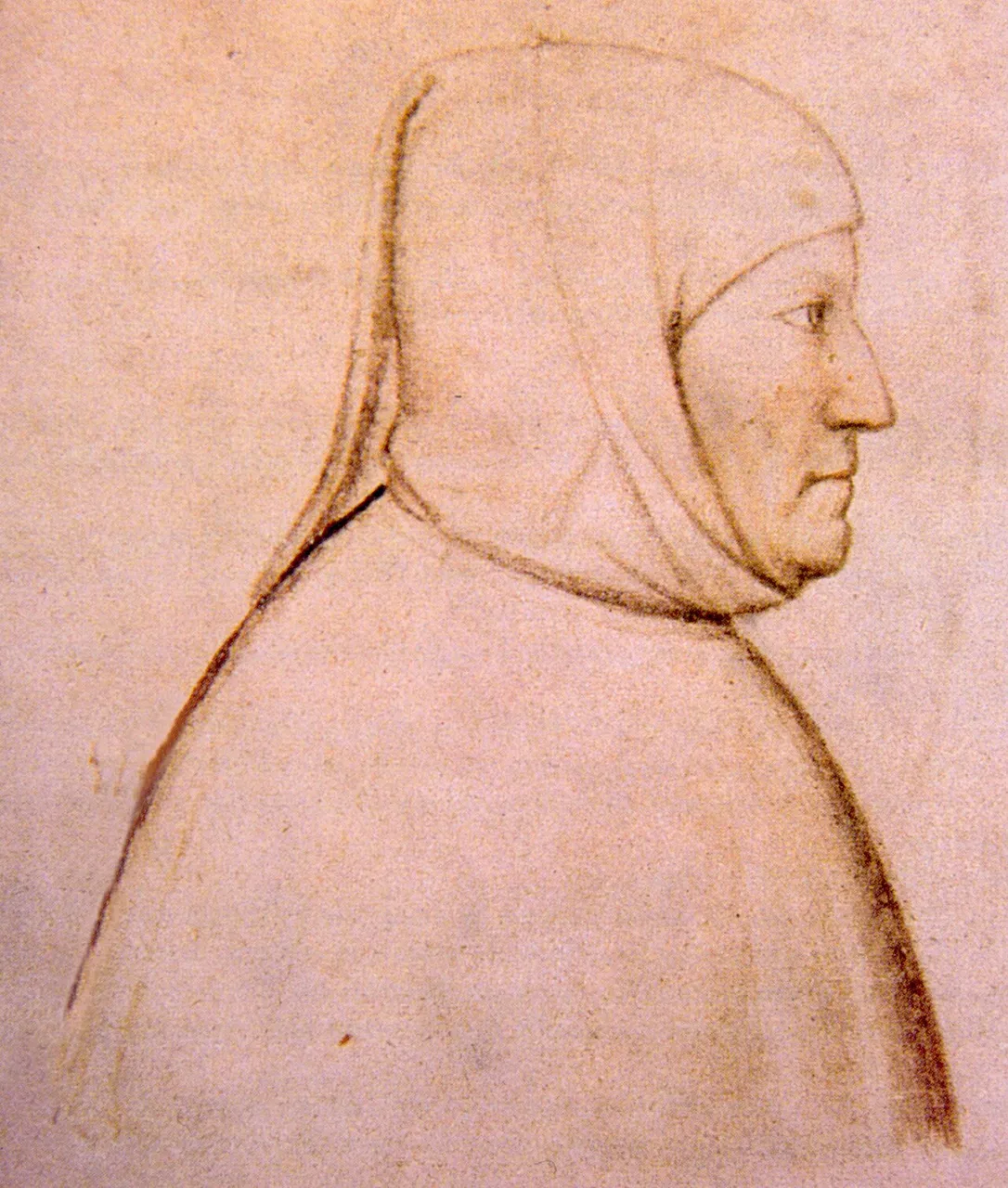 Petrarch, painted by Altichiero at Padua about 1370 to 1380Wikimedia Commons, Altichiero, public domain
Sources
- Petrarch, note on the death of Laura in his Virgil, Milan, Biblioteca Ambrosiana, MS A 79 inf. (1348).
- Ole J. Benedictow, The Complete History of the Black Death (2021).
- Shona Kelly Wray, Communities and Crisis: Bologna during the Black Death (2009).
- Christian Rohr, “Man and Natural Disaster in the Late Middle Ages: The Earthquake in Carinthia and Northern Italy on 25 January 1348 and its Perception”, Environment and History 9 (2003), 127–149.
Prev: Naples and the Hungarian army, May 1348Next: Gaza, Jerusalem and Damascus, April – July 1348