October – December 1347
Messina, October 1347
In early October 1347 twelve Genoese galleys from the east put in at Messina, the port on the strait between Sicily and Calabria. The Franciscan friar Michele da Piazza, who writes a history of Sicily some years later, describes their arrival. “In their bones they bore so virulent a disease,” he writes, “that anyone who only spoke to them was seized by a mortal illness and in no manner could evade death.”
The people of Messina drive the galleys out of the port, but the plague stays in the city. The sick ask for doctors, notaries and priests, who catch the disease and soon refuse to come near them. People abandon their houses, and thieves plunder them.
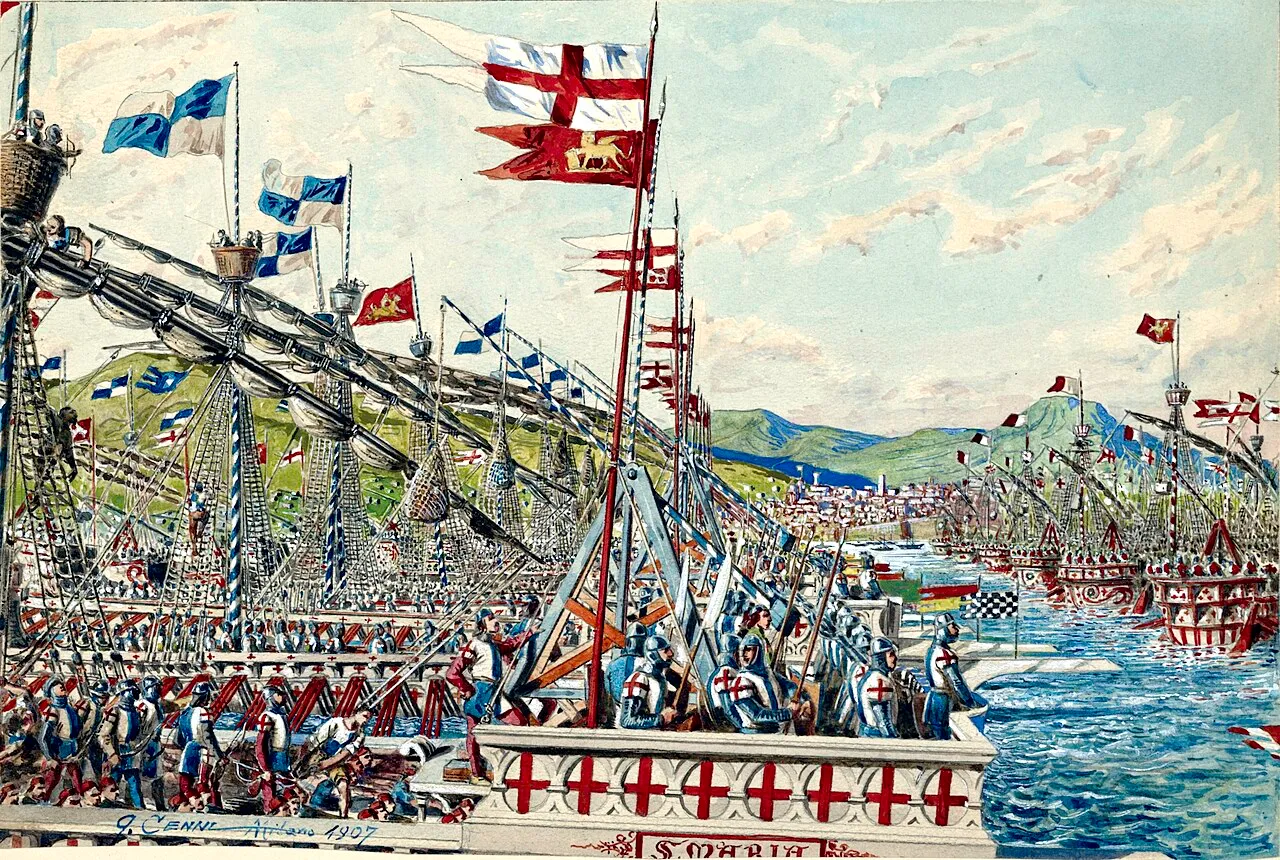 Genoese galleys of the 13th and 14th centuries, as Quinto Cenni painted them in 1907Wikimedia Commons, Quinto Cenni, public domain
Many go south to Catania, the second city of the island. The Messinese ask Catania to send them the relics of its patron saint, Agatha, and the people of Catania refuse to let the relics leave. They forbid the burial of refugees from Messina inside their town, but the plague follows the refugees. Duke John of Randazzo, who governs Sicily for his young nephew King Louis, flees Catania for the woods, and he dies of the plague there in April 1348.
In November the people fleeing Messina scatter over the whole of Sicily, many of them dying on the roads, and they carry the plague with them. By the end of 1347 it has probably crossed the strait into Calabria. The galleys driven from Messina sail on, and in the following weeks ships bring the plague to the ports of the western Mediterranean.
Sources
- Michele da Piazza, Historia Sicula (about 1360), trans. Johannes Nohl, The Black Death: A Chronicle of the Plague (1926).
- Rosemary Horrox, The Black Death (1994).
- Ole J. Benedictow, The Complete History of the Black Death (2021).
Prev: Alexandria, autumn 1347Next: Marseille and the Rhône, November 1347 – January 1348