December 1347 – January 1348
Split, Ragusa and Venice, December 1347 – January 1348
At the end of 1347 the Venetian galleys come home from the Black Sea and sail north along the coast of Dalmatia. The historian Ole Benedictow holds that they leave the plague in the ports where they call. Ragusa, today Dubrovnik, has the sickness before 13 January 1348. Split and the other towns of the coast have it in the first months of the year.
Venice has it in January 1348. The city is one of the largest in Europe and the centre of a trade that reaches from Flanders to the Black Sea. A later page tells how its government answers with a health commission and burial grounds on the islands of the lagoon.
On 25 January 1348 an earthquake shakes Friuli, Carinthia and the north of Italy. Churches and houses fall from Udine to Villach, and a landslide from the Dobratsch mountain buries the villages below it in the valley of the Gail. Many people take the earthquake and the plague for one punishment from God. In Florence Giovanni Villani writes of the earthquake in his chronicle as a sign of the end of the world. The scholar Konrad of Megenberg argues a few years later that it released poisoned air from inside the earth, and that this air caused the plague.
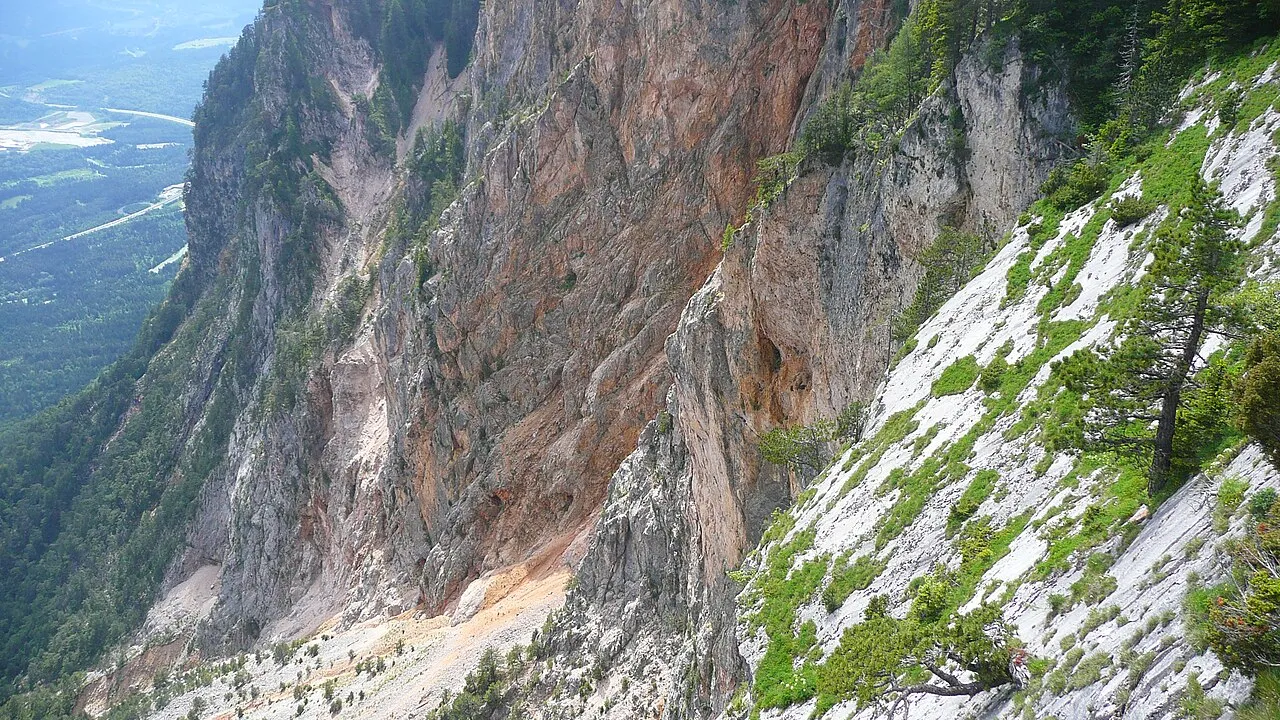 The Rote Wand of the Dobratsch near Villach, where the mountainside broke away in the earthquake of 25 January 1348Wikimedia Commons, Peter Tritthart, CC BY 3.0 (Dobratsch - Rote Wand.JPG)
Sources
- Ole J. Benedictow, The Complete History of the Black Death (2021), on the Venetian galleys in the Adriatic.
- Gordan Ravančić, Vrijeme umiranja: Crna smrt u Dubrovniku 1348.–1349. (2010).
- Christian Rohr, “Man and Natural Disaster in the Late Middle Ages: The Earthquake in Carinthia and Northern Italy on 25 January 1348 and its Perception”, Environment and History 9 (2003), 127–149.
- Giovanni Villani, Nuova Cronica, book 13 (1348).
Prev: Genoa and Pisa, winter 1347–1348Next: Languedoc, February – March 1348