October 1348 – January 1349
Cairo, autumn 1348
The plague reaches Cairo from Alexandria by September 1348. Cairo, the seat of the Mamluk sultans, is the largest city of the Mediterranean world, larger than any city in Europe, and the plague there is at its worst from October 1348 to January 1349. The Swedish historian Dick Harrison puts the dead at about 200,000, a third of the city.
Al-Maqrizi, a historian of Cairo in the next century, wrote its story from the records of the time. He gives the numbers of the dead counted each day, which rise through the autumn. Stuart Borsch, who has studied these counts, puts the peak at about 7,000 deaths a day in December 1348. The men who wash the dead, dig the graves and recite the Quran at funerals can ask any price, and many who take the property of the dead do not live to enjoy it, al-Maqrizi wrote.
The sultan, al-Nasir Hasan, is a boy of about thirteen. On 25 September he leaves the city with his court and stays at Siryaqus, north of Cairo, until 22 December. In the city the people hold mass prayers in the mosques and at the cemeteries.
Early in 1349 the plague moves up the Nile into Upper Egypt. Whole villages empty, and fields go unsown because no one is left to work them. In the district of Asyut, by Harrison’s figures, 6,000 people paid the land tax before the plague and 116 after it. Egypt’s farmland depends on canals and dikes that need many hands, and Borsch argues that this is why Egypt recovered from the plague more slowly than England.
In 1356 Sultan Hasan begins the great mosque and college below the citadel of Cairo that bears his name, at a cost of more than a million dinars. The chronicler Ibn Iyas wrote that the money came from a treasure found under the site. The historian Howayda Al-Harithy argues that most of it came from the property of plague dead who left no heirs.
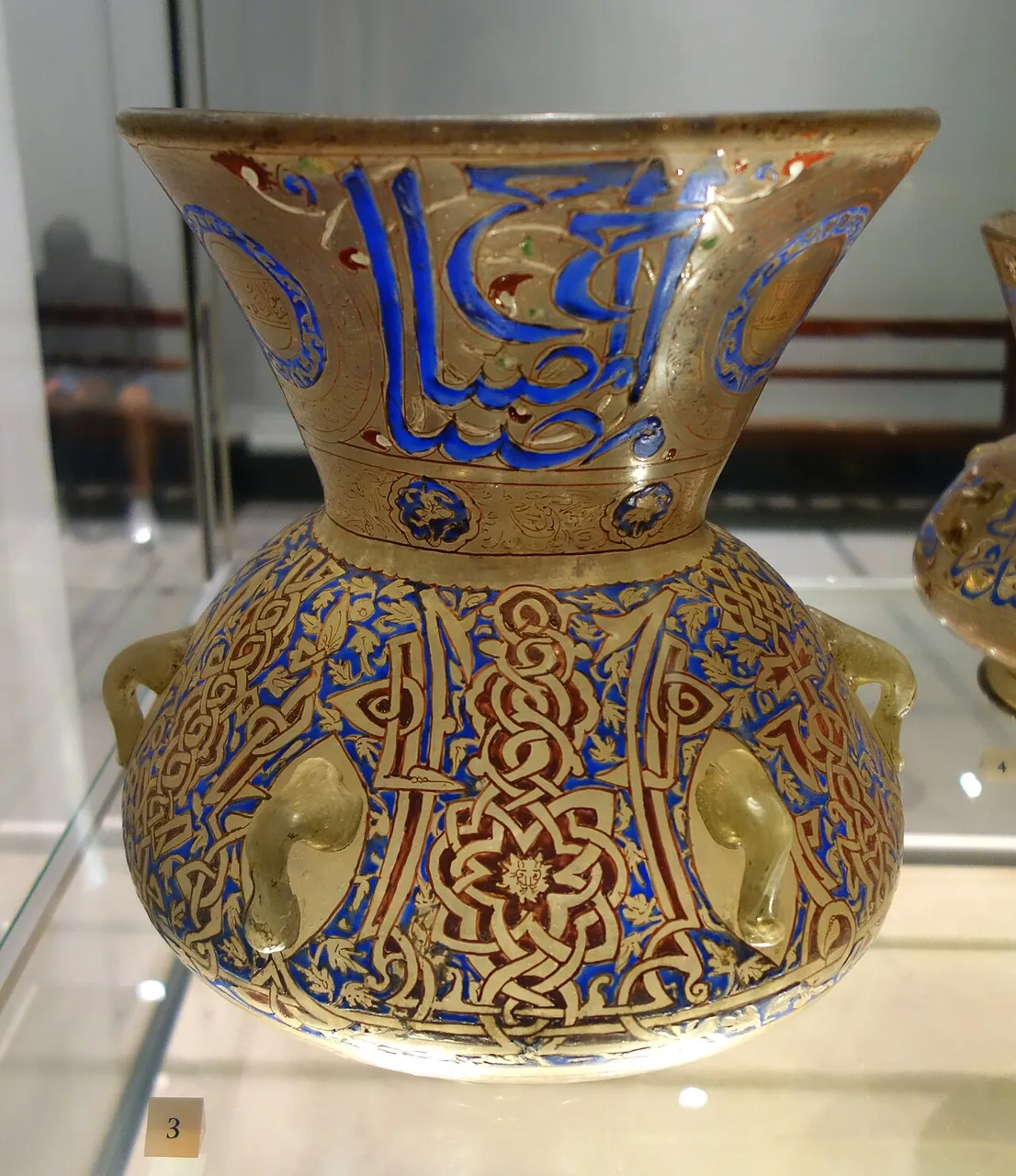 A glass lamp made for the mosque of Sultan Hasan in Cairo, about 1360Wikimedia Commons, Daderot, Victoria and Albert Museum, CC0
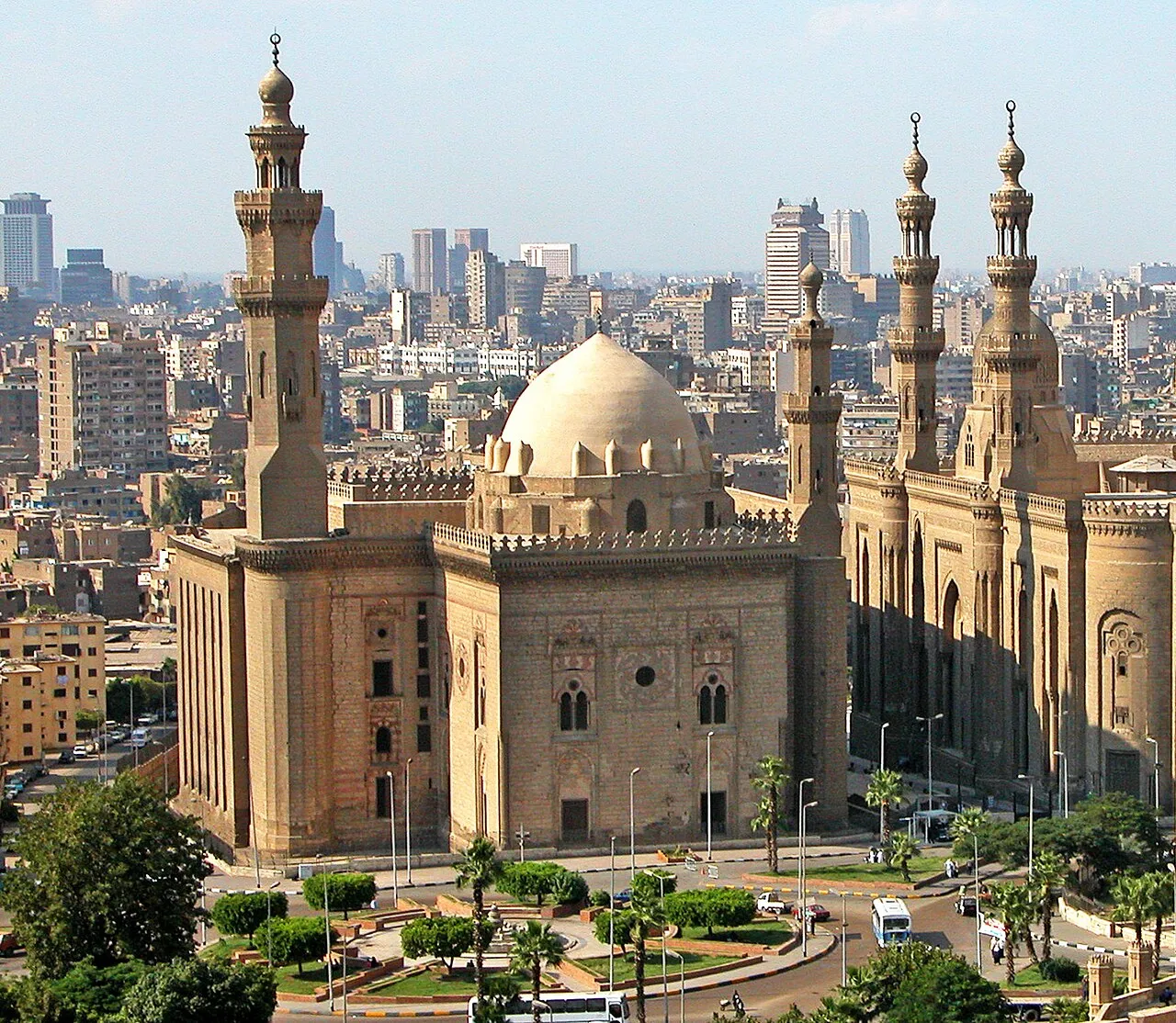 The mosque and college of Sultan Hasan in Cairo, begun in 1356Wikimedia Commons, Dennis G. Jarvis, CC BY-SA 2.0
Sources
- Al-Maqrizi, Kitab al-suluk li-ma‘rifat duwal al-muluk (15th century).
- Michael W. Dols, The Black Death in the Middle East (1977).
- Stuart J. Borsch, The Black Death in Egypt and England: A Comparative Study (2005).
Prev: The poison accusation, September 1348Next: London, autumn 1348