1348
Clement VI at Avignon, 1348
The popes have lived at Avignon since 1309, and Clement VI rules the Church from the new palace he is building there. The plague comes up the Rhône from Marseille and reaches Avignon in January 1348. It lasts seven months, by the account of Guy de Chauliac, the pope’s doctor. On 27 April Louis Heyligen, a Flemish musician in a cardinal’s household, writes from Avignon that half the city or more has died.
The cemeteries fill. The pope buys a field outside the walls at Champfleury and has it consecrated, and Heyligen writes that 11,000 bodies are buried there in six weeks. Then Clement consecrates the Rhône, so that the dead can be laid in the river. He grants the forgiveness of their sins to all who die of the plague.
Doctors believe that the plague spreads through corrupted air, and that fire makes the air clean. On Guy de Chauliac’s advice the pope keeps fires burning day and night in his rooms in the Palace of the Popes and sees few visitors. He survives the plague and lives until 1352. Guy stays at his post, catches the plague himself and recovers. In his book on surgery, finished in 1363, he described its two forms: in the first two months a fever with spitting of blood that killed within three days, and then a fever with swellings in the armpits and the groin that killed within five.
When the killings of Jews begin in Provence, at Toulon in April, Clement takes the Jews of Avignon and of his county of Venaissin, around Carpentras, under his protection. In July 1348 he forbids Christians to kill or rob Jews or to baptise them by force. On 26 September he issues a bull against the poison charge. Those who blame the Jews, he writes, have been led astray by the Devil, because the same plague strikes the Jews themselves and many peoples who have never lived beside them. He orders the bishops to protect the Jews. The bulls do not stop the burnings in the Empire in 1349.
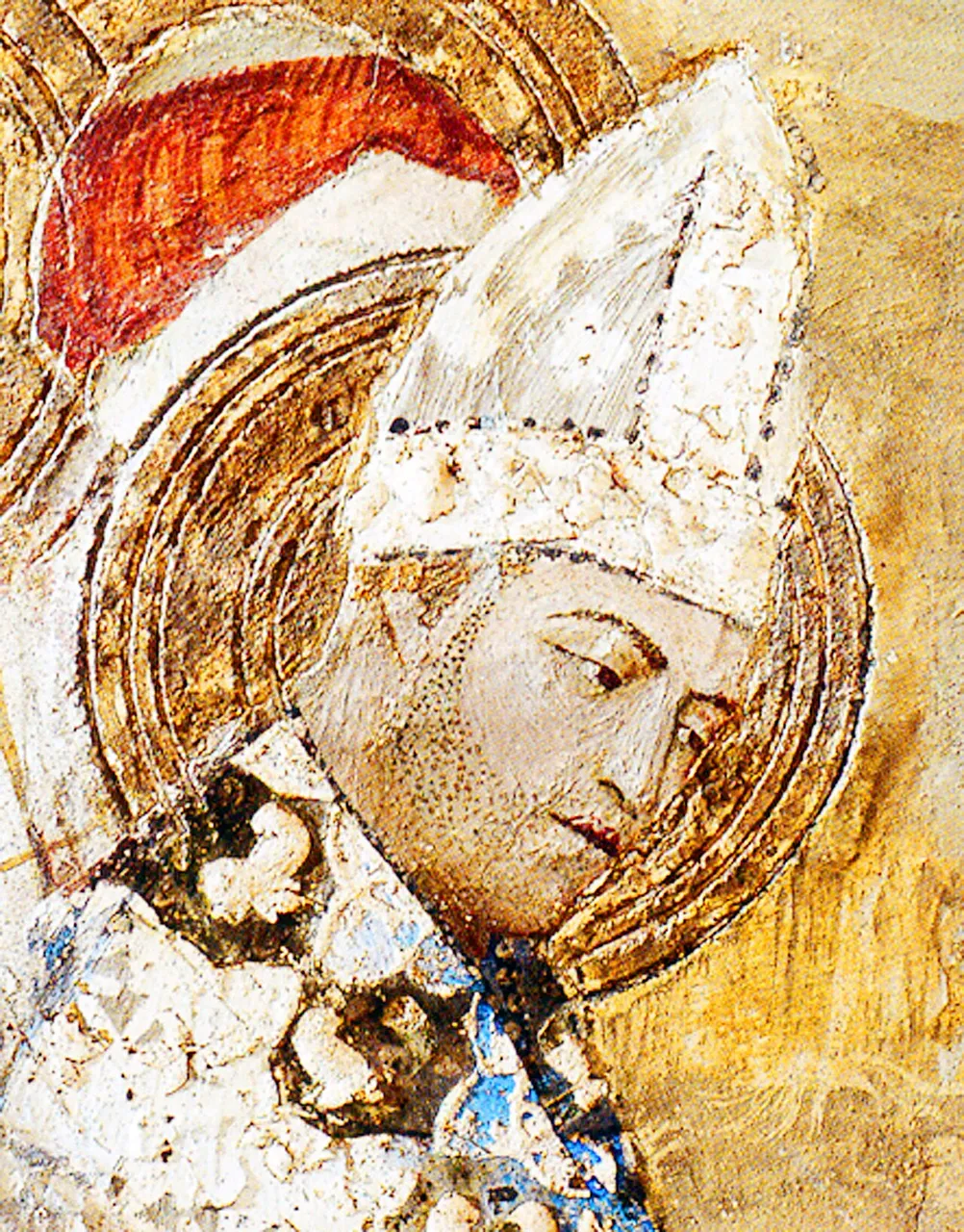 Clement VI, painted by Matteo Giovannetti in the chapel of St Martial in the Palace of the Popes, 1344 to 1345Wikimedia Commons, Matteo Giovannetti, public domain
Sources
- Guy de Chauliac, Chirurgia magna (1363), in Rosemary Horrox (ed.), The Black Death (1994).
- Louis Heyligen, letter from Avignon, 27 April 1348, in Breve chronicon clerici anonymi, in Rosemary Horrox (ed.), The Black Death (1994).
- Clement VI, bull of 26 September 1348, in Shlomo Simonsohn, The Apostolic See and the Jews: Documents, 492–1404 (1988).
- Diana Wood, Clement VI: The Pontificate and Ideas of an Avignon Pope (1989).
Prev: London, autumn 1348Next: Pistoia and Venice, 1348