August to October 1781
Yorktown
Cornwallis spends the summer raiding Virginia and in August fortifies Yorktown on the York River, and Gloucester Point opposite, as a naval base. Washington, watching New York with Rochambeau’s French army, learns that Admiral de Grasse is bringing the French West Indies fleet to the Chesapeake for a few weeks. He leaves a screen on the Hudson and marches both armies south through Philadelphia to Head of Elk, where they take ship down the bay.
De Grasse arrives first. On 5 September he fights the British fleet off the Virginia Capes, and the British fleet returns to New York, leaving the bay to the French. About 19,000 French and American troops, militia included, gather at Williamsburg and open the siege on 28 September. Redoubts 9 and 10 fall to night assaults on 14 October. On 19 October Cornwallis surrenders more than 7,000 men.
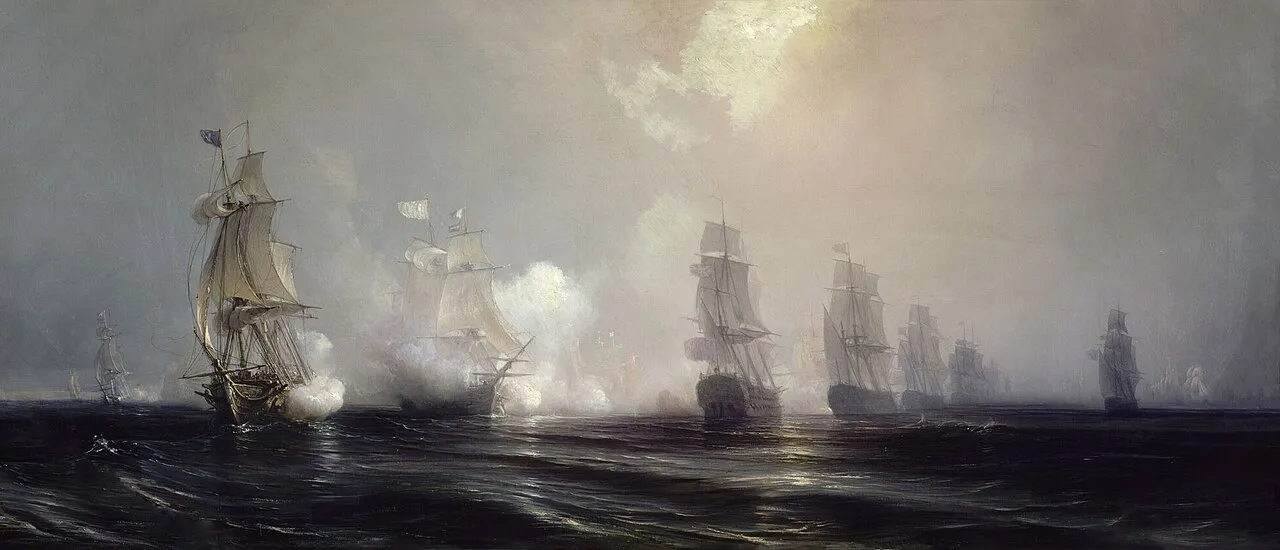 The naval battle off the Chesapeake, 5 September 1781, painting by Théodore GudinWikimedia Commons, Théodore Gudin, Public domain (Combat naval devant la Chesapeake, 3 septembre 1781.jpg)
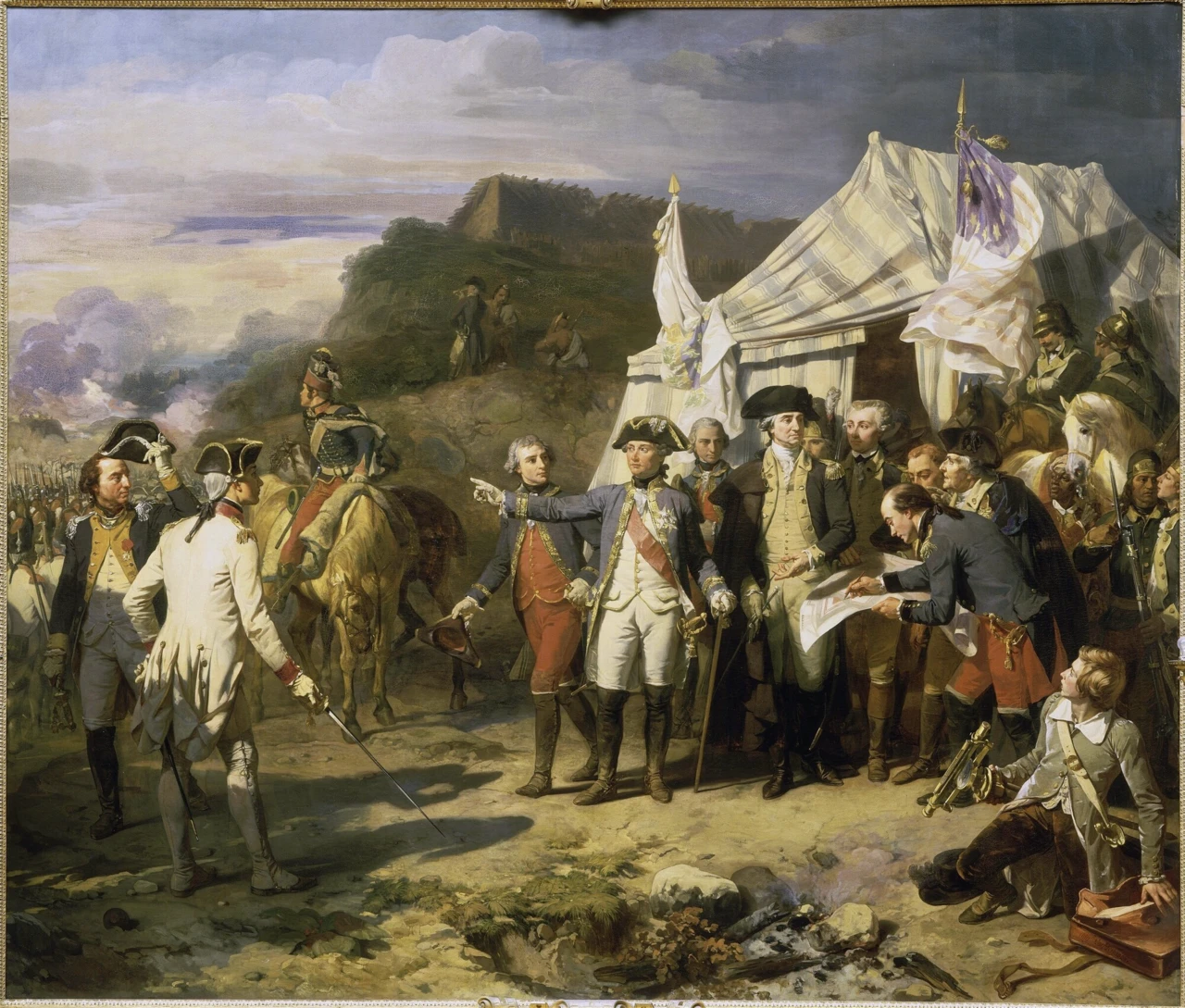 The siege of Yorktown, October 1781, painting by Auguste Couder, 1836Wikimedia Commons, Auguste Couder, Public domain (Siège de Yorktown, 17 octobre 1781.png)
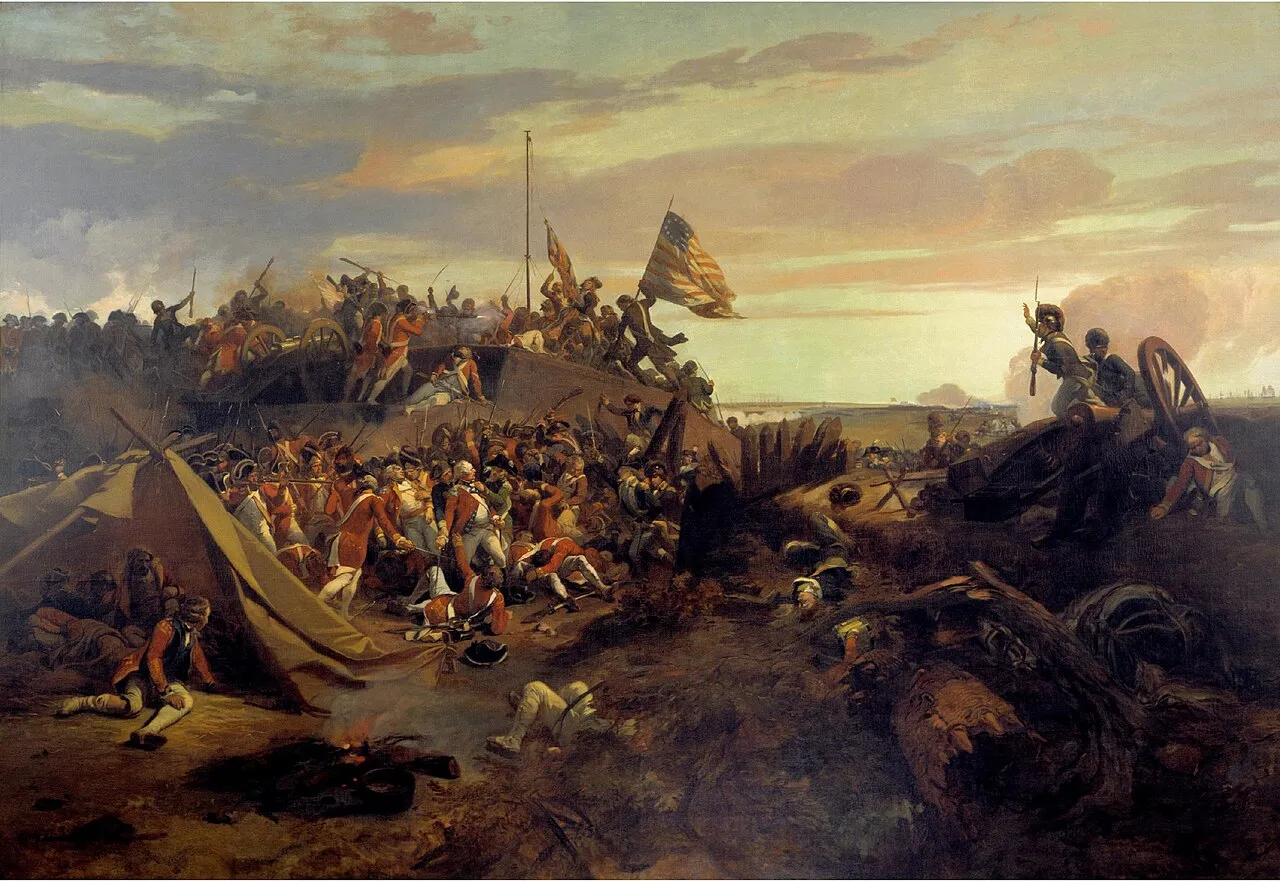 The storming of Redoubt 10 on the night of 14 October 1781, painting by Eugène Lami, 1840Wikimedia Commons, Eugène Lami, Public domain (EL Lami - Storming of redoubt 10 during the Siege of Yorktown (1840).jpg)
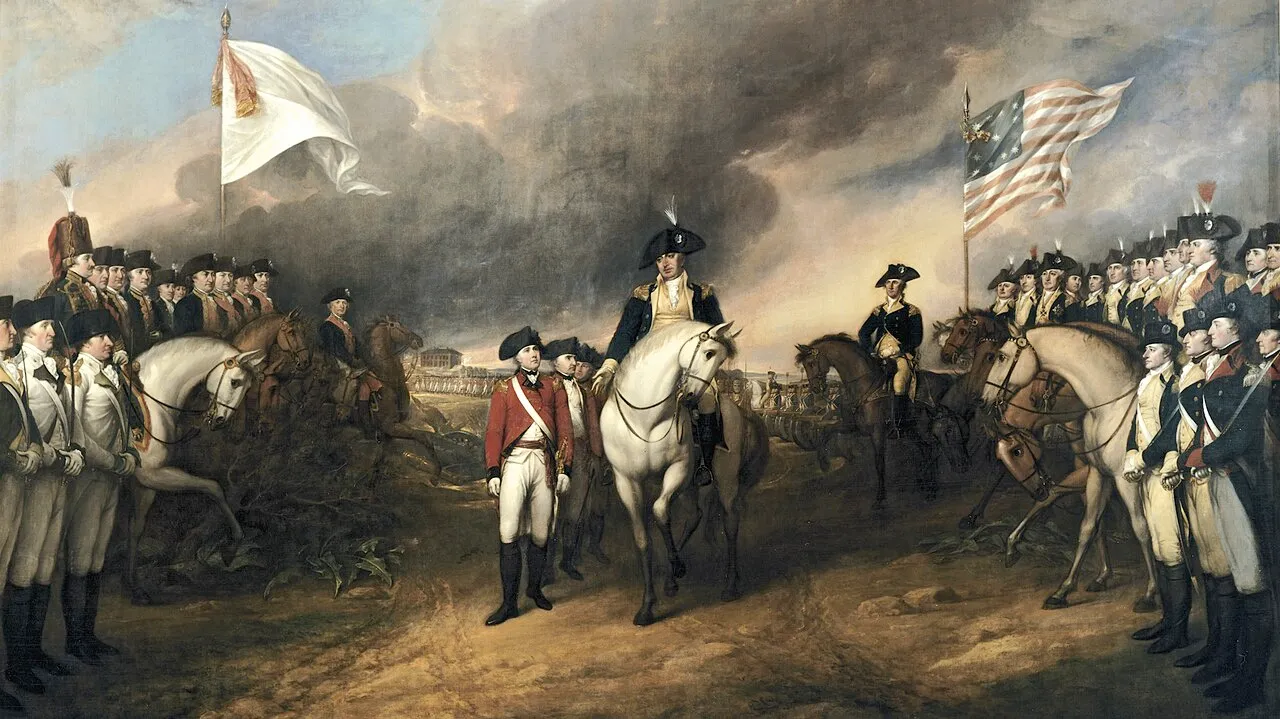 The Surrender of Lord Cornwallis at Yorktown, 19 October 1781, painting by John Trumbull, 1820Wikimedia Commons, John Trumbull, Public domain (Surrender of Lord Cornwallis (cropped).jpg)
On 8 September, in South Carolina, Greene fights the British at Eutaw Springs. When the news of Yorktown reaches London, Lord North is reported to have said, “Oh God, it is all over.”
Sources
- Robert Middlekauff, The Glorious Cause (2005).
- John Ferling, Almost a Miracle (2007).
- Jerome A. Greene, The Guns of Independence (2005).
Prev: Cowpens: the double envelopmentNext: Yorktown: the battle off the Capes