1764 to 1766
The Sugar Act, the Stamp Act and the first congress
Parliament looks to the colonies to pay for the garrison it keeps in America. The Sugar Act of April 1764 lowers the duty on molasses but tightens customs enforcement and sends smuggling cases to vice-admiralty courts without juries. The Stamp Act of March 1765 requires a tax stamp on newspapers, legal documents, licences and playing cards. It is the first direct tax Parliament has laid on the colonies.
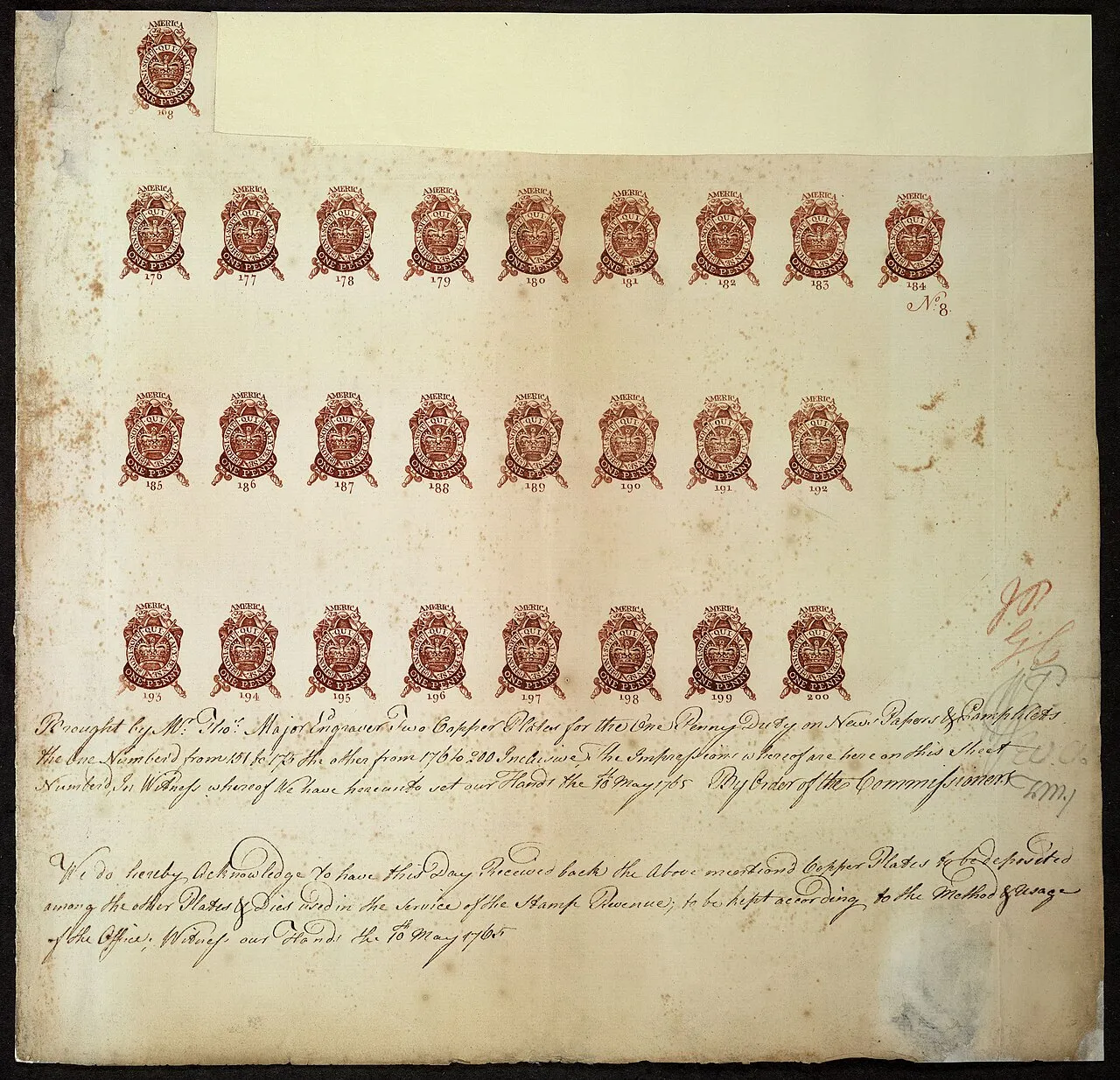 Proof sheet of one penny stamps for the Stamp Act, 1765Wikimedia Commons, Board of Stamps (engraver unknown), Public domain (Proof sheet of one penny stamps Stamp Act 1765.jpg)
In August 1765 a Boston crowd destroys the stamp distributor’s office and sacks the lieutenant governor’s house. Crowds force stamp agents to resign in one colony after another, and from November groups calling themselves Sons of Liberty organise the resistance. In October delegates from nine colonies meet in New York as the Stamp Act Congress and declare that only their own assemblies may tax them.
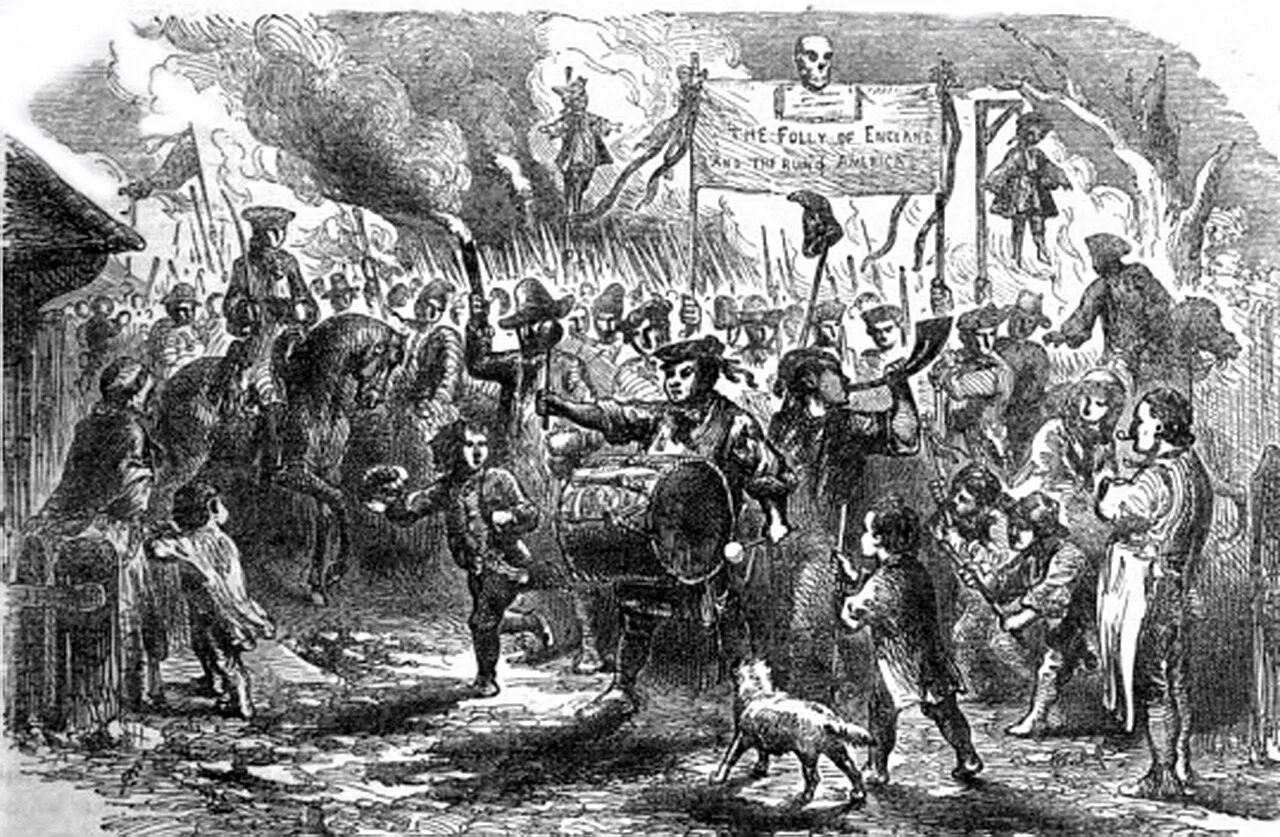 The Stamp Act riots in Boston, engraving published by John Cassell, 1865Wikimedia Commons, John Cassell, Public domain (P45 THE STAMP ACT RIOTS AT BOSTON, IN AMERICA.jpg)
Merchants stop importing British goods. Parliament repeals the act in March 1766 and at the same time passes the Declaratory Act, which asserts its right to legislate for the colonies “in all cases whatsoever”.
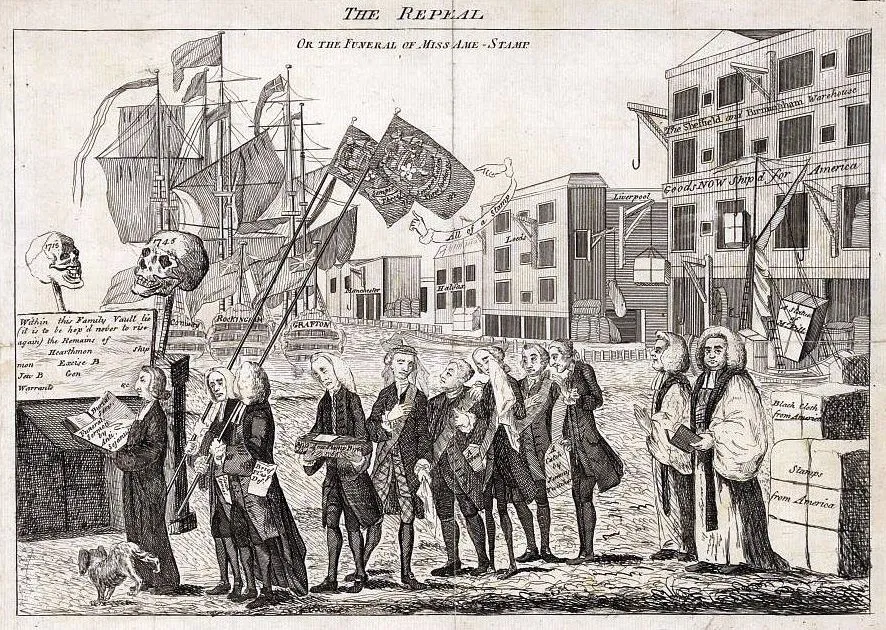 The Repeal, or the Funeral of Miss Ame-Stamp, British cartoon on the repeal of the Stamp Act, 1766Wikimedia Commons, Unknown author, Public domain (Repeal of the Stamp Act.jpg)
Sources
- Robert Middlekauff, The Glorious Cause (2005).
- Gordon S. Wood, The American Revolution: A History (2002).
- Edmund S. Morgan and Helen M. Morgan, The Stamp Act Crisis (1953).
Prev: The Peace of Paris and the Proclamation LineNext: The Townshend duties and the Boston Massacre