December 1778 to October 1779
The war moves south, and west to the Ohio
The British now turn to the south, where they expect strong Loyalist support. A force from New York takes Savannah on 29 December 1778, and in July 1779 royal government returns to Georgia under Governor James Wright. In October 1779 a French and American assault on Savannah fails with heavy loss, and d’Estaing sails away.
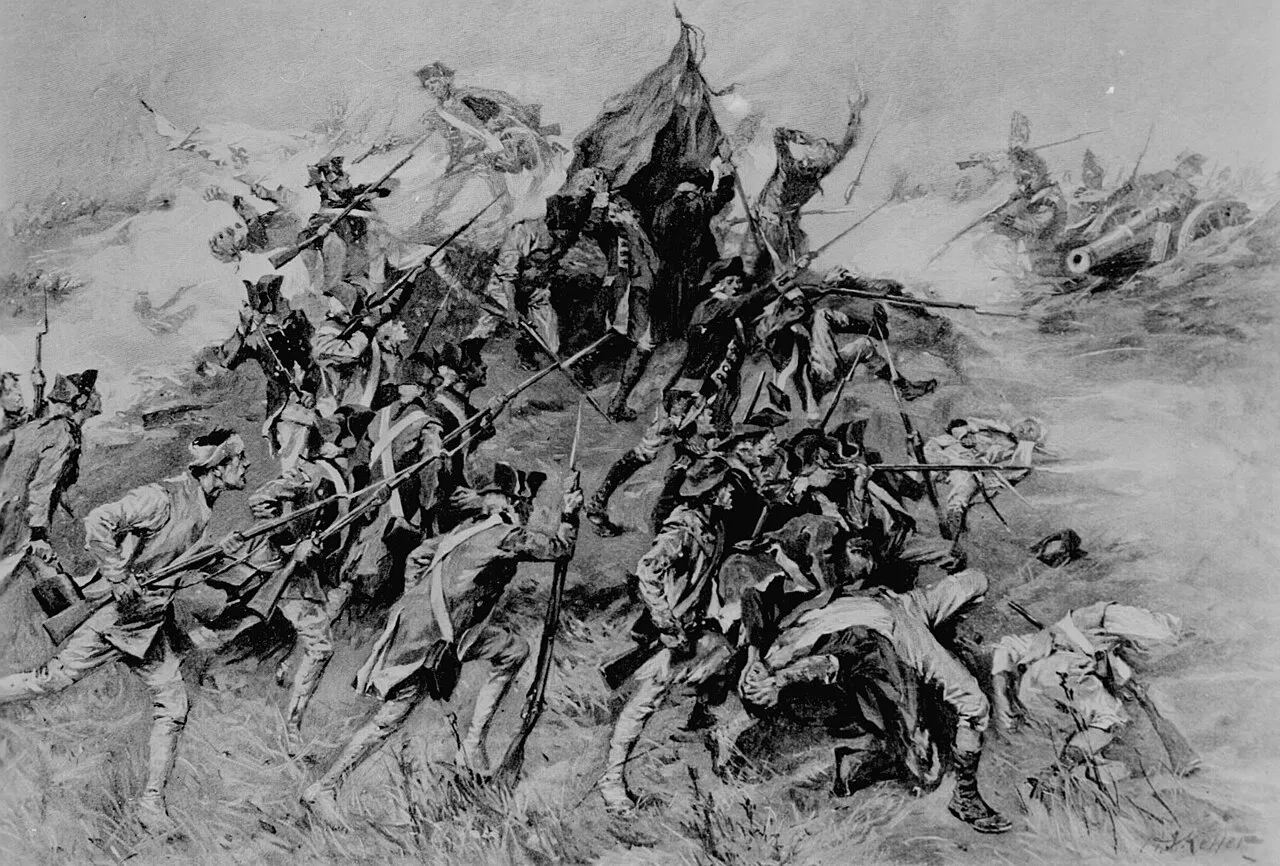 The French and American assault on Savannah, 9 October 1779, illustration by Arthur I. KellerWikimedia Commons, Arthur I. Keller (1866–1924), Public domain (Siege of Savannah - A.I. Keller.jpg)
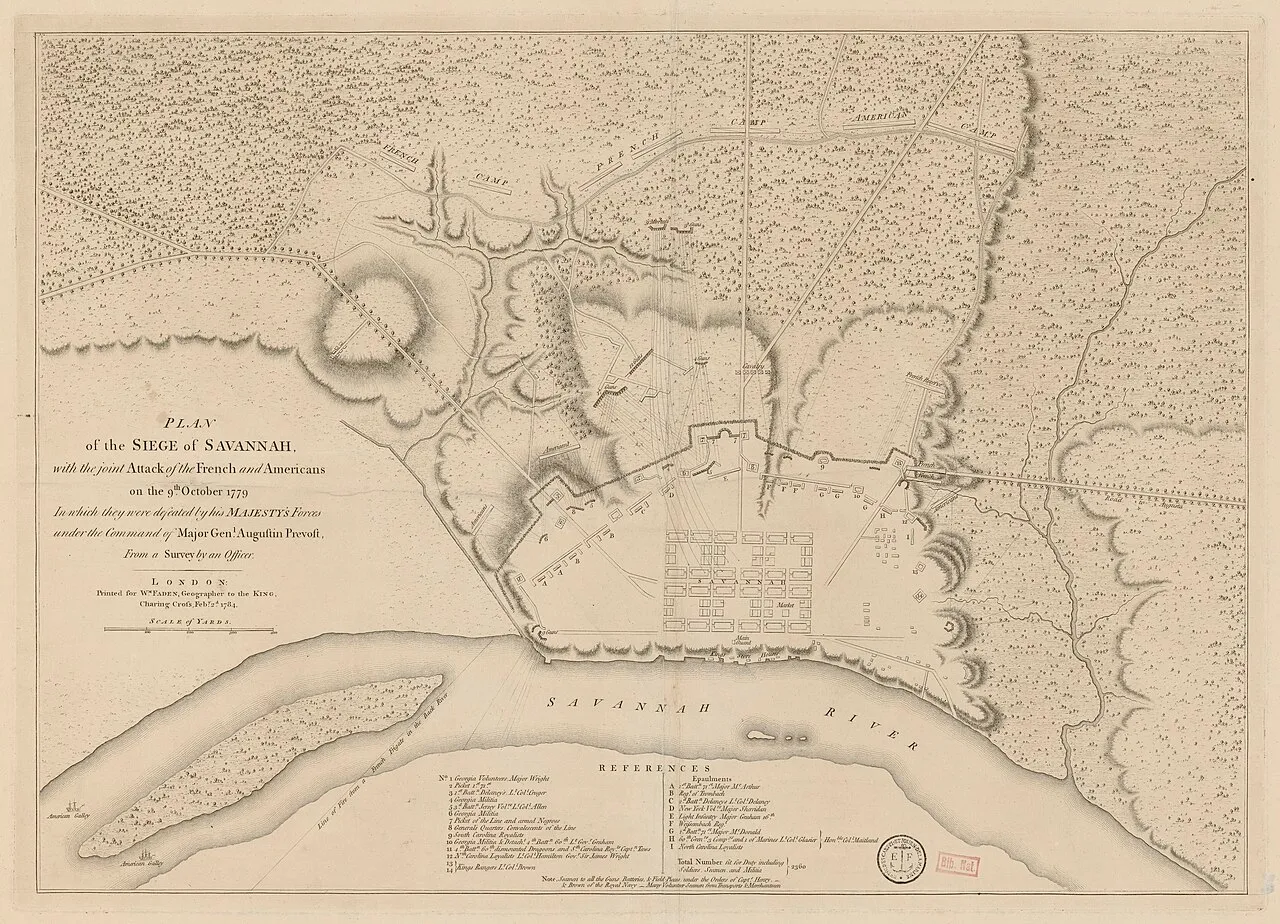 Plan of the siege of Savannah and the French and American attack of 9 October 1779, published 1784Wikimedia Commons, Archibald Campbell (1739–1791), Public domain (Plan of the siege of Savannah, with the joint attack of the french and americans on the 9th october, 1779, in which they were defeated by His Majesty's Forces .... From a survey by an officer - btv1b530898035.jpg)
In the west, George Rogers Clark leads about 170 men, nearly half of them French volunteers from Kaskaskia, across flooded country in February 1779 and takes Vincennes and its British commander. On the Hudson, Anthony Wayne storms Stony Point with the bayonet on 16 July.
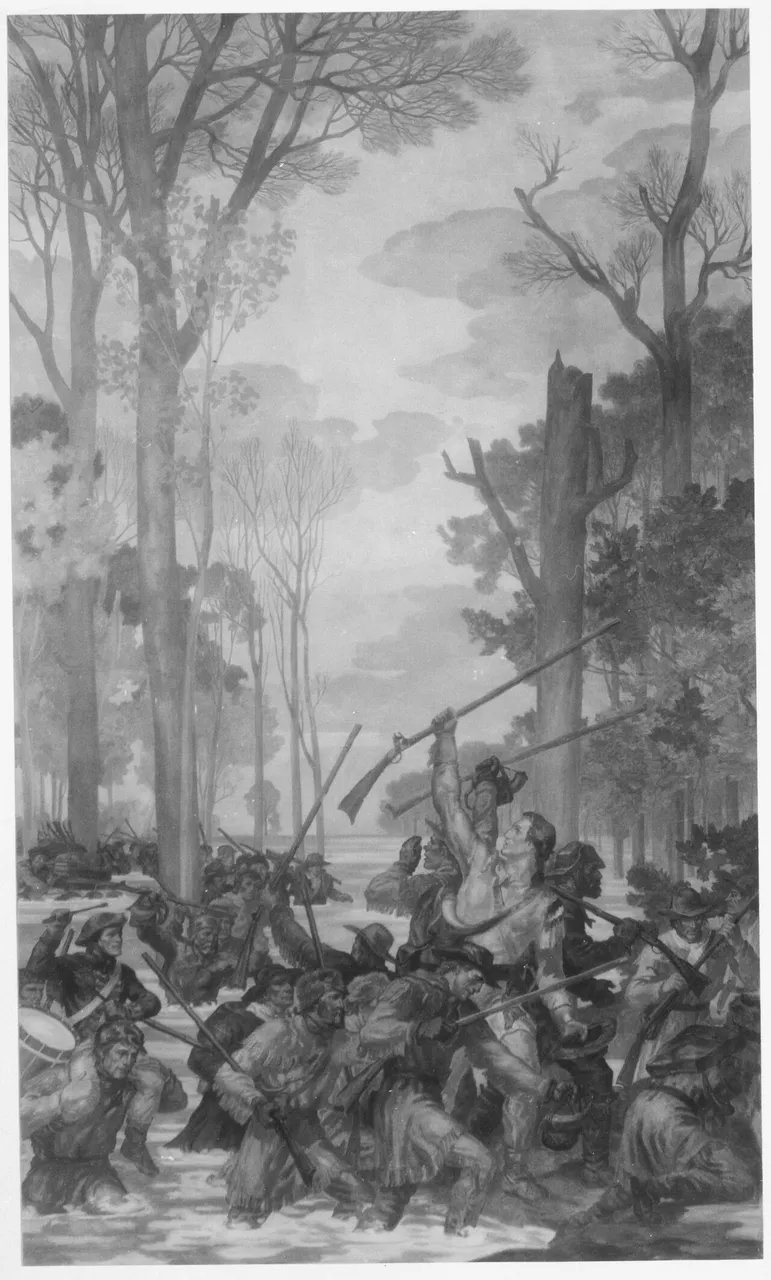 George Rogers Clark's march to Vincennes through the flooded Wabash country, February 1779, twentieth century paintingWikimedia Commons, Unknown author, Public domain (Clark's march against Vincennes across the Wabash through wilderness and flood. George Rogers Clark, February 1779. Copy - NARA - 518214.tif)
Sources
- Robert Middlekauff, The Glorious Cause (2005).
- John Ferling, Almost a Miracle (2007).
- John Buchanan, The Road to Guilford Courthouse (1997).
Prev: Monmouth: Combs Hill and the parsonageNext: Savannah: the siege