June to October 1777
Burgoyne’s campaign and Saratoga
The British plan for 1777 is to cut New England off from the other colonies. John Burgoyne comes south from Canada along Lake Champlain with about 7,000 British, German and native troops, and Barry St. Leger leads a smaller column from Oswego down the Mohawk valley. Howe, expected to come up the Hudson to meet them, sails for Philadelphia instead.
Ticonderoga is abandoned to Burgoyne on 6 July, but the road south through the forest takes a month. At Oriskany on 6 August St. Leger’s force defeats an American relief column, but his native allies leave him and he withdraws to Canada on 22 August. A German foraging detachment is destroyed at Bennington on 16 August.
By September Horatio Gates has about 9,000 men behind fortifications at Bemis Heights, and New England militia keep arriving. Burgoyne holds the field at Freeman’s Farm on 19 September but is defeated on 7 October. Surrounded at Saratoga, he surrenders about 6,000 men on 17 October. France decides to enter the war.
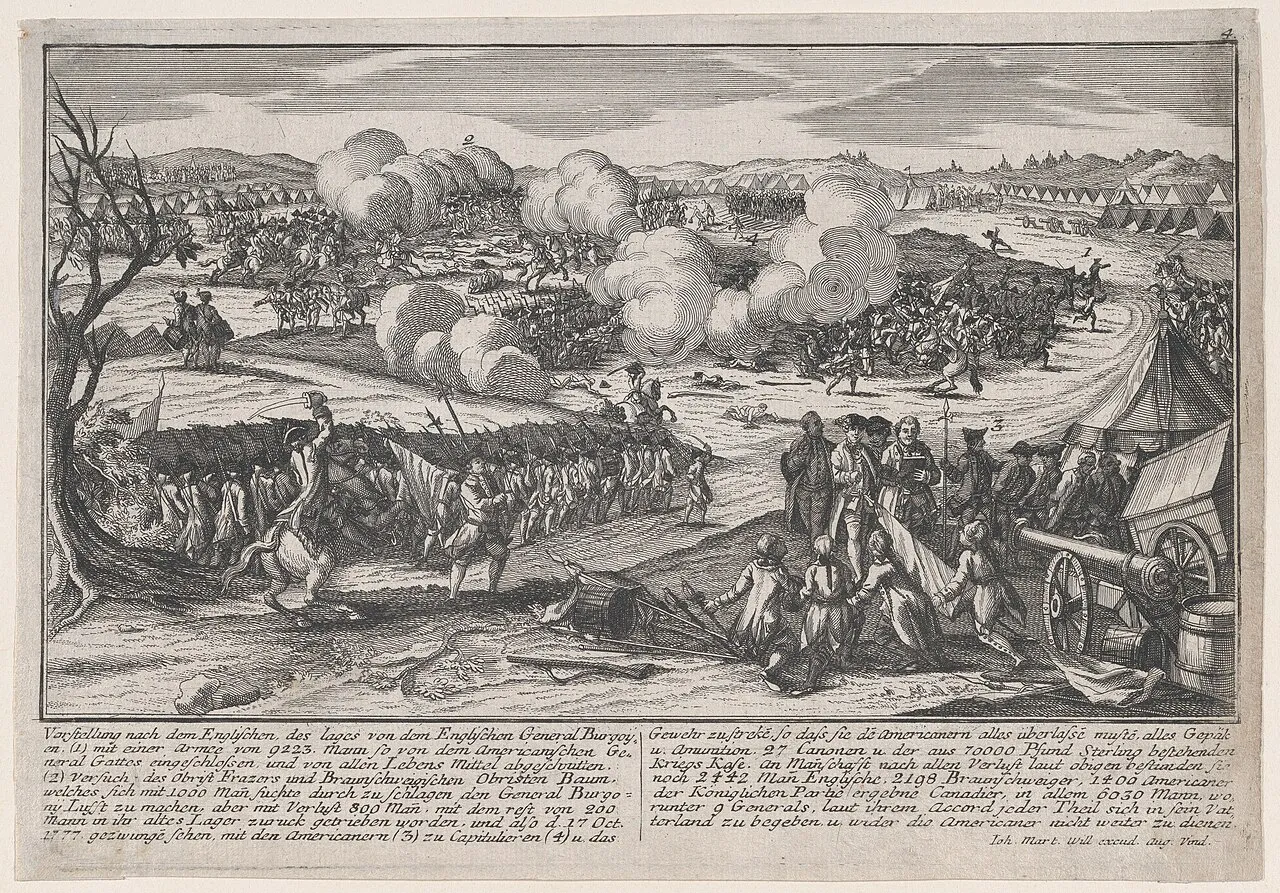 The battle at Saratoga on 19 September 1777, German engraving published by Johann Martin WillWikimedia Commons, Johann Martin Will, CC0 (Battle of Saratoga (September 19, 1777) MET DP876929.jpg)
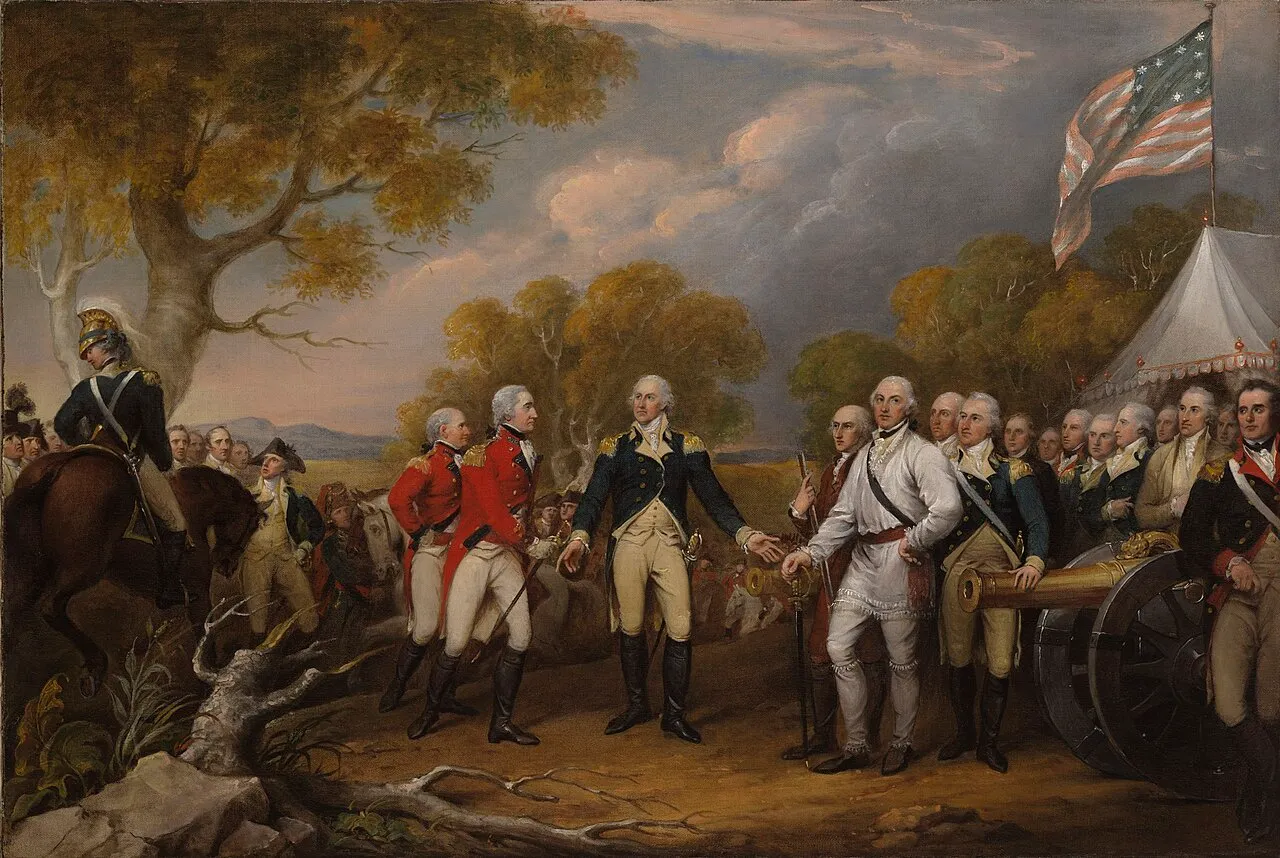 The Surrender of General Burgoyne at Saratoga, 17 October 1777, painting by John TrumbullWikimedia Commons, John Trumbull, Public domain (The Surrender of General Burgoyne at Saratoga October 16 1777.jpeg)
Sources
- Robert Middlekauff, The Glorious Cause (2005).
- John Ferling, Almost a Miracle (2007).
- Richard M. Ketchum, Saratoga (1997).
Prev: Princeton: Mercer and MawhoodNext: Saratoga: three columns