August 1777 to June 1778
Brandywine, Philadelphia and Valley Forge
Howe embarks about 17,000 troops at New York, sails round into the Chesapeake and lands at Head of Elk, about fifty miles southwest of Philadelphia, in late August. Washington meets him on the Brandywine on 11 September and is outflanked again. Congress moves to Lancaster and then to York. The British enter Philadelphia on 26 September, and Washington’s attack at Germantown on 4 October fails in the fog.
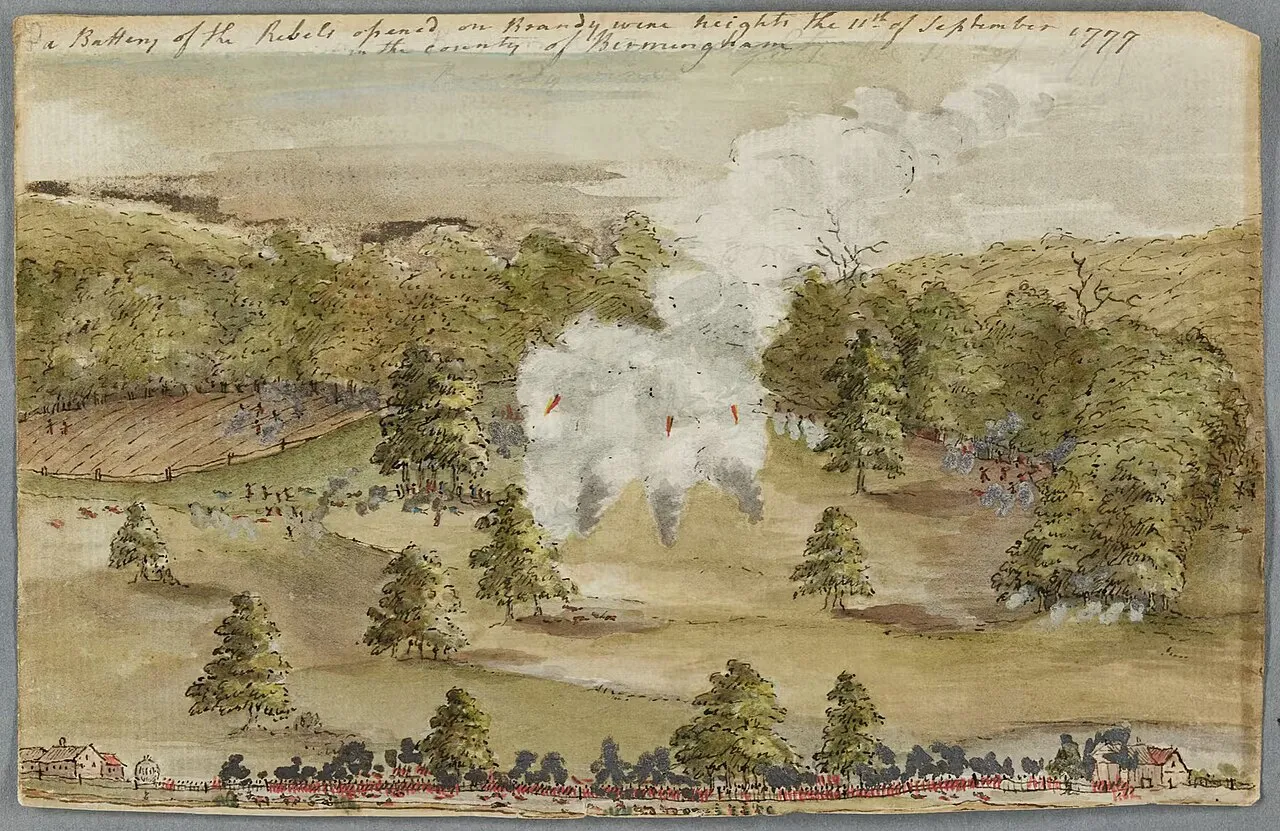 The American battery firing on Brandywine heights, 11 September 1777, watercolour by William Augustus WestWikimedia Commons, William Augustus West, Public domain (The Battery of the Rebels opened on Brandywine heights the 11th of September 1777 in the county of Birmingham.jpg)
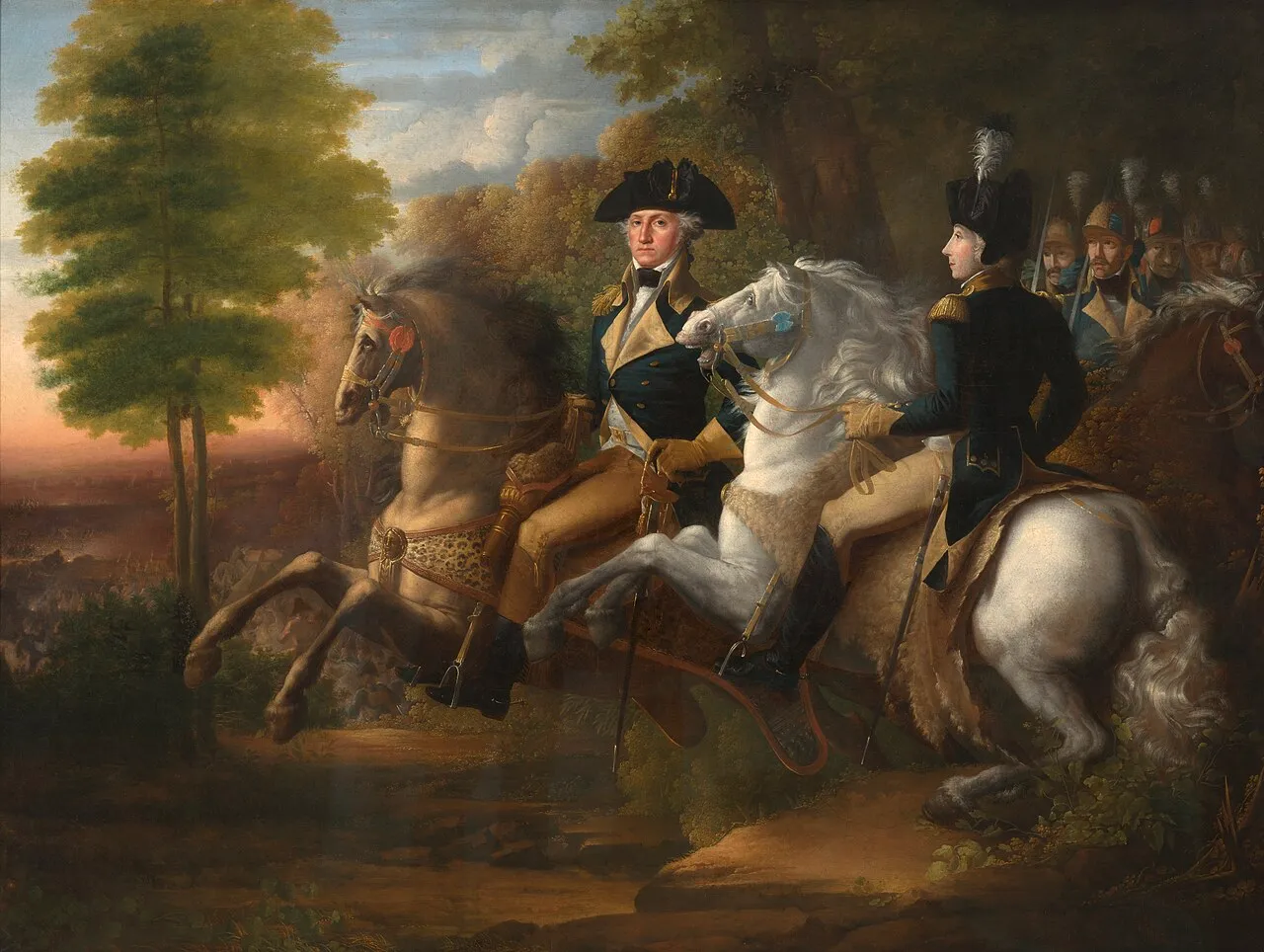 Washington and Lafayette at the Battle of Brandywine, painting by John VanderlynWikimedia Commons, John Vanderlyn, Public domain (Washington and Lafayette at the Battle of Brandywine.jpg)
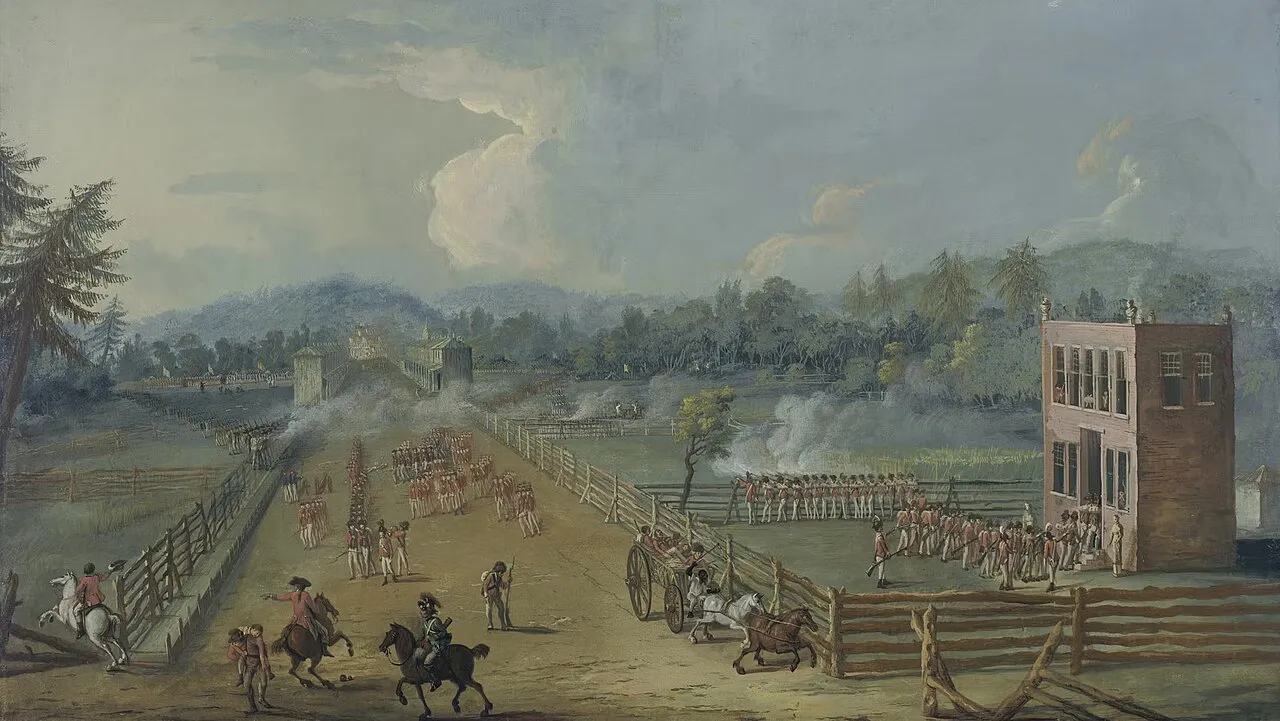 The Battle of Germantown, 4 October 1777, painting by Xavier della Gatta, 1782Wikimedia Commons, Xavier della Gatta, Public domain (Battle of Germantown.jpg)
At York, on 15 November, Congress completes the Articles of Confederation and sends them to the states for ratification. Washington takes about 12,000 men into winter camp at Valley Forge, eighteen miles from the city. Between 1,700 and 2,000 of them die of disease. In June 1778 the army marches out drilled by Baron von Steuben.
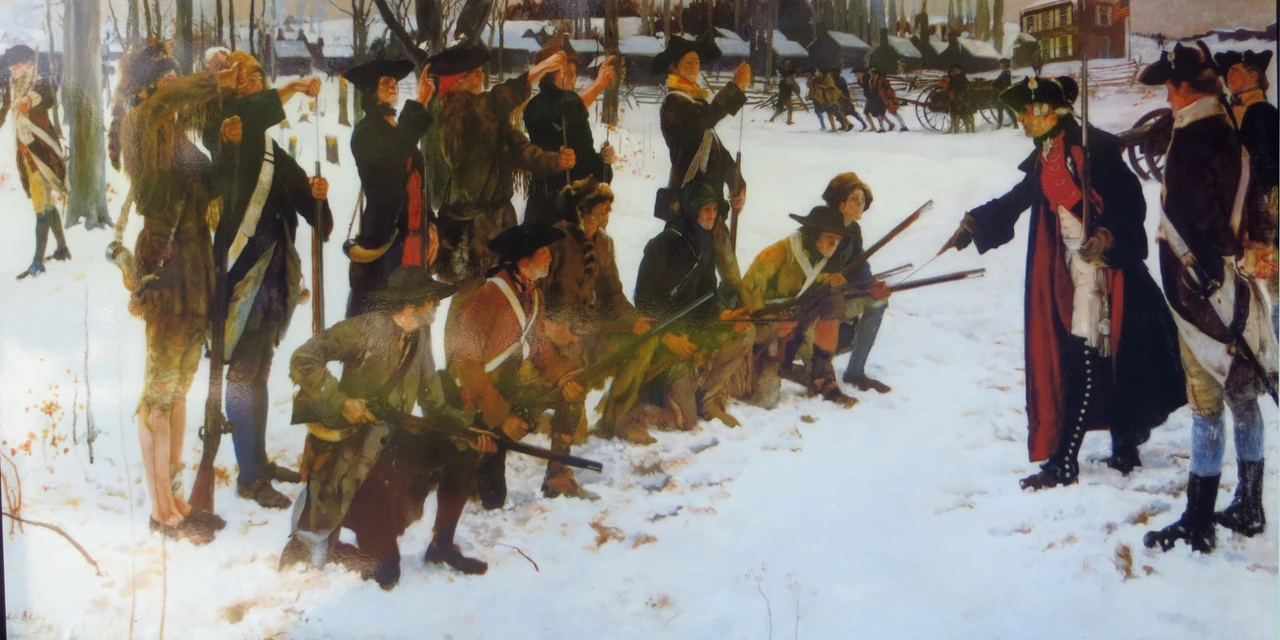 Baron von Steuben drilling troops at Valley Forge, painting by Edwin Austin AbbeyWikimedia Commons, Edwin Austin Abbey, Public domain (Baron Steuben drilling troops at Valley Forge by E A Abbey.png)
Sources
- Robert Middlekauff, The Glorious Cause (2005).
- John Ferling, Almost a Miracle (2007).
Prev: Saratoga: the surrenderNext: Brandywine: the flank march