November 1782 to December 1783
The Treaty of Paris
After Yorktown the main armies stop fighting, but the British still hold New York, Charleston and Savannah. Fighting goes on along the frontier in 1782 and, against France and Spain, at sea. The British leave Savannah in July 1782 and Charleston on 14 December.
In Paris, Franklin, Jay, Adams and Laurens negotiate directly with the British and sign preliminary articles on 30 November 1782. The final treaty, signed on 3 September 1783, recognises the United States with borders from the Great Lakes to the 31st parallel and west to the Mississippi. Florida goes back to Spain, which keeps Louisiana. Canada and Nova Scotia stay British and take in tens of thousands of Loyalists.
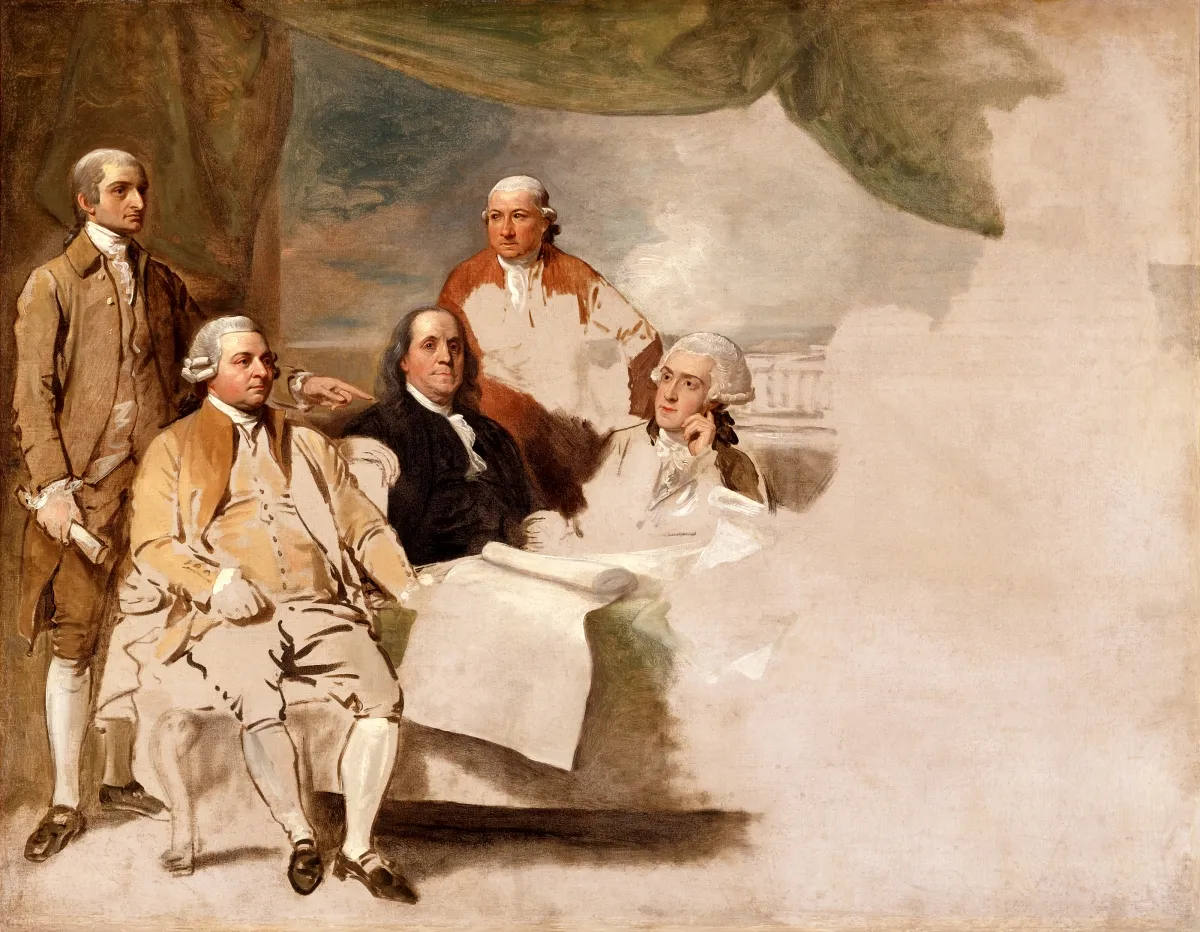 The American peace commissioners John Jay, John Adams, Benjamin Franklin, Henry Laurens and William Temple Franklin, unfinished painting by Benjamin West, 1783Wikimedia Commons, Benjamin West, Public domain (Treaty of Paris by Benjamin West 1783.jpg)
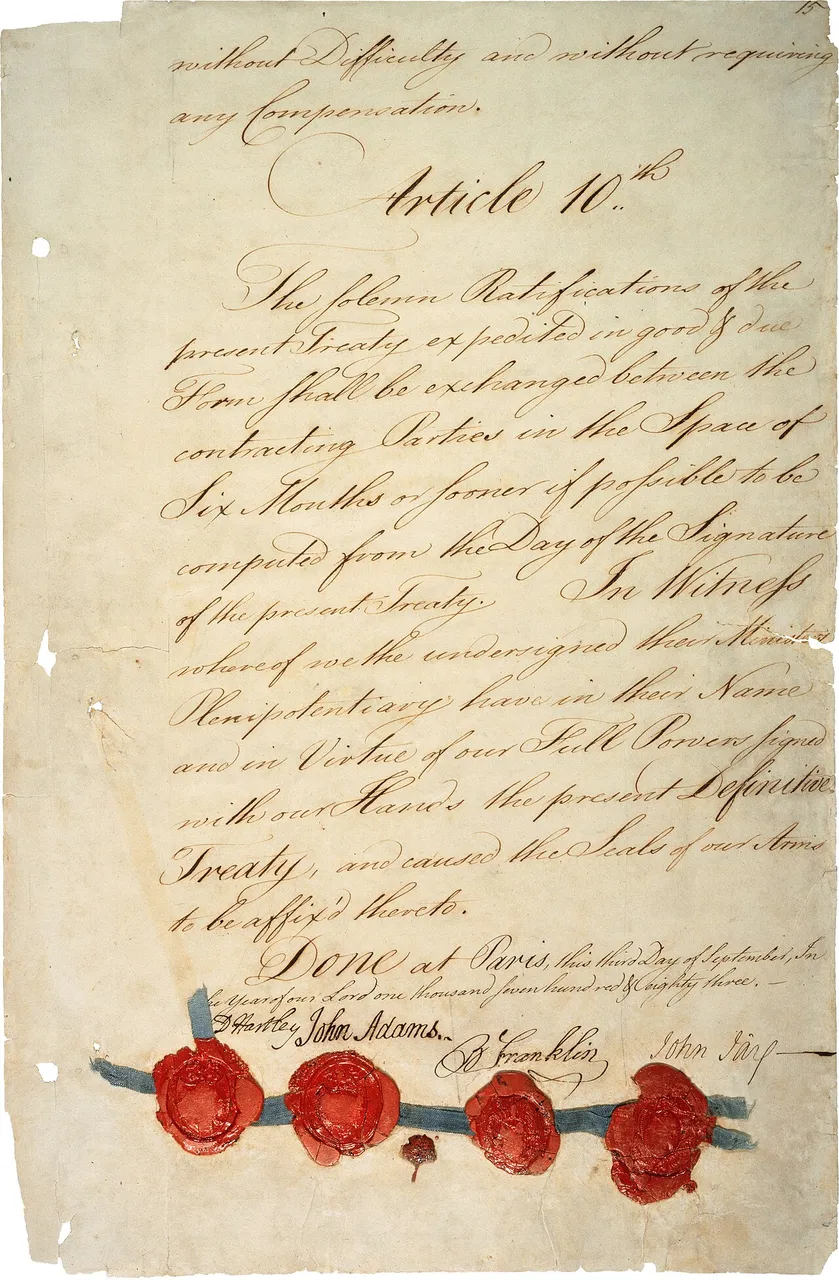 The last page of the Treaty of Paris with the signatures, 3 September 1783Wikimedia Commons, Unknown author, Public domain (Treaty of Paris 1783 - last page (hi-res).jpg)
In March 1783 officers at Newburgh, unpaid for months, circulate an address threatening Congress, and Washington persuades them to drop it. The British leave New York City on 25 November. On 23 December Washington hands his commission back to Congress at Annapolis and goes home.
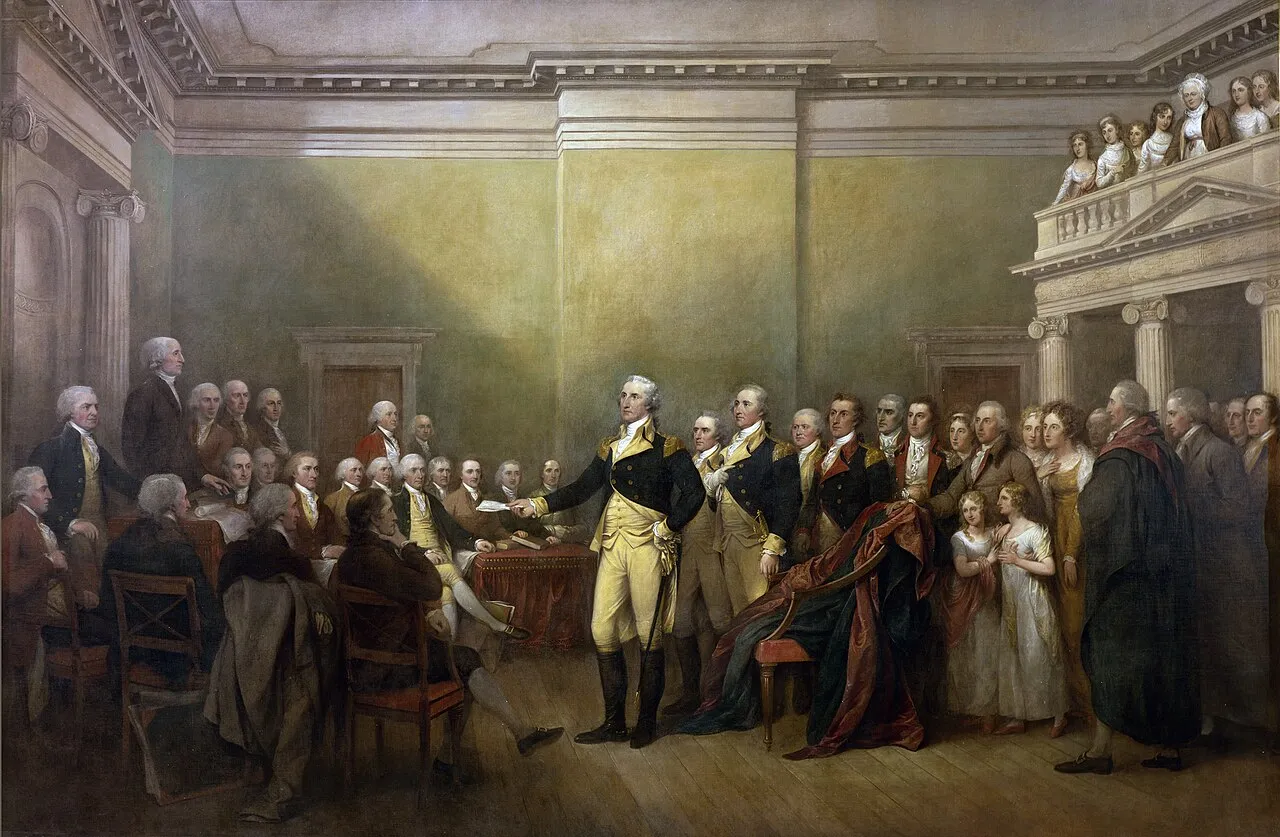 General George Washington Resigning His Commission at Annapolis, 23 December 1783, painting by John TrumbullWikimedia Commons, John Trumbull, Public domain (General George Washington Resigning his Commission.jpg)
Sources
- Robert Middlekauff, The Glorious Cause (2005).
- John Ferling, Almost a Miracle (2007).
- Richard B. Morris, The Peacemakers (1965).
Prev: Yorktown: the surrenderNext: The Confederation years