February to October 1763
The Peace of Paris and the Proclamation Line
The Seven Years’ War ends with the Treaty of Paris on 10 February 1763. France cedes Canada and all its land east of the Mississippi to Britain, except New Orleans. In a secret treaty of November 1762 it had already given Louisiana west of the river, with New Orleans, to Spain. Spain cedes Florida to Britain. Britain’s national debt has nearly doubled during the war, and the government means the colonies to share the cost of their defence.
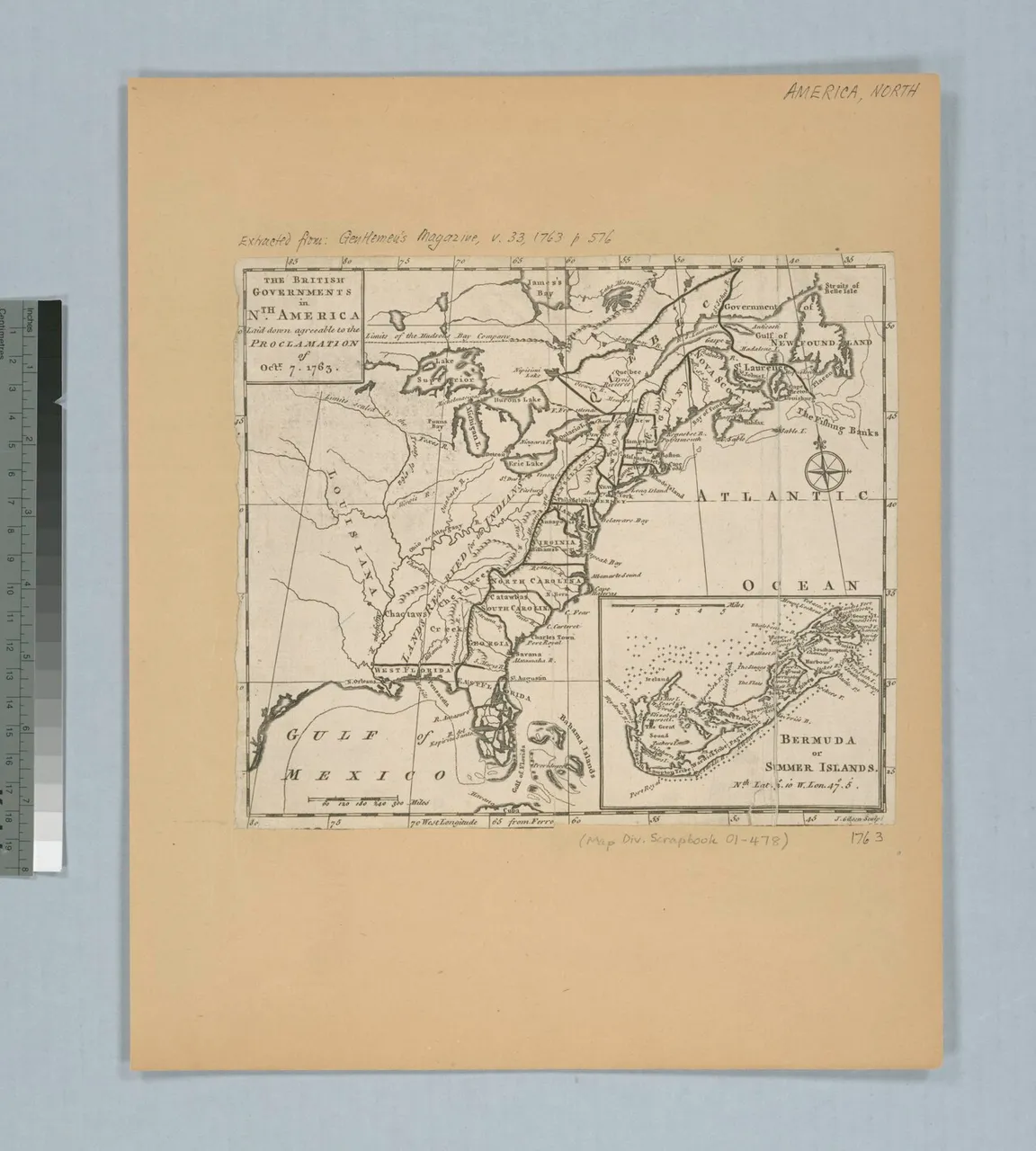 The British provinces in North America as laid down by the proclamation of October 1763, engraved by John GibsonWikimedia Commons, John Gibson, CC0 (The British governments in Nth. America - laid down agreeable to the proclamation of Octr. 7, 1763 NYPL435005.tiff)
Pontiac’s War breaks out at Fort Detroit in May 1763. Eight British forts fall, and Detroit and Fort Pitt are besieged.
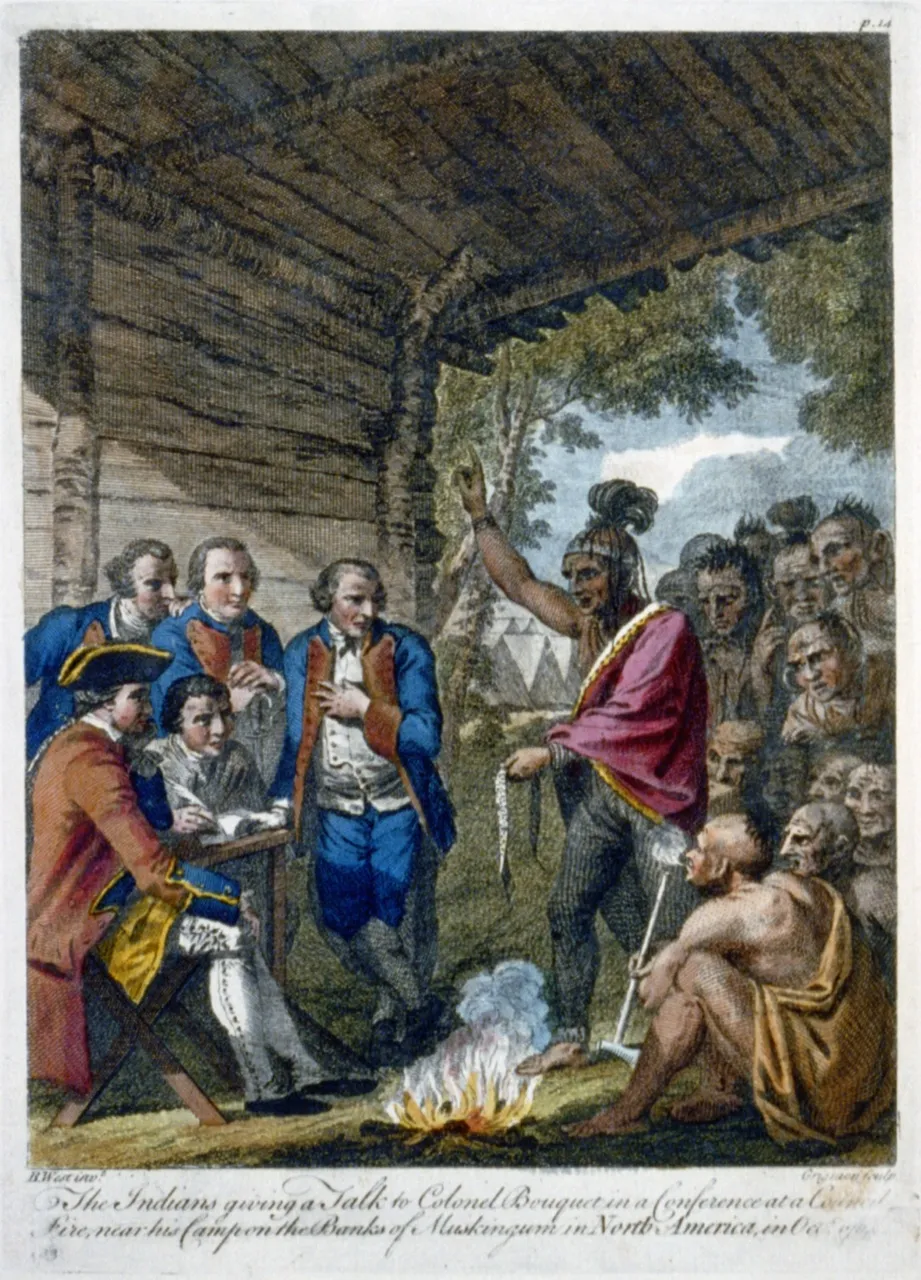 Indians giving a talk to Colonel Henry Bouquet in the Ohio country, October 1764, engraving after Benjamin WestWikimedia Commons, Charles Grignion the Elder / After Benjamin West, Public domain (Indians giving a talk to Bouquet.jpg)
On 7 October the Royal Proclamation reserves the land west of the Appalachians for the native nations and forbids colonial settlement there. It also creates the provinces of Quebec, East Florida and West Florida. Virginia’s Ohio Company and frontier settlers oppose the line.
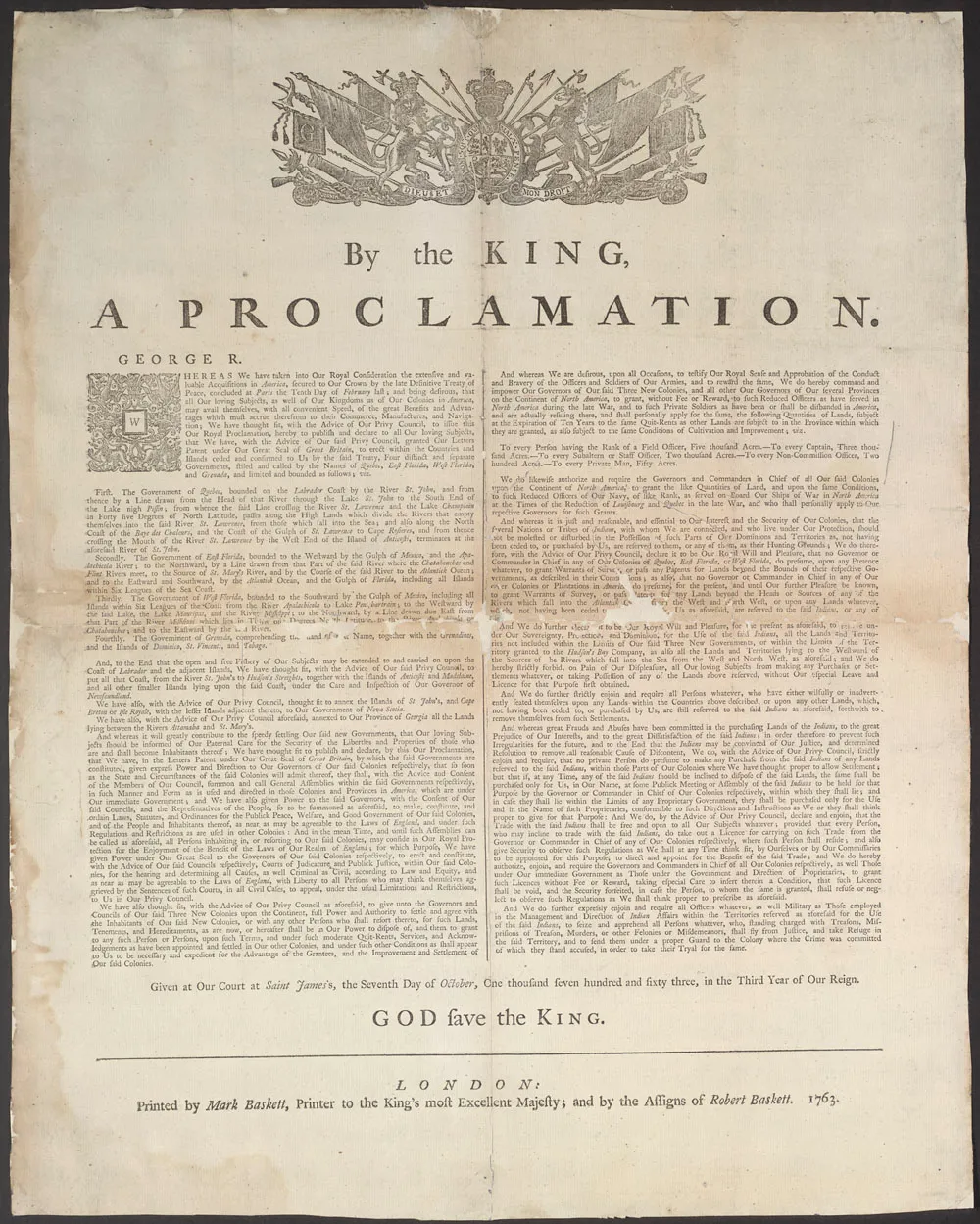 The Royal Proclamation of 7 October 1763Wikimedia Commons, George III, Public domain (Royal Proclamation of 1763.jpg)
Sources
- Robert Middlekauff, The Glorious Cause (2005).
- Gordon S. Wood, The American Revolution: A History (2002).
- Fred Anderson, Crucible of War (2000).
Next: The Sugar Act, the Stamp Act and the first congress